“We all have things
we don’t talk about,…”
Jamie Ford
[Heads-Up: Today’s post is unusually long — 7-minute read]
What Jamie Ford says in the quote above is absolutely true — we all have things we don’t talk about, and that’s okay. I’m sure that people have perfectly good reasons for not talking about some aspects of their lives or something from their past which they feel no particular need or desire to share. It’s important to acknowledge, however, that the quote above is only a partial quote. The rest of what Ford says is significant,… and powerful. “We all have things we don’t talk about,… even though, more often than not, those are the things that make us who we are.”
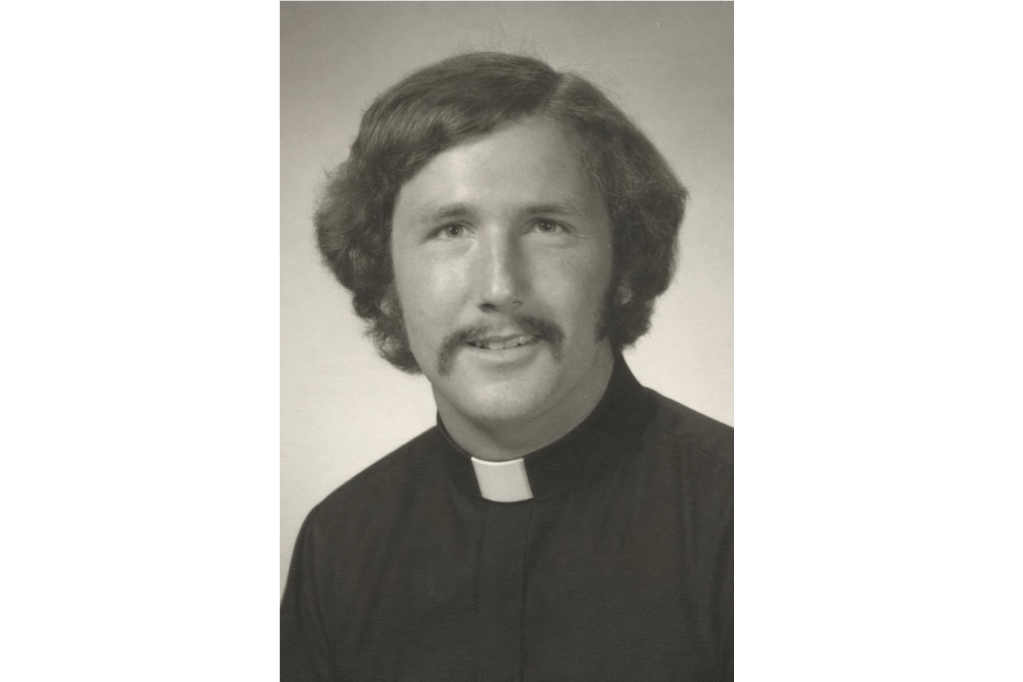
I have never intentionally concealed the fact that I gave serious consideration to the possibility that I might have a vocation to the Jesuit priesthood. This is not a part of my past of which I am in any way embarrassed. The six-year journey of discernment played a huge part in who I am today. I tend to downplay it in my conversations and writing because to explain it can be incredibly time consuming. I will attempt to do so here today because it was exactly fifty years ago that I spent five months in the Jesuit novitiate in Montecito, California.
When my brother, Tom, entered the Society of Jesus (Jesuits) immediately following his graduation from high school, I’m sure the thought of doing so after my own graduation must have crossed my mind, but I didn’t give it a lot of thought at the time. Throughout my four years at Saint Ignatius, a number of Jesuits made comments to me along the lines of “You’d make a good Jesuit.” While I considered those to be compliments, I can’t say that I ever gave serious consideration to the possibility. During those years at S.I., I enjoyed an active social life. I did, however, work part-time as a receptionist at the Jesuit residence on campus. And at the invitation of one of my Jesuit teachers, I spent several weeks working in Jamaica in the summer before my senior year. I certainly became familiar with Jesuit life.
When I graduated from Saint Ignatius in 1972, at the urging of the same Jesuit who had taken me to Jamaica, I accepted a job working as a prefect (resident assistant) in the student dormitory at Bellarmine College Prep in San José, another Jesuit educational institution. During my second year at Bellarmine, I was offered another unique opportunity by the same Jesuit priest — to teach in a Catholic high school in The Bahamas for one year. I accepted the offer.
At the same time I left Bellarmine to go to Nassau, five of the college students who were working with me as prefects in the dormitory all entered the Jesuit novitiate. I had not thought of that job as a training ground for future Jesuits. Apparently, I was clueless.
The year in Nassau was spent living in a guest room of a Benedictine monastery and teaching Religion in the 7th- through 12th-grade school. It was during that year that I was confronted with the reality that while the thought of the Jesuit priesthood had been in the back of my mind for almost six years, I had never completely ruled it out as a possibility. I made the decision to apply for the Jesuits — not because I had decided to become a priest, but because I had not yet decided not to become one.
When I arrived at the Novitiate in September 1975, I was totally honest with my spiritual director, Leo Rock, S.J. I told him I had not decided to become a Jesuit, but that I’d been giving some thought to it for six years. He assured me that I was in the right place, explaining that the two-year novitiate was a place and time of discernment. I asked him how I would know if that was my calling. Leo smiled knowingly and replied, “You’ll know.”
In the fall of 1975, I participated in a 30-day silent Ignatian retreat. I thought, for sure, that I’d have my answer by the time the retreat ended. I didn’t. Day after day through the month of December, I kept wondering if I was in the right place, so I would ask Leo, again, how I would know. I got the same response.
I enjoyed my time in the novitiate. The facilities were impressive. The other 23 novices in my class were good guys. The food was amazing. I settled into the daily routine of classes, chores, liturgy, and prayerful reflection. Then, one morning in late January, everything was different.
Things were normal enough until I went to the dining hall for breakfast. The usual feast of just about anything one might hope to find for breakfast was there. I picked up a plate and walked through the line. For some strange reason, nothing looked appetizing. I put my plate away and went outside to take a long walk. The same thing happened again at both lunch and dinner. I must have eaten something that day, but I don’t recall doing so. I felt so unsettled.
The next morning was a similar experience. I went for breakfast, but again I didn’t eat. I attended my classes, did a few chores, participated in daily Mass, then returned to the dining hall for lunch. Again, I had no desire to eat. Instead of going for another walk, I wandered over to the empty chapel and sat in the back row. I can’t really say I prayed. I just sat there, which, in retrospect, I can now recognize as a valuable form of prayer. And that’s when it happened. When I thought about leaving the novitiate, I was filled with immense joy and inner peace. But then I thought that I hadn’t given it enough time, that I should stay longer. This thought was accompanied by feelings of uneasiness and distress.
I sat in that chapel for at least three hours, going back and forth between the two options. The responses in my body — my heart, my gut — to the two possibilities were amazingly consistent. I stood up, walked out of the chapel, and went to see Leo in his office.
When I told him what was happening, he smiled kindly and said, “I told you that you would know.” He recommended that I give the decision two weeks, which I was happy to do. During those two weeks, every moment of every day was filled with peace and consolation. It’s not that I didn’t like the novitiate or the people there. I enjoyed the time I spent there immensely. It was simply clear to me that I did not have the same calling to the priesthood that many of the other novices were experiencing.
As I mentioned, I have had no reason to conceal this brief chapter of my life. It was time well spent. I have never regretted entering the novitiate, and I’ve never regretted leaving it. It is an essential part of who I am today — fifty years later.
 A Beacon of Light
Leave a comment