“He who is devoid
of the power to forgive
is devoid of the power
to love.”
Martin Luther King, Jr.
It’s a popular phrase with which you are probably familiar. “Holding onto anger is like drinking poison and expecting the other person to die.” Though its exact origin is debated, this popular quote is often attributed to Buddha. It contains a pearl of wisdom from which we could all benefit.
Forgiveness is a decision. It’s a decision to release ourselves from the pain we experience from being hurt by others. This is not the same as reconciliation. Reconciliation is a mutual effort to restore a relationship and rebuilding the trust which previously existed in that relationship. The difference between the two matters.
Forgiveness does not require you to immediately trust again. It does not even require that you allow the other person back into relationship with you. The purpose of forgiveness is to restore peace within yourself. It still allows you to set boundaries with the other person. While reconciliation is a mutual commitment to restore trust and resume the relationship, forgiveness is a gift we give to ourselves. In reality, it has little to do with the other person or people involved.
Author Lewis B. Smedes tells us, “To forgive is to set a prisoner free and discover that the prisoner was you.” This, in itself, should be motivation enough for us to be willing to offer forgiveness to those who have harmed us.
Another author, Marianne Williamson, wrote, “The practice of forgiveness is our most important contribution to the healing of the world.” Powerful words which may give us the strength we need to offer forgiveness to others.
T. D. Jakes, an American pastor and motivational speaker, offered this advice on the topic of forgiveness: “I think the first step is to understand that forgiveness does not exonerate the perpetrator. Forgiveness liberates the victim. It’s a gift you give yourself.” While it can be challenging to accept Jakes’ words, the truth in what he says has the potential to set us free.
“You can forgive someone and still not want to have anything to do with them,” writes author Karen Salmansohn. “Forgiveness is about freeing yourself of pain in your present. It’s not about making room for someone painful in your future.”
There seems to be a common theme running through these various words of wisdom.
Lebanese-Canadian author Najwa Zebian offers this warning: “Never wish them pain. That’s not who you are. If they caused you pain, they must have pain inside. Wish them healing.” Now we’re getting to a higher level of response, one which reflects my understanding of what love truly is — seeking the highest good for the other person.
According to the Stanford University Forgiveness Project, led by Dr. Frederic Luskin, forgiveness has been linked to a number of mental health benefits. These benefits include reductions in stress, anger, depression, and anxiety. Forgiveness contributes to our ability to engage in positive healthy relationships.
Most of us struggle with forgiving someone in our life. It’s time for us to do ourselves a favor and give ourselves the gift of peace by forgiving those who have harmed us. Yes, it’s a counter-cultural concept, but the research on the health benefits of forgiveness are overwhelming.
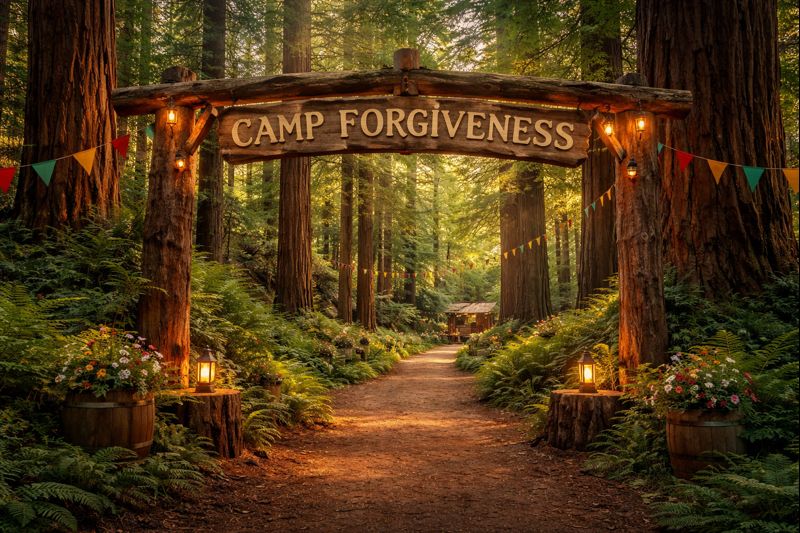
I will be attending a weekend retreat on the topic of forgiveness beginning this afternoon. One of my 2026 goals is to focus on forgiving those who have made life difficult for me at one time or another. I don’t expect this to be an easy process. In fact, I’m not sure I’ll be able to successfully reach a point where I am able to forgive some individuals. Like so many other areas of life, I’m simply going to do the best I can and take it one day at a time.
 A Beacon of Light
Leave a comment