-

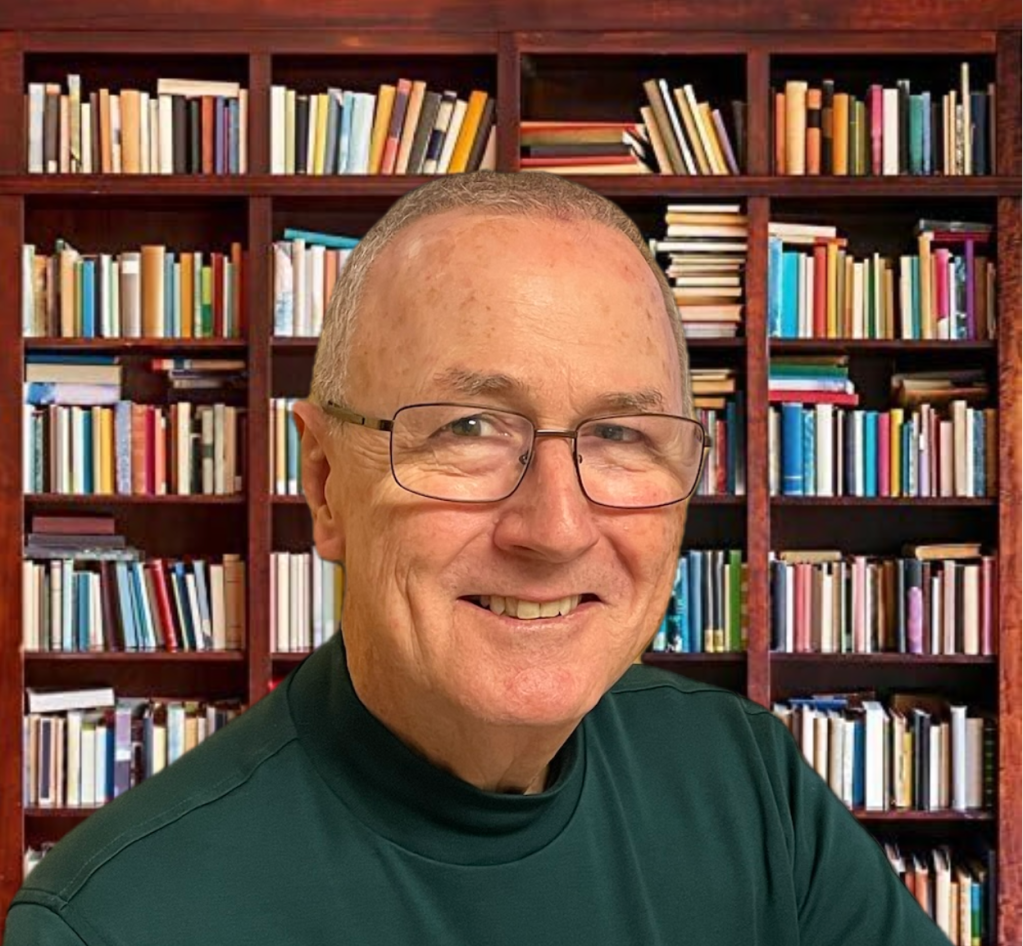
My name is Kevin Carroll. I was born and raised in San Francisco, California, where I attended Saint Ignatius College Preparatory. I am a graduate of both Santa Clara University and the University of San Francisco. Following a 40-year career in teaching and pastoral ministry, I launched a new career as a writer and speaker.
I live in San José, California. My wife, Kathy, and I have three adult sons and five precious grandchildren. I have much for which to be grateful.
I can be reached via email at kmc43sjc@gmail.com
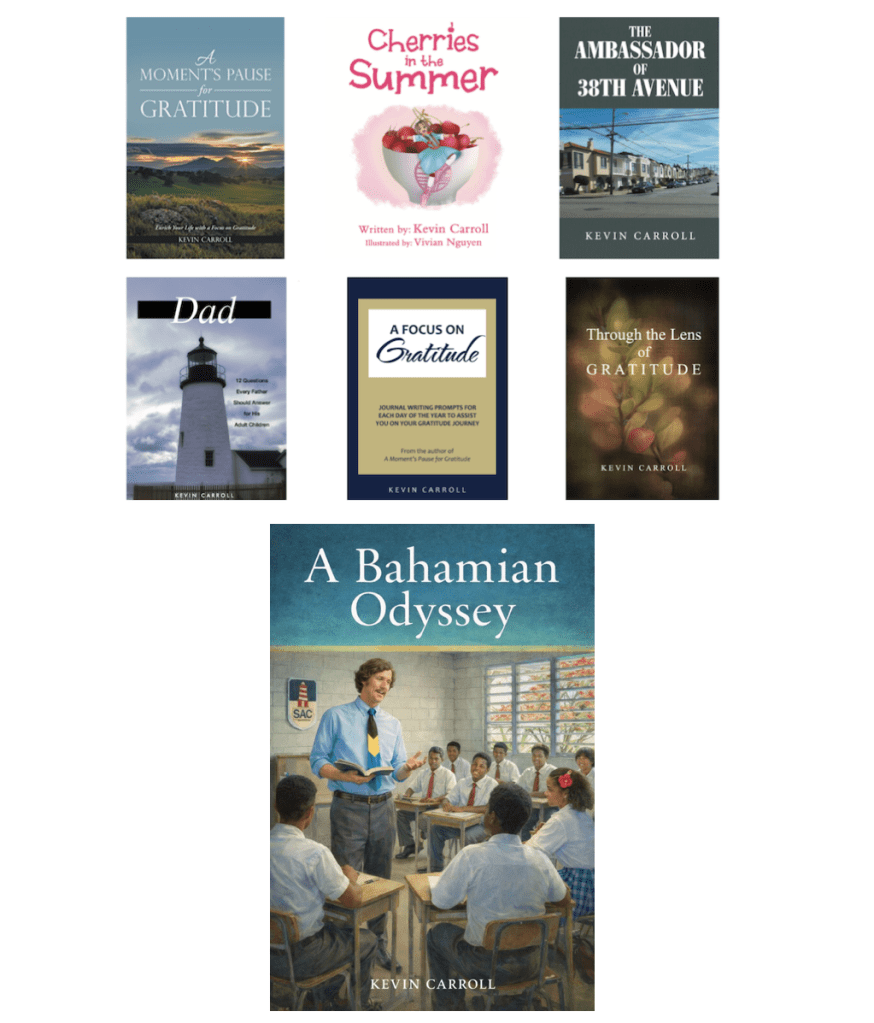
My books are available for purchase online from Amazon. I also have copies of some of these titles at my home for those who would like to buy them directly from me.
A Moment’s Pause for Gratitude (2017)
Cherries in the Summer (2021)
The Ambassador of 38th Avenue (2022)
Dad: 12 Questions… (2023)
A Focus on Gratitude (2024)
Through the Lens of Gratitude (2024)
A Bahamian Odyssey (2026)
-

- October 2026
- September 2026
- August 2026
- July 2026
- June 2026
- May 2026
- April 2026
- March 2026
- February 2026
- January 2026
- December 2025
- November 2025
- October 2025
- September 2025
- August 2025
- July 2025
- June 2025
- May 2025
- April 2025
- March 2025
- February 2025
- January 2025
- December 2024
- November 2024
- October 2024
- September 2024
- August 2024
- July 2024
- June 2024
- May 2024
- April 2024
- March 2024
- February 2024
- January 2024
- December 2023
- November 2023
- October 2023
- September 2023
- August 2023
- July 2023
- June 2023
- May 2023
- April 2023
- March 2023
- February 2023
- January 2023
- December 2022
- November 2022
-
Enough is Enough
“He who knows that
enough is enough
will always have
enough.”
Lao Tzu“You will never have enough until you are grateful for what you have.” This Greek proverb challenges a belief that is deeply embedded in modern society — the idea that what we have is never quite enough. We are constantly encouraged to want more money, more possessions, more success, more experiences, and even more recognition. Yet, the pursuit of “more” does not necessarily bring greater happiness. Often, it simply creates a greater awareness of what we don’t have.
We live in a culture of dissatisfaction. Advertising surrounds us with carefully designed messages suggesting that our lives are incomplete and that we are somehow deprived. We are shown the perfect home, the newest phone, the latest fashion, the dream vacation, and the seemingly perfect lives of others. The message is subtle, but powerful: You would be happier if you had more. As a result, it becomes easy to confuse wanting something with needing it, and having more stuff with being truly fulfilled in life.
This misconception can cause us to overlook the abundance already present in our lives. We may become so focused on what is missing that we fail to appreciate what is right in front of us: family, friendship, health, security, opportunities, memories, and ordinary moments of peace. Gratitude does not mean pretending that we have no problems or that we should stop pursuing meaningful goals. Rather, it means recognizing that our lives can have value and richness even while there are things we still desire.
Germany Kent expresses this beautifully: “Once you begin to take note of the things you are grateful for, you begin to lose sight of the things that you lack.” Gratitude changes our focus. Instead of constantly measuring our lives against an imagined version of perfection, we begin to notice what is already good in life. The more we recognize these things, the less power our feelings of inadequacy will have over us.
Perhaps having enough is not a matter of accumulating everything we want. Perhaps it is a way of recognizing that we can continue to grow, dream, and work toward a better future without allowing dissatisfaction to define the present. We do not have to have everything to have enough. Sometimes, enough begins when we stop counting what is missing and start appreciating what is already ours.
-
Magical!

“San Franciscans are
very proud of their City.
It’s the most beautiful
place in the world.”
Robert RedfordIt has been an absolute honor for Kathy and me to host my friend Saori, and her daughter, Saki, for the past week. They departed San Francisco International Airport late last night and are returning to their home in Sasebo, Japan right about the time I’m writing this post at 7:20 pm on Saturday night. (It’s a little after noon on Sunday in Japan.) In one word, the week was magical.
Saori and I have been friends for 28 years. I’ve met Saki, now almost 16-years-old, before, but she was very young at the time. This visit was a totally different experience. She is an intelligent, competent, and personable young woman who seems to enjoy her life to the fullest.
Our two one-day trips to San Francisco were enjoyable, despite the less-than-ideal weather conditions on those two days. We never did get a clear view of the Golden Gate Bridge. We did, however, enjoy seeing various landmarks around The City. Perhaps the highlight was lunch at Ghirardelli Square. Yes, lunch. While it may not have been the most nutritious meal of the week, our Ghirardelli sundaes hit the spot.
Saki enjoyed her day-long visits to Presentation High School (Wednesday), The Harker School (Thursday), and Notre Dame High School (Friday). By visiting those campuses, attending classes, and participating in group activities, she was able to get a taste of high school life in the United States.
Last night, Saori and Saki prepared edamame, homemade gyoza, onigiri, seasoned rice balls, and miso soup. Steve, Morgan, and the kids joined us for dinner. Even the kids are experienced Japanese food eaters, so they thoroughly enjoyed the meal. Needless to say, there were no leftovers.
Saying goodbye is always difficult, but I am confident that our friendship with Saori and Saki will continue for many more years. I don’t know if Kathy and I will ever get to Japan again, so there is a possibility that we will never see them again. Fortunately, we’ll always have FaceTime and email to keep us in contact with each other. And who knows? Maybe they will visit us here in San José again some time.
I am grateful for all that Saori and her parents provided for me during my first two visits to Nagasaki in 1998 and 1999, so to have the opportunity to provide hospitality for Saori and Saki in our home, and to share with them “the most beautiful place in the world,” is truly a gift.
-
What a Week!
“True friends stay
with you no matter
the distance or time
that separates you
from them.”
Lance ReynaldIt was the luck of the draw. When I was first invited to escort a group of students from St. Lawrence Academy to Nagasaki, Japan for a homestay visit in November 1998, I learned that my host student would be Saori Komoda, a 16-year-old tenth-grade student at Junshin Girls’ High School. She and her parents lived in the town of Sotome, about 45-minutes by bus from the school. My two-week visit to the school was memorable, but the highlight of the visit was the time I spent with Saori and her parents at their home. They welcomed me as family.
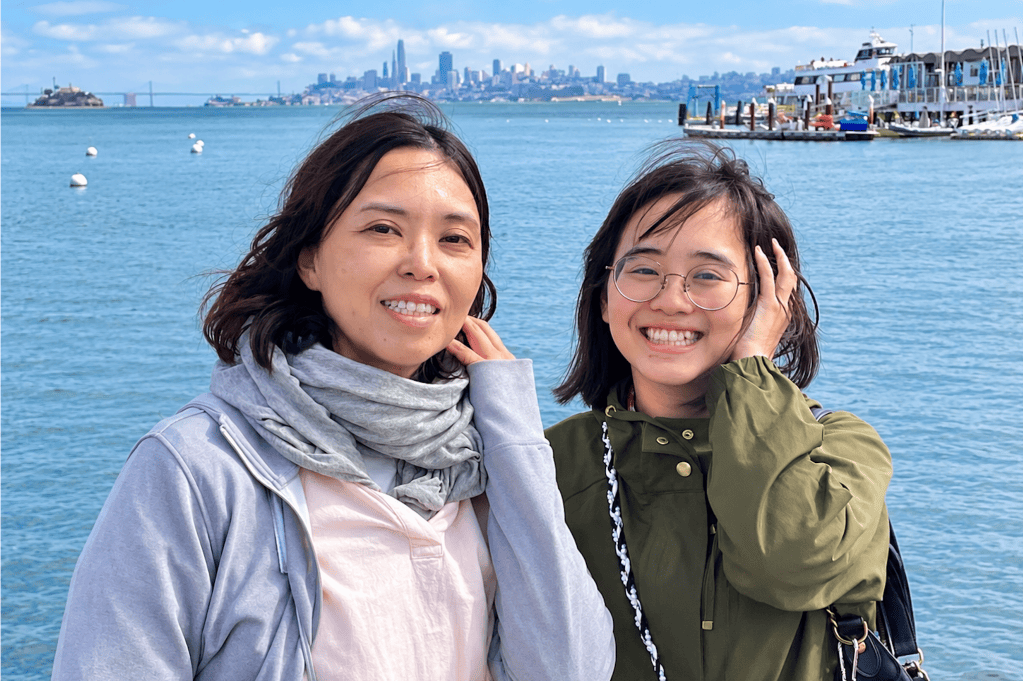
Today, twenty-eight years later, Saori is visiting San José with her soon-to-be 16-year-old daughter, Saki. Saori wanted Saki to experience life in the United States, so they took advantage of a one-week national holiday in Japan to visit us. We spent Monday and Tuesday playing tourist in San Francisco. Yesterday, Saki spent a good part of the day at Presentation High School in San José to get a feel for high school life in the U.S. Today, she enjoyed several hours on the campus of The Harker Upper School where she made quick friends with her host student, Momo, who is fluent in Japanese. These experiences have been priceless for Saki.
Tomorrow, Saki will spend the day at Notre Dame High School in San José. Like Presentation and Notre Dame, Saki’s high school in Sasebo, Japan is an all-girls Catholic school. While there are similarities in the experience, it should come as no surprise that Saki has noticed myriad differences in the schools. Japanese schools, for the most part, continue to feature very traditional styles of learning, while American schools have introduced countless innovative approaches to learning that seem to enhance student learning significantly.
It has been an absolute joy to watch Saki come out of her shell as she gains confidence daily realizing that she really can speak English well enough to be understood. She has studied English for the past three years. As is so often the case, Saki became quite proficient at writing English, but speaking is a challenge, as there are few opportunities for Japanese students to speak English with native English speakers.
Saki and Saori visited here eight years ago, but Saki has only sketchy memories of that visit. By the time she boards her flight back to Japan tomorrow night, she will have a lifetime of unforgettable memories of her 2026 visit to California.
I am so grateful for the opportunity to welcome Saori and Saki into our home once again. Despite the almost 6,000 miles between our cities, Saori and I have maintained our friendship for 28 years. I expect that it will continue for many more.
-
The Gift of Autumn

“And all at once,
summer collapsed
into fall.”
Oscar WildeThis will be brief.
My favorite season has arrived. A season of colorful foliage, falling leaves, cooler days and evenings, pumpkin-spice everything, and, of course, gratitude. How could I not love this season of autumn?
I’ve been busy this week with our two visitors from Nagasaki, Japan. After a relaxing weekend, we spent all day Monday and Tuesday in San Francisco doing the tourist thing. We made all the predictable stops — Java Beach Café, Ocean Beach, the Palace of the Legion of Honor, the Golden Gate Bridge, Capurro’s Restaurant, Fisherman’s Wharf, Pier 39, Ghirardelli Square, St. Ignatius Church on the campus of the University of San Francisco, St. Paul Church (the venue for the movie “Sister Act”), Twin Peaks, the Ferry Building, and a cruise to Sausalito for lunch. We’re exhausted, but it’s a good tired.
May the season of autumn bring you much happiness and allow you to reflect on all the people, experiences, opportunities, and other things in your life for which you are grateful. Gratitude makes a difference!
-
What a Treat!
“I get the feel
of a happy
atmosphere.”
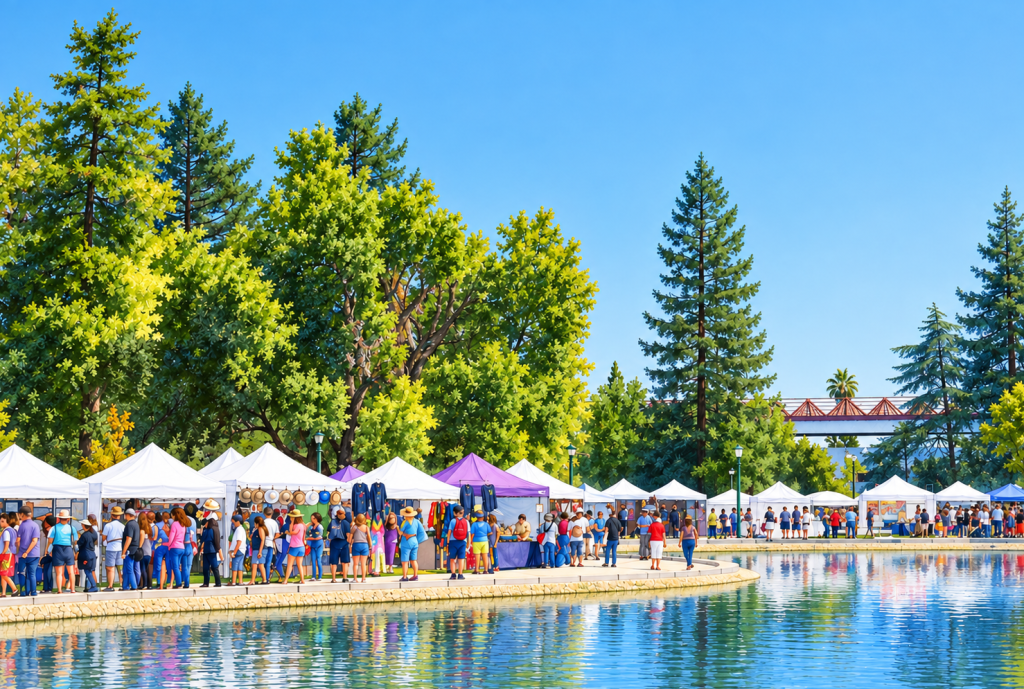
Sandra Aguirre, ArtistThe City of Santa Clara hosts its annual Art & Wine Festival today and tomorrow at Central Park on Kiely Boulevard. The event features live music, a variety of food vendors, and dozens of artists displaying and selling their work. Thousands of people will stroll through the grounds of the park this weekend to enjoy the vibe, taste some local wines, enjoy a variety of musical presentations, and check out the works of local vendors.
My favorite part of this annual event is people watching. I’ve lived in the Santa Clara Valley since 1972. I first attended the Santa Clara Art & Wine Festival in 1984. Since that time, Kathy and I make an effort to get there almost every year. Walking along the paths of the park, between the vendor booths and the lake, it’s inevitable that I will see people I know, many who I have not seen in quite a while.
This year, our visitors from Nagasaki, Saori, and her daughter Saki, will join us. The event will give them a good experience of life in the United States. I’m confident they will enjoy the variety of artists selling jewelry, paintings, ceramic sculptures, hand-sewn bags, hats, gemstones, and custom bead work. Music from artists of different genres will fill the air throughout the event, and the smell of burgers, popcorn, barbecued ribs, and gourmet pizza will permeate the air.
There have been years when this event was held during unbearably hot weather. This year, however, the high temperature predicted for today is a comfortable 74º — cool enough that we won’t need to worry about staying hydrated, yet warm enough to treat ourselves to an ice cream at some point in the day.
I’m grateful for the opportunity to share this event with Saori and Saki. While there are many festivals in Japan, which, in some ways, are quite similar to this event, the Santa Clara Art & Wine Festival will be an experience they will never forget.
-
Omotenashi

“A guest never forgets
the host who
treated him kindly.”
HomerThose who have the opportunity to visit Japan will undoubtedly be left in awe by the level of hospitality they experience there. This is no coincidence. Hospitality is actually a deeply rooted element of Japanese culture. This exceptional standard of hospitality has a word in Japanese, omotenashi (おもてなし).
Omotenashi is the traditional Japanese philosophy of wholehearted, selfless hospitality. It goes far beyond mere politeness. It is the thoughtful art of anticipating a guest’s needs before they are ever spoken, executed with genuine care and absolutely no expectation of reciprocity. To experience true omotenashi is to be fundamentally changed by the realization of how deeply one can be cared for by others. Having been blessed with this grace during my fourteen visits to Japan, I have carried a lifelong impression that has transformed into a deeply held desire: the yearning to return this invaluable gift by employing its principles in my own life.
My journey of understanding began in Nagasaki, Japan, where I first experienced this selfless care in November 1998. Staying at the home of Saori Komoda and her family, I was struck by their intuitive kindness and seamless attention to detail. Every comfort was quietly arranged before I even realized I needed it.
This profound impression was reinforced the following year when I returned to Nagasaki, accompanying more students from Saint Lawrence Academy on another homestay visit to Junshin Girls’ High School. Witnessing omotenashi practiced so flawlessly — both within the walls of the Komoda family home and on the broader scale of our educational exchange on campus — revealed a culture that elevates human connection into a sacred art form.
True omotenashi expects nothing in return, which paradoxically creates a powerful, lasting desire in the recipient to reciprocate. Because I cannot easily repay the Komoda family across the boundaries of time and distance, returning this gift means translating their philosophy into my own daily life. It means cultivating a sharp, mindful empathy to anticipate the needs of my family and friends without waiting to be asked.
Whether by preparing a space for a visitor’s ultimate comfort in our home, offering quiet support to a friend in a moment of stress, or simply practicing deep, undistracted listening, I seek to mirror the grace I was shown in Japan.
The profound care I experienced when I visited Nagasaki remains a vibrant, guiding light for how I choose to treat others today.
While I may never be able to directly balance the scales of the immense kindness extended to me by Saori, her parents, her grandfather, and the community at Junshin Girls’ High School, I do have an opportunity to do my best to replicate the gift of omotenashi during the next week. Saori, and her 15-year-old daughter, Saki, arrive this afternoon for a one-week visit. By opening our home and my heart to anticipate and serve their needs, I hope to honor the family who welcomed me so warmly into their home almost thirty years ago. In doing so, the selfless spirit of omotenashi crosses continents and generations, continuing to ripple outward into a world that deeply needs it.
-
The Last Lecture

“We cannot change
the cards we are dealt,
just how we
play the hand.”
Randy PauschOne of life’s most difficult lessons is recognizing that we are not in control of everything that happens to us. We make plans, pursue dreams, build relationships, and try to create the lives we want. Yet illness, loss, disappointment, aging, and the actions of other people can suddenly change those plans. Randy Pausch understood this reality in a profound way. After being diagnosed with pancreatic cancer and learning that he had only months of good health remaining, he could not change the hand he had been dealt. He could, however, choose how he would play it. His example reminds us that although we cannot control everything that happens to us, we can control our attitude, our actions, and how we respond.
Accepting what we cannot control is often difficult. We naturally want life to unfold according to our hopes and expectations. We may believe that if we work hard, make good decisions, and treat others well, things should turn out as we would like. Life offers no such guarantee. People become ill. Relationships change. Opportunities disappear. People we love die. We make mistakes that cannot be undone. Acceptance does not mean that these experiences do not hurt or that we should simply give up. It means recognizing reality rather than wasting our energy wishing that an unchangeable situation were different.
Once we recognize what we cannot control, an important question remains: What can I control? We can control how we respond. We can allow disappointment to make us bitter, or we can allow it to make us wiser. We can spend our lives regretting the past, or we can learn from it. We can respond to suffering by withdrawing from others, or we can become more compassionate because we understand suffering ourselves. We cannot always choose our circumstances, but we can choose the person we want to be within those circumstances.
Pausch demonstrated this freedom beautifully. About a month after learning that his pancreatic cancer diagnosis was terminal, he delivered The Last Lecture at Carnegie Mellon University, where he worked as a professor of computer science. Remarkably, his presentation was not primarily about dying. It was about living. He spoke about pursuing childhood dreams, overcoming obstacles, helping other people achieve their dreams, expressing gratitude, and making meaningful use of the time we are given. Pausch could not determine how much time remained in his life, but he could determine what he would do with that time.
His message applies to all of us because everyone eventually receives cards we would rather not have been dealt. Our circumstances may be very different from Pausch’s, but the challenge is the same. We cannot always change what happens. We can only decide what happens within us as a result.
None of us chooses every card in our hand. What matters is how we play those cards. Perhaps our greatest freedom is not controlling our circumstances but choosing courage over fear, gratitude over resentment, and love over bitterness. We may not choose the hand life deals us, but every day gives us another opportunity to decide how we will play it.
-
The Gift of Time
“The greatest gift you
can give someone
is your time.”
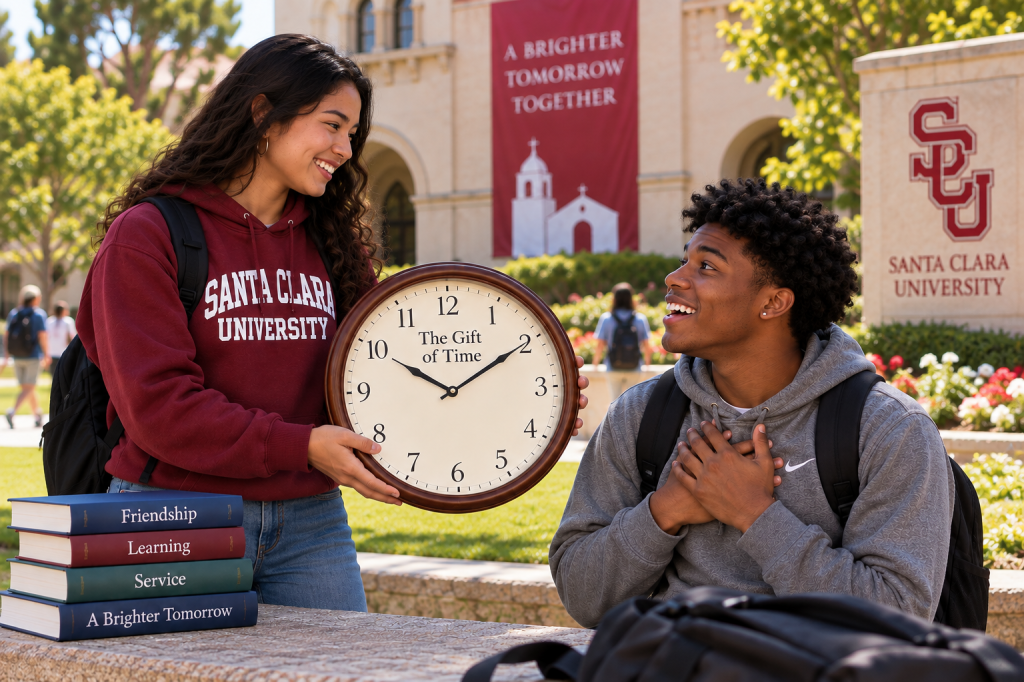
Rick WarrenIt’s true! “The greatest gift you can give someone is your time.” But there is more to Rick Warren’s words quoted above. He tells us, “When you give your time, you are giving a portion of your life that you will never get back.” These words of wisdom invite us to think differently about what it means to give. We often associate generosity with material things—a thoughtful gift, a financial contribution, or some other tangible expression of kindness. Yet possessions can be replaced. Money can be earned again. Time is different. Once an hour, a day, or a year has passed, it is gone forever. When we willingly share our time with another person, we are offering something genuinely priceless: a portion of our life.
Time is essential to building and sustaining meaningful relationships. Friendships do not deepen simply because we wish them to. Families do not remain close without attention and effort. Relationships grow through shared experiences and ordinary moments. Having coffee with a friend, eating dinner with one’s family, taking a walk with someone we care about, or sitting together engaged in conversation may seem insignificant at the time. Yet these moments gradually create bonds of trust, affection, and understanding. By choosing to spend time with another person, we communicate a powerful message without necessarily saying a word: You matter to me.
Giving our time also means giving our presence. There is an important difference between being physically present and being genuinely attentive. We can sit across from someone while checking our phones, thinking about our next appointment, or preparing what we want to say next. Genuine presence asks more of us. It requires us to listen—not merely to words, but to the feelings and experiences behind them. Sometimes the greatest kindness we can offer someone who is struggling is not advice or a solution. It is simply our willingness to sit beside them, listen attentively without judgment, and allow them to know they are not alone.
Interestingly, the gift of time enriches the giver as well as the receiver. Time spent mentoring a young person, visiting someone who is lonely, volunteering in the community, accompanying a friend through a difficult experience, or simply enjoying the company of someone we love often becomes part of our own treasured memories. In giving ourselves to others, we frequently receive unexpected blessings in return — wisdom, friendship, gratitude, perspective, and a deeper appreciation for life.
As I grow older, I become increasingly aware that a meaningful life cannot be measured only by achievements, possessions, or the number of tasks completed in a given day. Ultimately, much of life’s meaning is found in relationships—in the people we have love, encourage, listen to, teach, help, and accompany along the way.
Rick Warren’s words remind us that our time is limited, which is precisely what makes time so valuable. Perhaps one of the most important questions we can ask ourselves is not simply, “How am I spending my time?” but “With whom am I sharing it?” The greatest gift we give another person may not be something purchased or wrapped. It may be a portion of our life, freely and lovingly shared.
-
Write It Down!
“What doesn’t kill us
gives us something
to write about.”
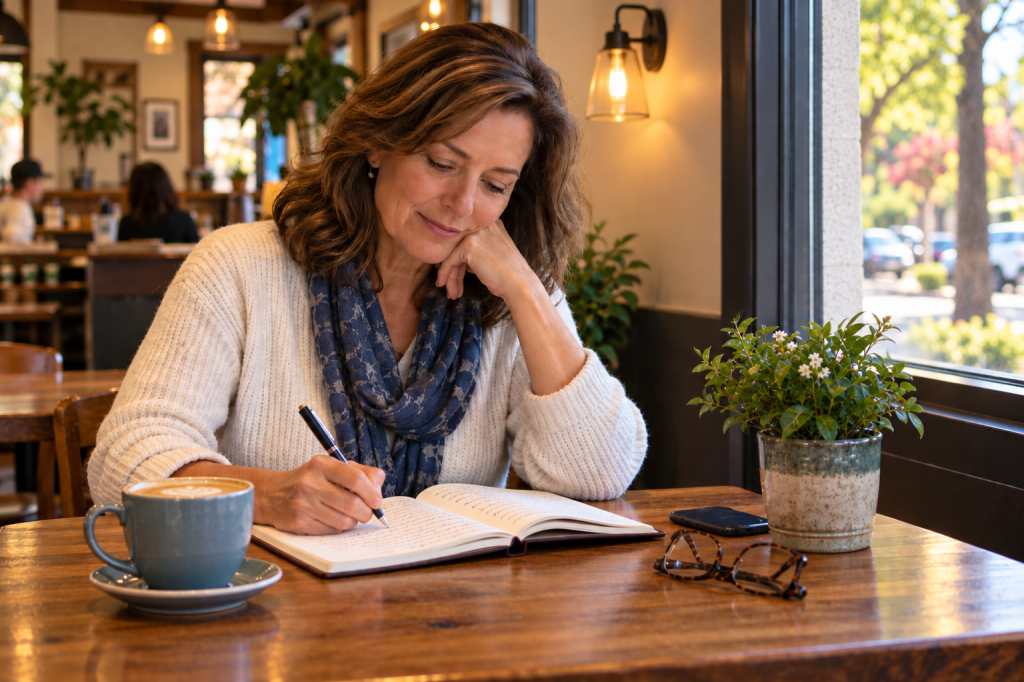
Julie WrightThere is something powerful about putting our thoughts down on paper. In a world filled with constant noise, distractions, and digital communication, writing gives us a quiet space to pause and understand what is happening inside us. Whether we write in a journal, compose a letter, tell a story, or simply record a thought, the act of writing can bring clarity to experiences that otherwise feel confusing or overwhelming. As Wallace Stegner observed, “We write to make sense of it all.”
Writing allows us to understand ourselves as much as it allows others to understand us. When thoughts remain in our heads, they can become tangled together. Putting them on paper forces us to slow down and give them shape. A fear can become a sentence, an idea can become a paragraph, and a difficult experience can become a story. Once our thoughts are visible, we can examine them from a different perspective.
Writing can also help us carry pain. Karen Blixen wrote, “All sorrows can be borne if you tell a story about them.” This does not mean that writing magically removes suffering, but it can give suffering meaning. By describing what has happened to us, we transform an experience into something we can reflect upon rather than something that simply overwhelms us. Maya Angelou similarly warned of “the agony” of carrying an untold story inside. Sometimes, writing is a way of finally giving that story a voice.
Just as importantly, writing reminds us that our individual experiences have value. Paulo Coelho said, “Writing means sharing. It’s part of the human condition to want to share things — thoughts, ideas, opinions.” Our words may help someone else feel less alone. Sean Thomas Dougherty captured this idea poignantly: “There is someone out there with a wound in the exact shape of your words.” What we write may resonate with another person in ways we cannot anticipate.
Yet many people hesitate to write because they are afraid of not being good enough. This is where we must remember that writing does not have to be perfect to have value. Neil Gaiman reminds us, “No one cares about your first draft.” Jodi Picoult makes the same point more simply: “You can’t edit a blank page.” The important thing is to begin. The first words may be awkward, but they create something that can later be improved.
Ultimately, writing is an act of discovery. Henry Miller called it “a voyage of discovery,” while Isabel Allende offered a simple challenge: “Write what should not be forgotten.” Our thoughts, memories, questions, hopes, and experiences deserve to be recorded. We write not because every thought is perfect, but because every honest thought has the potential to teach us something about ourselves. Putting pen to paper is therefore more than a method of communication. It is a way of knowing ourselves, preserving our experiences, and connecting with others. As Libba Bray reminds us, “Write like it matters, and it will.”
-
“Metta”
“If we practice
good will,
we become loving.”
Charlotte BellI learn something new every day. Yesterday morning, I received an email from someone I met at a dinner party a few weeks ago. Sandy was responding to one of my recent blog posts. At the end of her message, where one might normally write Take care, All the best, or Love before writing their name, she wrote the word Metta. I had never seen the word before, so I Googled it to see what might come up.
I learned that Metta is a form of meditation rooted in an ancient Buddhist tradition. The practice involves silently directing well-wishes and good will toward yourself and others. Modern psychological science and neuroscience validate its effectiveness.
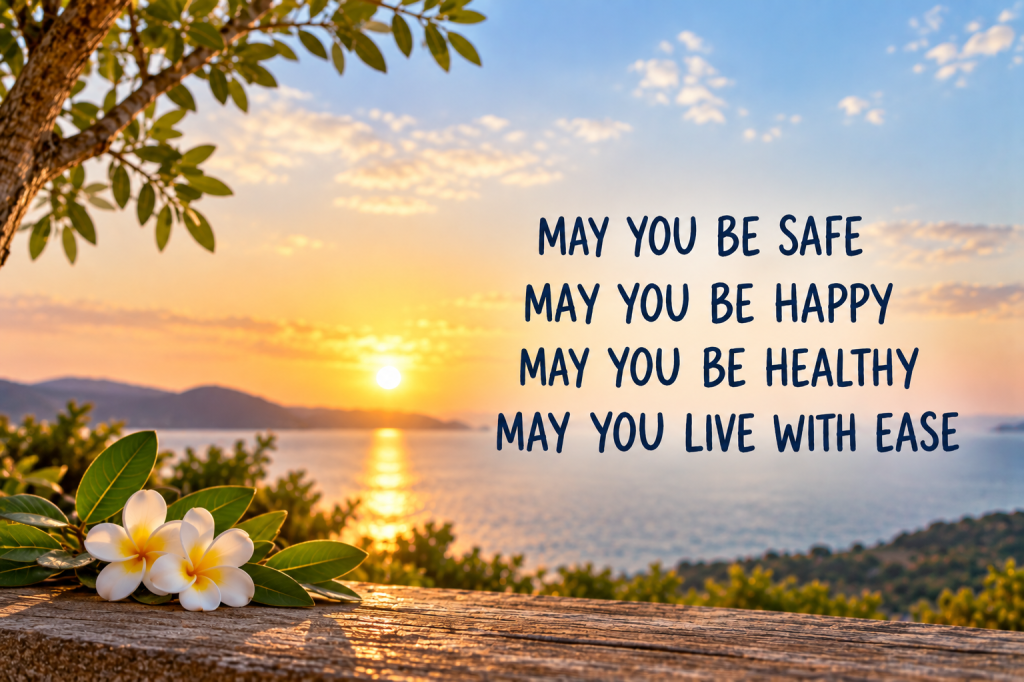
The four classic phrases used in Metta meditation are safe, happy, healthy, and at ease. When I read this, I recalled a conversation Sandy and I had at the dinner party. She was explaining a simple meditation she used to help her find peace in her life and to nourish her soul. She was introducing me to Metta meditation, but I don’t recall if she identified it as such at that time.
Metta is not sentimentality, and it’s not affection. It’s not about turning someone we don’t like into someone we do like. Metta is simply an attitude of benevolence or good will toward all beings. Can you imagine what our world might be like if we could permeate the world with good will toward all?
After centering ourselves and focusing on our breathing, we can begin our meditation by thinking of one person. It may be someone with whom we have an excellent relationship, or it could be someone with whom we are at odds. Focusing on this person, we have the opportunity to say these simple phrases:
May you be safe.
May you be happy.
May you be healthy.
May you live with ease.Repeating these words, with a specific person in mind, can be a powerful exercise. After doing this with a few people specifically in mind, we can say these words again while focusing on ourselves:
May I be safe.
May I be happy.
May I be healthy.
May I live with ease.So simple, and yet so powerful. I am tremendously grateful to Sandy for sharing this practice with me. Now it’s up to me to have the self-discipline and determination to do this every day.
-
Subscribe
Subscribed
Have a WordPress.com account? Log in now.

