-

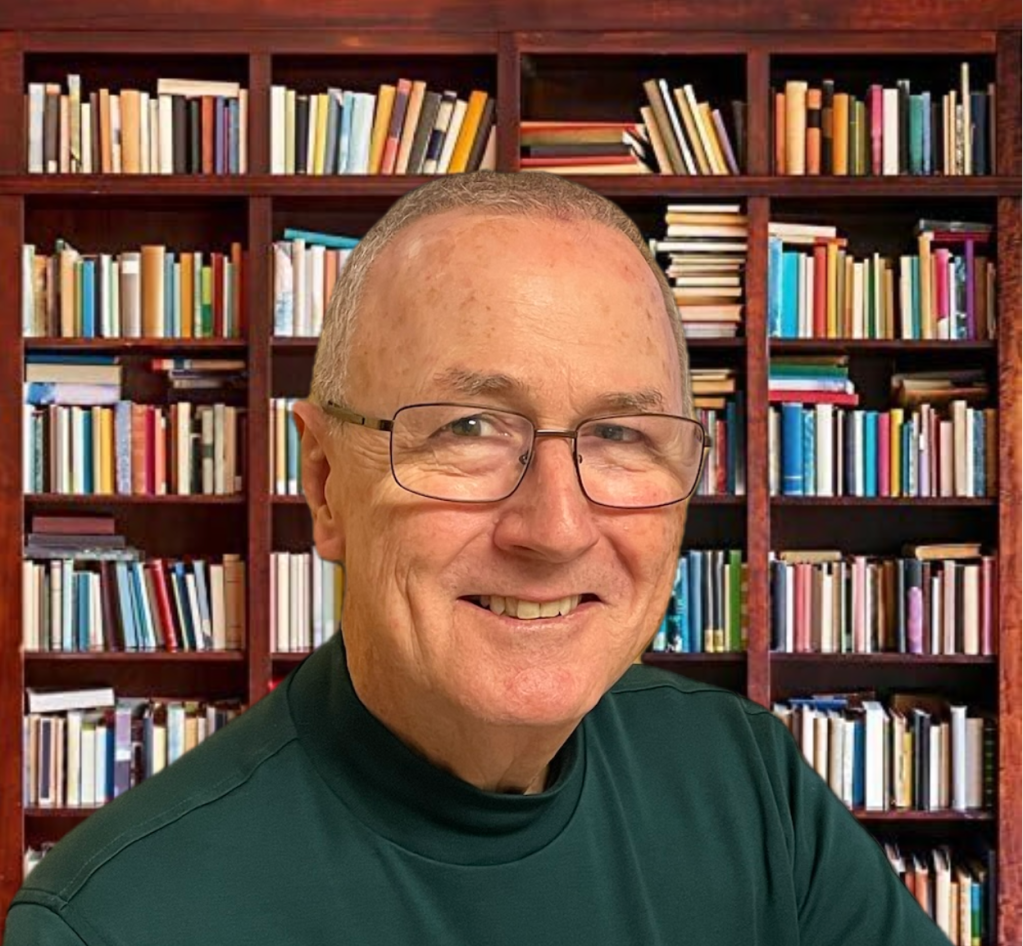
My name is Kevin Carroll. I was born and raised in San Francisco, California, where I attended Saint Ignatius College Preparatory. I am a graduate of both Santa Clara University and the University of San Francisco. Following a 40-year career in teaching and pastoral ministry, I launched a new career as a writer and speaker.
I live in San José, California. My wife, Kathy, and I have three adult sons and five precious grandchildren. I have much for which to be grateful.
I can be reached via email at kmc43sjc@gmail.com
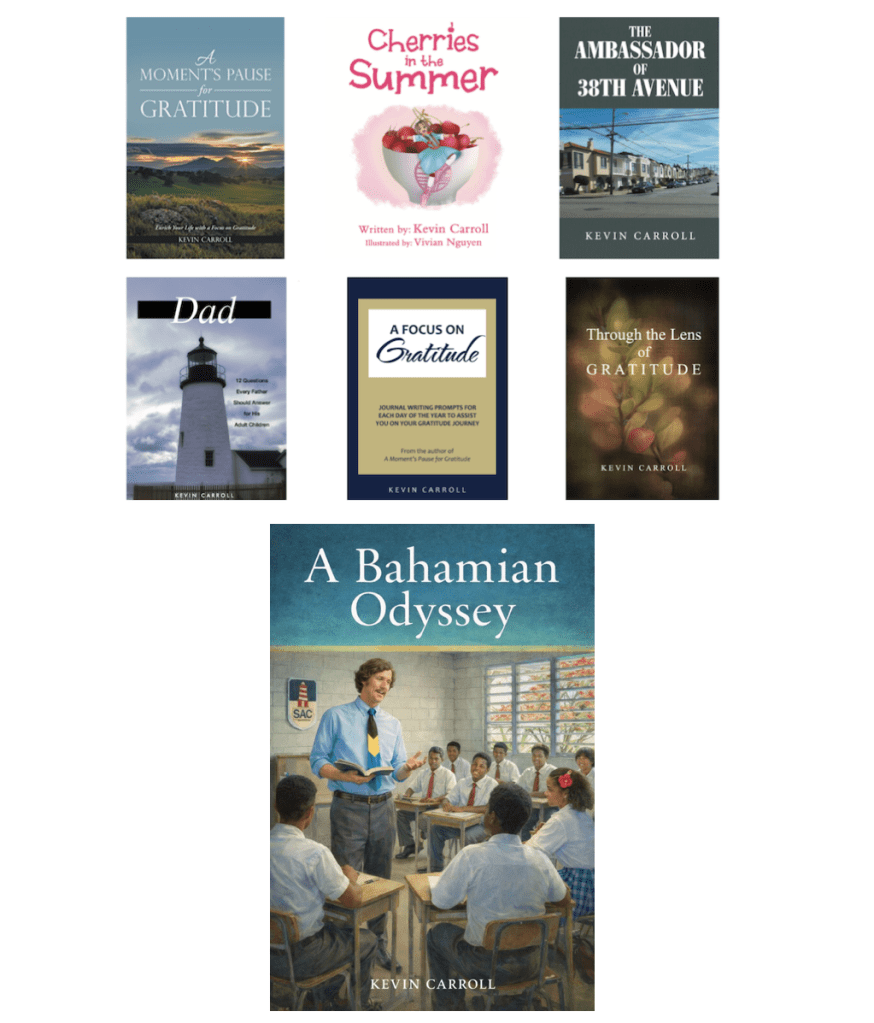
My books are available for purchase online from Amazon. I also have copies of some of these titles at my home for those who would like to buy them directly from me.
A Moment’s Pause for Gratitude (2017)
Cherries in the Summer (2021)
The Ambassador of 38th Avenue (2022)
Dad: 12 Questions… (2023)
A Focus on Gratitude (2024)
Through the Lens of Gratitude (2024)
A Bahamian Odyssey (2026)
-

- October 2026
- September 2026
- August 2026
- July 2026
- June 2026
- May 2026
- April 2026
- March 2026
- February 2026
- January 2026
- December 2025
- November 2025
- October 2025
- September 2025
- August 2025
- July 2025
- June 2025
- May 2025
- April 2025
- March 2025
- February 2025
- January 2025
- December 2024
- November 2024
- October 2024
- September 2024
- August 2024
- July 2024
- June 2024
- May 2024
- April 2024
- March 2024
- February 2024
- January 2024
- December 2023
- November 2023
- October 2023
- September 2023
- August 2023
- July 2023
- June 2023
- May 2023
- April 2023
- March 2023
- February 2023
- January 2023
- December 2022
- November 2022
-
Pure Love
“You do not really
understand something
unless you can explain it
to your grandmother.”
Albert EinsteinBritish scholar Richard Garnett reminded us of a basic truism in life: “Love is the greatest gift one generation can leave to another.” My wife, Kathy, who is the mother of our three sons and grandmother to five beautiful grandchildren, understands this statement well. Since May 1986, Kathy has gifted our three sons with unconditional love. Beginning in October 2014, she has blessed our grandkids, now five of them, with the same level of love and affection.
Kathy and I are by no means old. We are, however, getting older. We are constantly reminded of this fact by aching muscles, hearing challenges, occasional forgetfulness, and the inability to do many of the physical activities we once enjoyed with ease. While some complain about getting older, Kathy and I recognize what Mary H. Waldrip, a journalist from Georgia, pointed out when she wrote, “Grandchildren are God’s way of compensating us for growing old.”
Kathy and I are both retired from our professional careers. Retirement provides us with the gift of time — time to do whatever we choose to do. Some retired folks join book clubs or service organizations. Others play golf or travel the world. Author J. R. R. Tolkien addressed this issue with a statement which is both obvious and challenging. He wrote, “All we have to decide is what to do with the time that is given us.”
Since long before her retirement, Kathy has known exactly what she wanted to do with her time during her retirement years, and she’s been doing it for almost eleven years now. In the years before the grandkids started preschool, Kathy has cared for them in our home while their parents worked as professional educators. What a blessing this has been for my two older sons and their wives. What a blessing this has been for our five grandchildren. What a blessing this has been for Kathy! More so than at any point in her professional career, Kathy now experiences a sense of purpose for what she’s doing, as well as a tremendous love for this ministry to which she has been called. She adores our five grandchildren, and they adore their “Mama.”
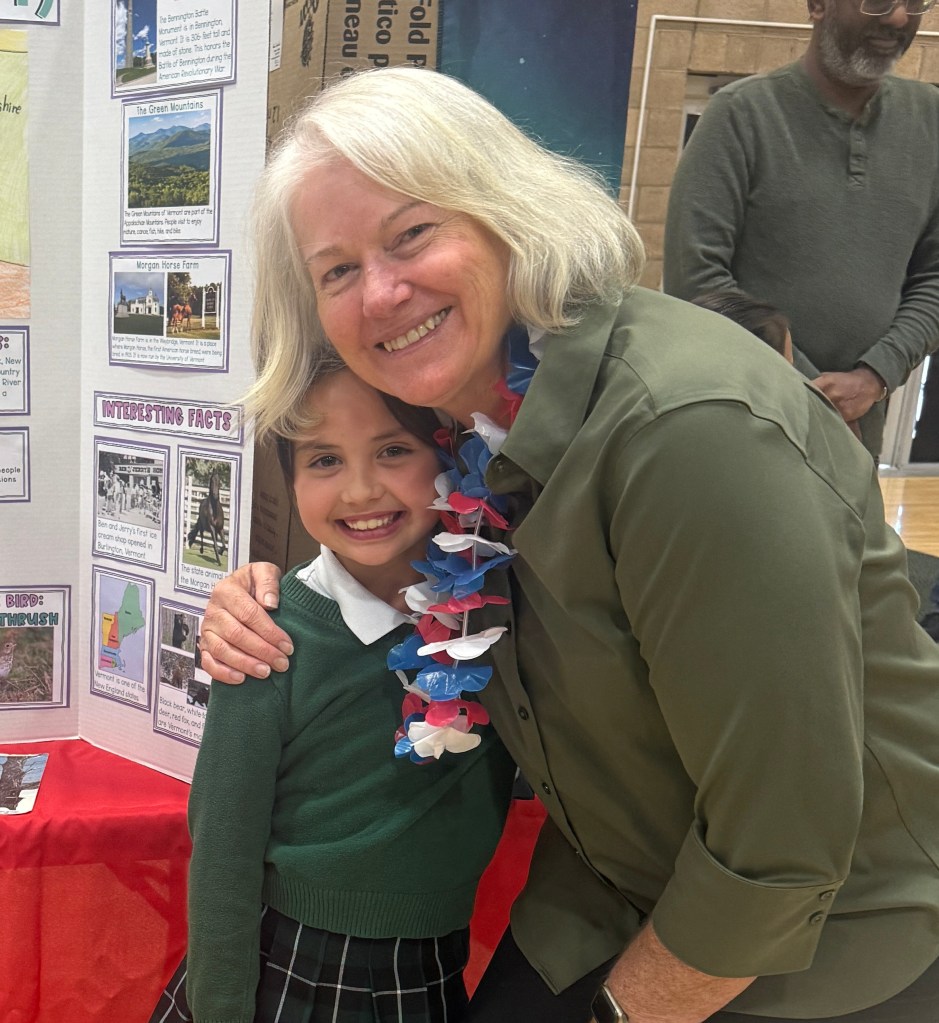
Of course, just as Kathy made a concerted effort to attend every football, soccer, basketball, and baseball game in which our three sons competed in their younger days, she also does her best to get to games and activities in which the grandkids are involved. Last week, Kathy attended a “States” presentations by the second grade students at Emily’s school. Emily chose to do her report on the State of Vermont. (Her Dad admitted that when he had done his state report in fourth grade, he chose Rhode Island, believing that such a small state would require less work!) The photo above leaves no question about how much Emily appreciated Mama’s presence at the event.
Being a grandparent is one of the greatest joys in Kathy’s life — and in mine. Author Regina Brett hopes the younger generation appreciates the gift of their grandparents. She wrote these words of encouragement to them: “If you’re lucky enough to still have grandparents, cherish them and celebrate them while you can.”
-
A Rare Sighting
“It is an odd thing,
but everyone who
disappears is said
to be seen in
San Francisco.”
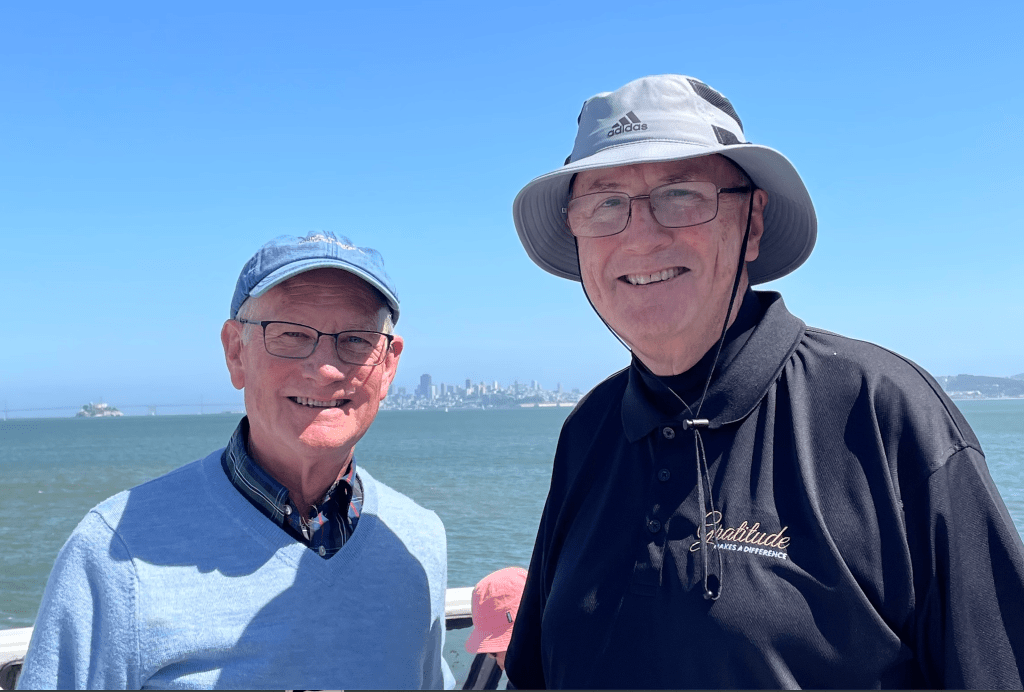
Oscar WildeOkay, so it’s not exactly that he disappeared, but my good friend, and former college roommate, Pierce Murphy was seen in The City this past Friday. This I know for sure. We took CalTrain together from Santa Clara to 4th & Townsend in San Francisco to begin a delightful day in the City by the Bay.
I met Pierce in September 1976. We were both undergraduate students at Santa Clara University and both employed to teach part-time at Bellarmine College Prep in San José. Although we had not yet completed our undergrad degrees, we were both 22 years old. No one seemed to mind that we lacked the proper credentials for teaching as long as we did our job and did it well.
Since those years, Pierce has lived in Santa Barbara, Spokane (WA), Seattle (WA), and Boise (ID), while spending time in Costa Rica and Belize along the way. After retiring from a career as an ombudsman for the police departments in both Seattle and Boise, Pierce and his wife moved to Morgantown, West Virginia to be near some of his grandchildren. I have had few opportunities through the years to get together with him. This week, Pierce was in town to spend time with family (he’s originally from Menlo Park) and friends in the Bay Area.
As I mentioned, we caught an early CalTrain to The City, then hopped on the #30 Stockton bus for the quick ride over to North Beach. There we enjoyed breakfast at the legendary Caffé Trieste, a quintessential San Francisco coffee shop. From there, we walked to Ghirardelli Square, Fisherman’s Wharf, and along the Embarcadero to the Ferry Building. Pierce suggested that we take the ferry over to Sausalito for lunch. It was a good call. While the weather in The City was nice, Sausalito was enjoying even warmer temperatures throughout the day. We ate lunch at the Sausalito Bakery & Café before wandering the streets of the downtown area. We then caught the ferry boat back to The City.
Once back in San Francisco, we continued along the Embarcadero, past Oracle Park, and jumped on CalTrain for the ride back to Santa Clara.
It’s no secret that San Francisco is…, well,… unique. Comedian and actor Robin Williams once said, “I can walk down the streets of San Francisco and here, I’m normal.” Yes, The City is filled with a variety of characters, but that’s part of the charm of visiting there. In recent years, the media has portrayed San Francisco as filthy, dangerous, and filled with unhoused people and drug users. While this might be true of a few small neighborhoods, in general the City of Saint Francis is still one of the most beautiful cities in the world, which is why it continues to be a desired destination for global travelers.
The well-known news journalist, Walter Cronkite, once said, “Leaving San Francisco is like saying goodbye to an old sweetheart. You want to linger as long as possible.” This is still true.
I am grateful to have had the opportunity to visit San Francisco once again, but especially since I was able to do so with my friend, Pierce. I have been blessed to know many truly good people in my lifetime. Pierce is, without a doubt, one of those people. To have maintained a friendship with him for almost fifty years has been a true gift.
-
Guy Talk

“The royal road to a
man’s heart is to talk
to him about the things
he treasures most.”
Dale CarnegieIt’s no secret that women and men communicate in different ways and for different reasons. Dr. Deborah Tannen, in her book You Just Don’t Understand: Women and Men in Conversation, explains that while women attempt to establish connection through their conversations, men often seek to establish status in the relationship. Women often attempt to seek common ground in an effort to even the playing field by saying something like, “Oh, I had a similar experience once.”
Men, on the other hand, often try to one-up the person with whom they are speaking. “Oh, really? You think that’s bad? Ha! Let me tell you what happened to me…”
I am not adept in how women communicate, nor do I have any particular expertise in the field of male communication. I do, however, have more than seventy years of experience communicating with men and women as a male in this often complicated world. Through those years, especially in the past forty years, I’ve learned a few things about communicating with others, particularly men, which have served me well.
First and foremost, life is a journey, not a competition. To think that I might somehow be better than someone else because of my accomplishments in life, my level of education, or due to a particular talent with which I was blessed, is ludicrous. In the same way, it would be foolish of me to judge myself harshly because I have not achieved the level of professional success as someone else. When we do these things, we are sabotaging our relationships with other men.
It is also healthy to recognize that not everyone has the same interests or level of knowledge in a particular area. For example, one man might be extremely well-informed regarding the ins and outs of the political scene in our country, while another may pay little attention to such things. Guys I know are gifted in the area of computers or auto maintenance, or, perhaps, they are proficient doing handyman tasks around the house. I’m not. When I need a repair done in my home or car, I consult a professional and pay to have the work done correctly. I know my strengths, my weaknesses, and my interests.
Some men have an insatiable need to be recognized as the expert in everything, from good wines or fine art to the current standings and statistics of every team in Major League Baseball’s National League West. Others of us, while able to enjoy a nice glass of wine, know only that there are two types of wine — red and white. In the same way, I can enjoy watching an occasional San Francisco Giants baseball game without needing to know their record, their standing in the division, or even the names of all the players on the field.
One thing of which I am certain about communication among men is summed up in the words of Dale Carnegie quoted above. If you want to enjoy a valuable, meaningful conversation with a guy, ask him about the things he treasures most. Invite him to share about his family, his past, his hopes and dreams, his most memorable life experiences, his most significant losses in life, or his motivation for getting out of bed each morning. You could even ask him what he fears most in life.
If the things he treasures most are good wines, art museums, major league baseball, or fishing, go ahead and ask about such things, even though they might not be high on your list of interests. By doing so, the doors to productive conversation open and, hopefully, provide opportunities to discuss some of the things that you treasure, as well.
Conversations are a bit like the game of tennis. If the only stroke you have is a forehand, you’re going to be continually frustrated when the ball is hit to your backhand. There is no need to perfect either stroke to play the game, but it’s important to be proficient with both.
-
To the Beach
“The waves of the sea
help me get back to me.”
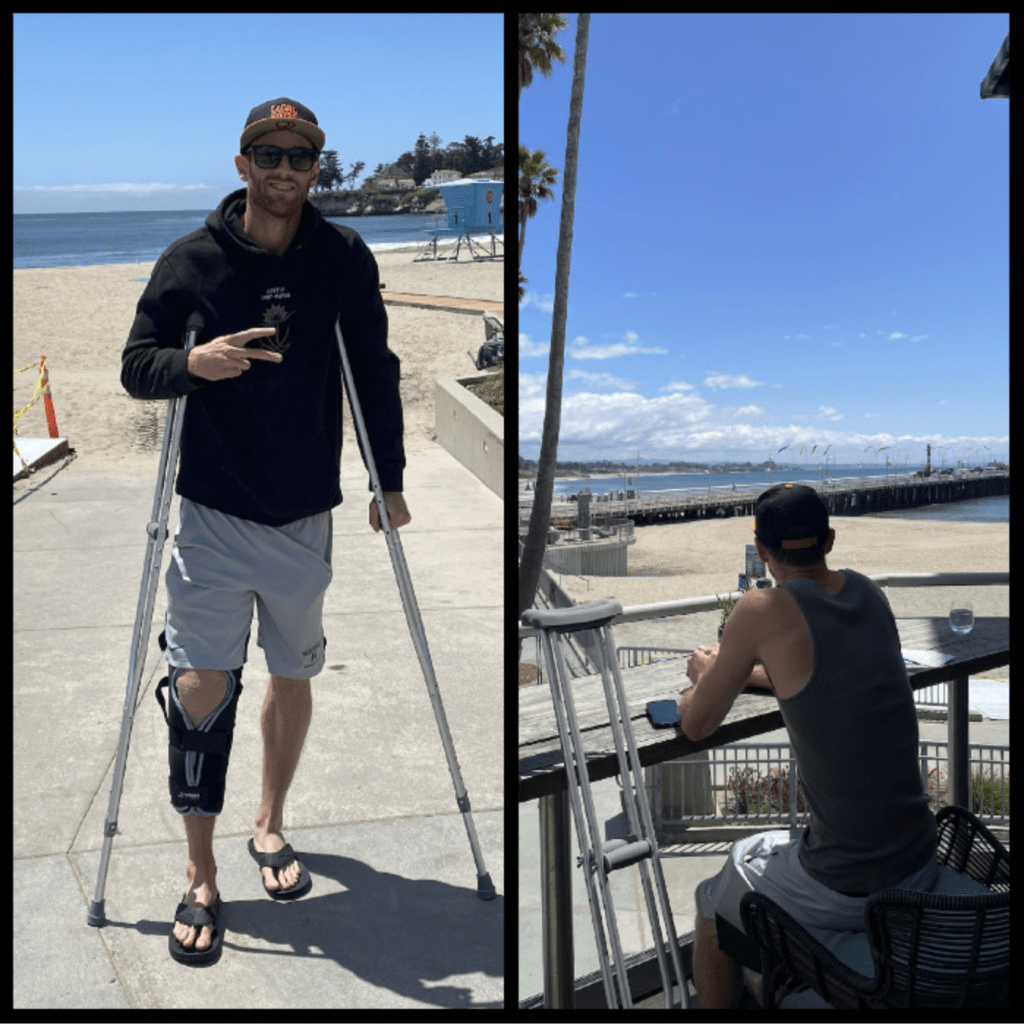
Jill DavisStuff happens. We all know this. Things we didn’t expect to be dealing with suddenly change the course of our lives, leaving us with no choice but to adjust. And so, we do.
Today, Brendan and I took a drive over the hill to Santa Cruz. It was our first “field trip” — the first of many — since his surgery last Tuesday. He may be required to immobilize his knee for a while, but that doesn’t mean he can’t get out and enjoy California life. Santa Cruz has been one of Brendan’s go-to places for a long time. It’s a destination he has visited on a regular basis to relax, to think, and to nourish his soul. A simple leg injury or, as in this case, a serious surgery, isn’t going to prevent him from getting there.
It’s unfortunate that Brendan sustained this injury just six weeks after launching his new business, True Form Basketball. After devoting several weeks to getting himself back into top physical condition, he was just getting started meeting with clients to help them improve their game. Then… snap! Just like that, the patellar tendon in his right knee ruptured and Brendan found himself in the back of an ambulance en route to Regional Medical Center in San José for surgery. Some might perceive this situation as a brick wall. Brendan sees it in a different way.
Randy Pausch, the Carnegie Mellon University professor who is well-known for his Last Lecture prior to losing his battle with cancer, was confronted with a serious crisis in his life. He spoke of this situation in his lecture, saying, “The brick walls are not there to keep us out. The brick walls are there to give us a chance to show how badly we want something.”
Brendan’s situation might also be considered a crisis. For at least the next six months, his ability to provide instruction to basketball players will be severely limited. Player development training is now his business — his livelihood. Fortunately, Brendan knows all too well that the word “crisis” in Chinese requires two symbols: 危机. Together they mean “crisis” as we understand it in English. It’s interesting to note that when separated, these two symbols have their own unique meanings. 危 means “danger,” which shouldn’t surprise anyone. The other symbol, 机, means “opportunity.” This can apply to any crisis situation.
Rather than sitting back and feeling sorry for himself, Brendan has made the decision to maintain a positive attitude, looking forward to the future rather than resenting what happened to him. While the danger of his situation is obvious, he has chosen to focus on the opportunities this state of affairs offers him to actively promote his business, to further develop lesson plans for practice sessions, and to make professional contacts here in the South Bay who might be able to refer potential clients to him in 2026.
Gregory S. Williams, author of the book Petulant Shadows, wrote, “On the other side of the storm is the strength that comes from having navigated through it. Raise your sail and begin.”
Brendan is on his way!
-
Serving Others

“Men and Women
for others.”
Pedro Arrupe, S.J.After eight years at Saint Gabriel Elementary School in San Francisco, I was blessed with the opportunity to attend Saint Ignatius College Preparatory, an all-boys Jesuit high school in San Francisco. I completed my undergraduate studies at Santa Clara University and earned my Master’s degree at the University of San Francisco. Traditionally, Jesuit schools had been all-male. Santa Clara went coed in 1961, followed by USF in 1964. SI made the decision to accept girls in 1989.
During my four years at Saint Ignatius, I never heard the phrase “Men for Others.” I graduated in 1972, one year before the phrase was introduced by Fr. Pedro Arrupe, S.J., Superior General of the Society of Jesus (Jesuits), in an address to Jesuit high school alumni in Valencia, Spain. At that time, most Jesuit high school graduates were, in fact, men. In the years since then, the phrase has been adapted to recognize women educated in the Jesuit tradition: “Men and Women for Others.”
Fr. Arrupe’s message, now embraced by Jesuit educational institutions throughout the world, challenges us to make concrete actions of love and service a priority in our lives. This is consistent with Ignatius’ fundamental belief that we are all called to share in God’s work of healing in the world. Ignatius taught that we are most human, most fulfilled, when our lives are characterized by love, service, and compassion.
Nelson Mandela, the first president of South Africa, echoed Ignatius’ message when he said, “What counts in life is not the mere fact that we have lived. It is what difference we have made to the lives of others that will determine the significance of the life we lead.”
Sadly, all too many people link the significance of their life with their job title, salary, the type of car they drive, professional honors bestowed upon them, the size and location of their home, and other such trivial factors. While these things may indicate, to some, the success one has achieved in life, none of these things determine the significance of their lives. Far more important are the ways in which we have loved, served, and showed compassion to others. These will determine the true significance of our lives.
It’s important to recognize that such actions of love and service do not have to be done on a large scale. Some people, like Mandela and Mother Teresa, are called to make a positive difference in the lives of whole populations of people. Others, however, may be called to make a positive difference in the life of just one person or one family.
The time has come for us to stop judging the significance of our lives by the accumulation of worldly possessions. Loving, serving, and showing compassion to others does not require a great deal of material wealth. It is through actions such as these that we truly become “Men and Women for Others.”
-
Mother’s Day
“When you look into
your mother’s eyes,
you know that is the
purest love you can
find on this earth.”
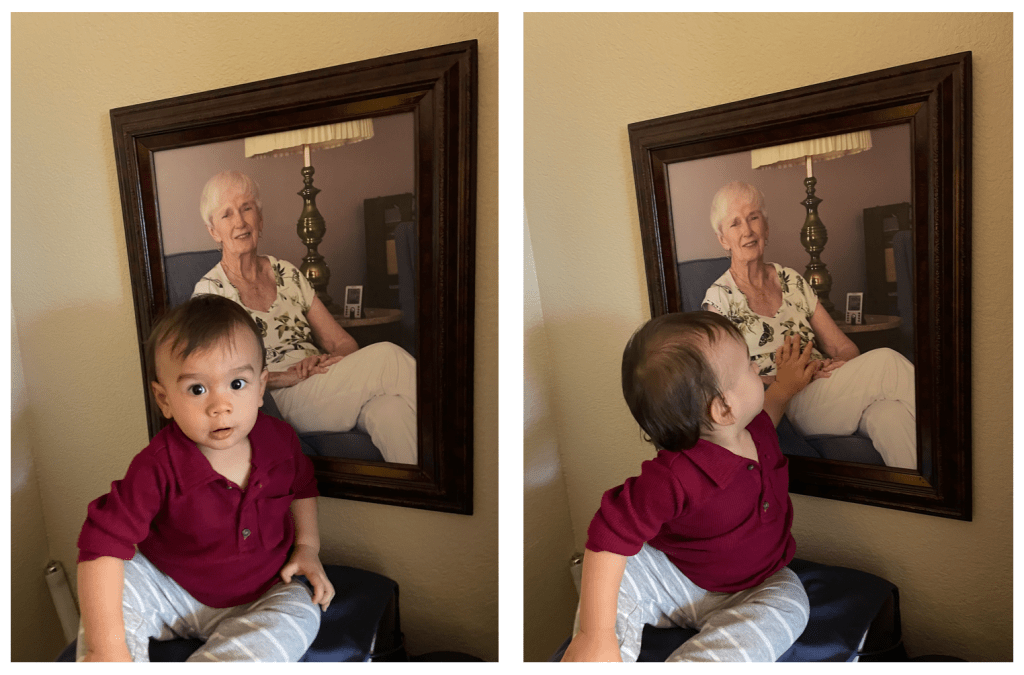
Mitch AlbomMom passed away in August 2022. At the time of her passing, Kathy and I had four grandchildren — Liam, Emily, Penelope, and Scarlett. Each of them had met their great-grandmother, and Mom had the opportunity to hold each of them in her arms. Henry, however, wasn’t born until January 2024. Fortunately, even at this early age, he is beginning to understand that there is one special person in his life who he never met.
I took a photo of Mom more than ten years ago, when she was still living on 38th Avenue in The City. When I saw the image, I knew it was special. I knew it was the photo I wanted to use when she passed away. At the time, Mom was in excellent health and still had more than a decade of living ahead of her. When she died in 2022, I shared the photo with my siblings. We all agreed that it would be appropriate for her memorial services. The photo now hangs on the wall in my home office.
My son, Steve, and his family live just two doors down from us. Kathy has provided preschool day care for all five of our grandkids. With Penny and Scarlett now in preschool, only Henry spends his days with us. Quite often, when I’m home working in my office, Henry will come in for a visit. He likes to say hello to my miniature ceramic Shih-Tzu, which sits on my desk. Then he wants to say hello to the ceramic panda bear perched on the top shelf of one of my bookcases. After that, he turns his attention to the colorful ceramic sea turtle that resides on a different bookcase shelf. And finally, he turns his head, looks at the photo of Mom, and points to her. I don’t think he quite understands who she is and why her photo is in my office, but he definitely seems to comprehend that she is someone special.
In the photo sequence above, taken several months ago, I sat Henry on top of the printer so that I could take a picture of him with Mom’s photo in the background. Then, without being prompted to do so, he turned and placed his hand on her hand. I am grateful to have caught this moment with my camera. He definitely knows that she holds a special place in my heart. With each passing day, I get a sense that Mom holds a special place in Henry’s heart, as well.
Most people I know think their mother was the best Mom ever. I understand this. This is how it should be. Without minimizing the importance of any other mothers, I can say with absolute confidence that my mother was the best Mom… for me.
When I think about Mom, words that come to mind include such adjectives as kind, loving, compassionate, caring, forgiving, nurturing, faith-filled, knowledgeable, considerate, thoughtful, assertive, gracious, devoted, generous, perceptive, grateful, and incredibly wise. In my early years, she was just “Mom.” It was only as I gained valuable life experience that I realized what an incredible treasure she was in my life.
Not a day goes by that I don’t think about Mom… with tremendous gratitude. As author Mitch Albom so accurately points out in the quote above, mothers provide the purest love we can ever experience on this earth. I am grateful for Mom’s love every day, but especially today as we celebrate all mothers on Mother’s Day.
• • •
NOTE: To subscribe to A Beacon of Light, click the link below and scroll down to the bottom of the page where you will see a “Subscribe” button. There is no cost to subscribe and all future blog posts will be sent to your email. https://abeaconoflight.life/home/ -
Friends

“Old friends pass away.
New friends appear.”
Dalai LamaMy friend, Kim, passed away two years ago today — on May 10th, 2023 — after a seven-year battle with cancer. Over a period of 48 years, Kim and I had corresponded by postal mail, email, social media, FaceTime, and an occasional phone call. Although she was one of my students at St. Augustine’s College in the Bahamas in the 1974-75 academic year, we were only six years apart in age. Our relationship, which began after I left Nassau in August 1975, was platonic from the very start. We enjoyed each other’s company. We trusted each other. After exchanging note cards and letters for four years, I returned to Nassau for a visit in August 1979. I saw her briefly during that visit. I returned again in August 1981, at which time I took Kim out to dinner to celebrate her 21st birthday. We dined at The Wharf Restaurant in the British Colonial Hotel, which is where my parents and I had celebrated my 21st birthday six years earlier. Neither of us considered it a “date.” We were just two good friends celebrating Kim’s special day.
Kathy and I had the opportunity to visit Kim and her husband, Simon, at their home in Nassau in August 1985. Simon and Kim visited us here in California on two separate occasions. The four of us enjoyed a good, healthy relationship.
In 2016, Kim was diagnosed with cancer. In the years that followed, the cancer slowly spread from her uterus to her bones, and then to her brain. In mid-March 2023, Kim sent me an email informing me that her doctor had told her that she had reached the end of the road. When I read the email to Kathy, she urged me to visit Kim immediately. Two days later, I was in Nassau to say goodbye to my good friend.
Since that time, the words of the Dalai Lama quoted above have proven to be prophetic. Kim passed away, yes, but in the two years since that time, I have been blessed to meet a number of new friends. None of these individuals take the place of Kim in my life, but all of them enrich my life in their own unique ways, and my relationships with all of them, like my friendship with Kim, are purely platonic.
I met Shalini in Nassau two years ago, when I visited the Bahamas to say goodbye to Kim. She and I were staying at the same hotel and we happened to meet in the lobby. She’s originally from Trinidad, though she currently lives and works in Toronto, Canada. She has been a true blessing to me in these past two years.
Warda (in photo above) is originally from Tanzania. I met her at the Westfield Valley Fair Shopping Mall in San José where she is employed. From our first conversation, I felt as though I was speaking with a long-time friend. In this past week, through text messages and a nice lunch we shared yesterday afternoon, Warda expressed her genuine concern for Brendan’s well being following his surgery, and offered assistance if we need it. I appreciate her kindness.
Last month, I had the opportunity to visit friends in Nassau once again. On that trip, I met a local merchant, a long-time resident of the Bahamas who works in one of the shops on Bay Street. When I visited the shop, I was overwhelmed with Christine’s gracious hospitality and outgoing personality. Again, I felt as though we had known each other for a long time. She’s one of those people who has a way of making others feel special.
Throughout my life, I have been blessed with a number of healthy relationships. These friendships have enriched my life and nourished my soul in countless ways. I am truly grateful for all of them.
-
It Really Does!

“The deepest craving
of human nature
is the need to
be appreciated.”
William JamesI have had the pleasure of spending a significant amount of time with my son Brendan these past few days. I was with him on Tuesday morning as he was wheeled away from his room at Regional Medical Center for the surgery to repair the severed tendon in his knee. I was there Tuesday afternoon when he returned from surgery. I was with him throughout the day on Wednesday, including his discharge from the hospital. In fact, I’ve been with Brendan though most of the past 48 hours, including a return to the emergency room yesterday to have the sutures checked and for his first physical therapy appointment. Through all this, I’ve noticed something significant.
During his 48-hour stay on the third floor of Regional Medical Center, Brendan encountered countless doctors, nurses, and specialists who checked up on him. What caught my attention was the frequency with which he expressed his sincere gratitude to each of them for the care he was receiving. He verbalized his gratitude to the emergency room staff, as well, including the security guard who graciously offered to get him a wheel chair so that he would be more comfortable while waiting to be seen by the ER staff.
Even in our conversations in the car driving to and from the hospital, Brendan expressed his sincere gratitude to me, to Kathy, to his brothers, and to the many other family members and friends who have supported him through this challenging time. This attitude of gratitude warms my heart.
It would be understandable if Brendan were to be bitter and resentful towards people while dealing with the pain and disappointment of this situation. Many in his position might turn their anger and frustration towards those around them. Brendan, however, has consistently expressed his gratitude throughout each day. Not surprisingly, he’s noticed that people respond to him with increased positivity.
Gratitude really does make a difference. It makes a difference to us and to those around us. When we are grateful, and most especially when we make the effort to express our gratitude to others, we simply feel better. Those around us feel better, too. For this reason, I am convinced that gratitude has the power to heal both the mind and the body.
Most of us take so much for granted. Then, when we lose the ability to do something we’ve always been able to do, we lament our inability to do so. Sadly, these things happen to us from time to time. It’s up to us to decide how we’re going to deal with such disappointments. I can say with absolute certainty that gratitude makes a difference — a positive difference — in our lives and the lives of those around us. It really does!
-
Doing Nothing

“Sometimes sitting
and doing nothing
is the best something
you can do.”
Karen SalmansohnWhen the week began, I was planning to be in Camarillo, California this evening, a quick stop on my way to visit my brother, Tom, in Los Angeles. No one could have predicted that Brendan would have a basketball mishap on Monday morning, resulting in a ruptured patellar tendon that would require surgery on Tuesday. Needless to say, my plans for the week changed.
I spent the day at Regional Medical Center on Tuesday, then again on Wednesday until Brendan was finally discharged around 1:00 p.m. Soon after we returned home, Brendan noticed that there was evidence of bleeding in the bandaging of his knee. As a precautionary measure, we headed back to Regional to get it checked out. The medical team there assured Brendan that post-op bleeding was normal. They redressed the wound and we were on our way.
Today we were back to Regional for Brendan’s first physical therapy appointment. The PT, seeing more evidence of bleeding, recommended that we return to the ER once again to have the knee checked out to make certain that the sutures were holding. Again, the staff there was awesome. After an observation, Brendan was assured that all is well. One of the nurses changed the bandages and sent us on our way.
Now we begin the journey of a slow recovery. I say “we” because Brendan will require assistance to do a few everyday activities, as well as for transportation to and from upcoming appointments. I am grateful to have the opportunity to provide this assistance. Since I was planning to be out of town until next Thursday, I have nothing on my calendar for the next six days. After that, I will adjust my calendar, as needed, to make certain that Brendan’s needs are met. Since his “needs” at this point are minimal, I have a bit of spare time on my hands.
The words of author Karen Salmansohn quoted above are pertinent right now. Brendan’s next scheduled appointment is on May 22nd, so for these next few days, there is nothing I need to be doing. This is a gift, because it offers the opportunity for me to do whatever I want, which, in some cases, may be nothing at all. It’s interesting to note that the Dutch have a word for this: niksen.
The pool furniture at our complex pool is out and ready for use, so I might just head out there with a cold drink, a good book, and a vivid imagination which will enable me to visualize being in Nassau, or Montego Bay, or somewhere in Maui. With the water and sun provided, I’ll have everything I need for a pleasant virtual vacation experience.
-
Resilience
“The journey of
a thousand miles
begins with one step.”
Lao TzuDr. Susan Kobasa is one of the leading researchers on the topic of resilience. Resilience is defined as “the capacity to withstand or to recover quickly from difficulties.” Kobasa identified three elements essential to being resilient:
1. Challenge: While some individuals are paralyzed by the trauma of painful events in their lives, resilient people view a difficulty as a challenge. They consider what some might perceive to be a brick wall as an opportunity for growth.
2. Commitment: People who are committed to the goals they have set for themselves, those who have a compelling reason to get out of bed in the morning, are better equipped to be resilient. These individuals tend to be committed not only to their work, but to their friendships and relationships, as well.
3. Personal Control: It’s been said that we have control over only two things in life — our attitude and our effort. People who are resilient focus on those things over which they have control, which enables them to feel more empowered and confident. Kobasa points out that those who worry about uncontrollable events can often feel powerless.
Fortunately, there are things we can do to develop a resilient mindset.
Ensuring balance in our lives enables us to cope more effectively with life’s challenges. This includes getting a sufficient amount of sleep (but not too much), eating well (but not too much), exercising regularly (but not too much), and focusing on our breathing when stressful situations arise.
Positive self-talk also enhances one’s level of resilience. It is counter-productive to beat ourselves up when we make mistakes or fail to achieve a particular goal. It’s critical that we learn from our mistakes rather than allowing them to define us.
Taking charge of our response to stressful situations, rather than simply reacting, allows us to take control and find a solution to the crisis. Remember… attitude and effort. These are the only things over which we truly have control.
Flexibility is also key to resilience. Situations arise when it becomes necessary to make changes, amend, or scrap our plans altogether and start over. Resilient individuals are able to do this and to move on with life.
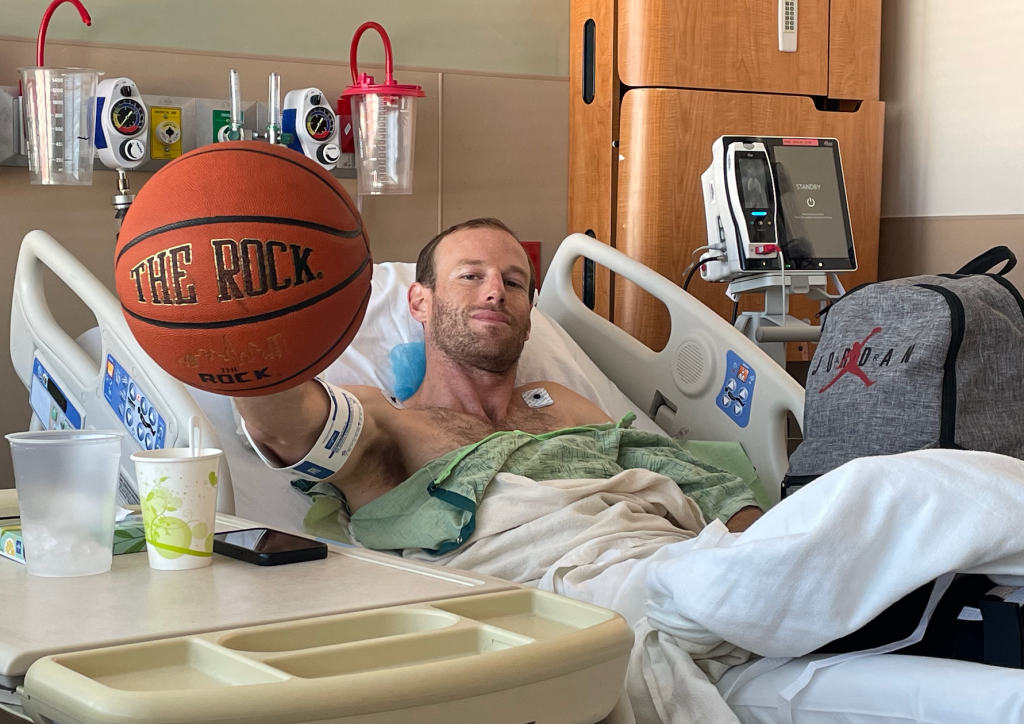
I mention all this today because I’ve been incredibly impressed with Brendan’s resilience this week. Just as his new business of personal basketball coaching was gaining momentum, he had a major setback. The surgery to repair his ruptured patellar tendon was successful yesterday, but it’s going to be a long, slow recovery process. This has not deterred Brendan’s commitment to fulfilling his dream. It requires a detour, for sure, but Brendan is focused and motivated to do whatever needs to be done to get back on track. This impresses me.
Within hours of completion of the surgery, Brendan was up and walking (with crutches) in the hallway of Regional Medical Center. He knows he has a long road ahead. He is also well aware that a journey of a thousand miles begins with a single step.
-
Subscribe
Subscribed
Have a WordPress.com account? Log in now.

