“As the Lord has
forgiven you,
so must you
also do.”
Colossians 3:13
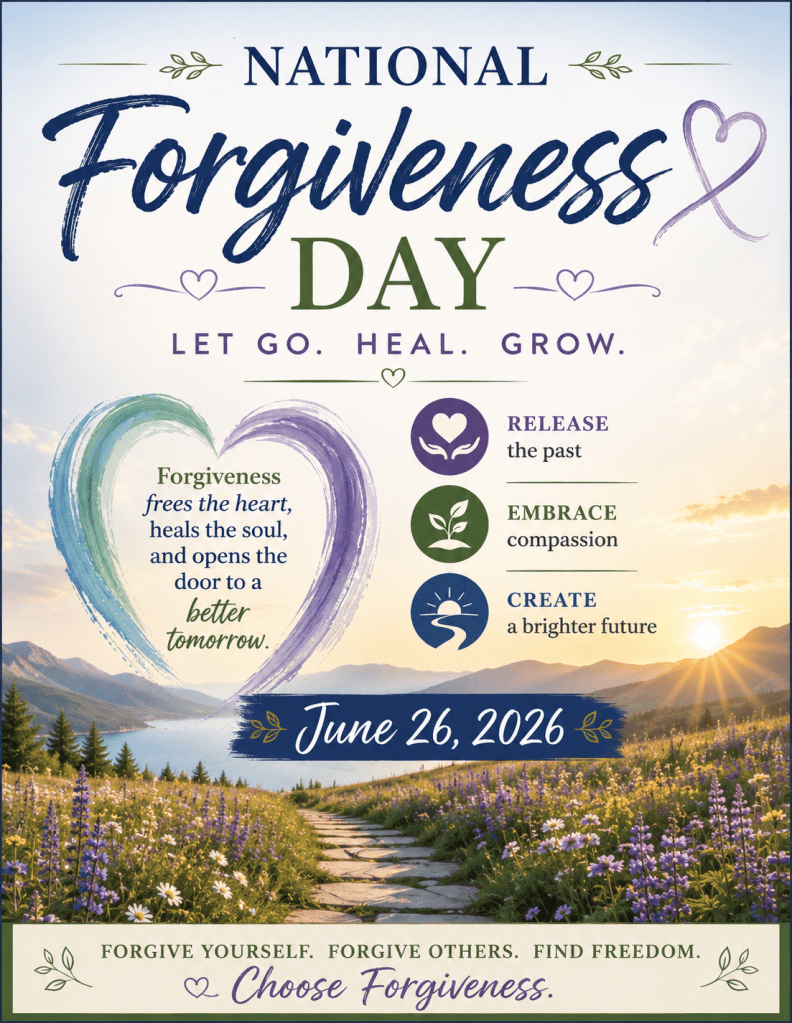
Yes, it seems like there is a “National Day” for just about everything. Today’s observance, while overlooked by many, might be one of the most significant on our calendar: National Forgiveness Day.
Anger and resentment are inevitable components of the human experience. When we are hurt by another person or situation, we often feel betrayed, mistreated, or alienated. This can result in feelings of intense anger and resentment which often stay with us for days, weeks, years, or, perhaps, throughout an entire lifetime.
At times, the thought of forgiving someone may cross our mind. It is understandable that we might dismiss such a thought, insisting that the harm done to us is simply unforgivable. While we may feel justified in holding onto our anger or resentment, doing so is detrimental to our own mental health and well-being.
The well-known quote, “Holding onto anger is like drinking poison and expecting the other person to die,” is a modern proverb with no definitive author. Forgiveness is not for the person who hurt us. It’s for us. It’s a deliberate choice to release the burdens of anger and resentment so that we are free to move forward without being chained to people or events from the past.
When we forgive others, we free ourselves from the prolonged stress of our anger. Stress can elevate our blood pressure, weaken our immune system, and put undue strain on our heart. We owe it to ourselves to forgive.
When we forgive others, we put an end to the repetitive, agonizing loop of replaying the hurt in our head. It redirects our emotional energy away from the person who hurt us and back into our own personal growth and happiness. Forgiveness also gives us the power to close a painful chapter of life on our own terms.
It’s important to note that forgiveness does not mean that we forget what happened to us. It does not mean that we condone the behavior of the person who hurt us. Forgiveness also does not require that we reconcile with the offender. It simply means that we will no longer allow events of the past to dictate how we feel and live our lives today.
Self-forgiveness is important for our mental health, as well. In a September 2020 article in Psychology Today, Dr. Abigail Brenner wrote, “When you forgive yourself, you allow resentment and hurt to be replaced by healing. You are taking an action that will course-correct your life and well-being.”
Forgiveness is not a sign of weakness. It is courageous act of self-care.


Leave a Reply