“He who knows that
enough is enough
will always have
enough.”
Lao Tzu
“You will never have enough until you are grateful for what you have.” This Greek proverb challenges a belief that is deeply embedded in modern society — the idea that what we have is never quite enough. We are constantly encouraged to want more money, more possessions, more success, more experiences, and even more recognition. Yet, the pursuit of “more” does not necessarily bring greater happiness. Often, it simply creates a greater awareness of what we don’t have.
We live in a culture of dissatisfaction. Advertising surrounds us with carefully designed messages suggesting that our lives are incomplete and that we are somehow deprived. We are shown the perfect home, the newest phone, the latest fashion, the dream vacation, and the seemingly perfect lives of others. The message is subtle, but powerful: You would be happier if you had more. As a result, it becomes easy to confuse wanting something with needing it, and having more stuff with being truly fulfilled in life.
This misconception can cause us to overlook the abundance already present in our lives. We may become so focused on what is missing that we fail to appreciate what is right in front of us: family, friendship, health, security, opportunities, memories, and ordinary moments of peace. Gratitude does not mean pretending that we have no problems or that we should stop pursuing meaningful goals. Rather, it means recognizing that our lives can have value and richness even while there are things we still desire.
Germany Kent expresses this beautifully: “Once you begin to take note of the things you are grateful for, you begin to lose sight of the things that you lack.” Gratitude changes our focus. Instead of constantly measuring our lives against an imagined version of perfection, we begin to notice what is already good in life. The more we recognize these things, the less power our feelings of inadequacy will have over us.
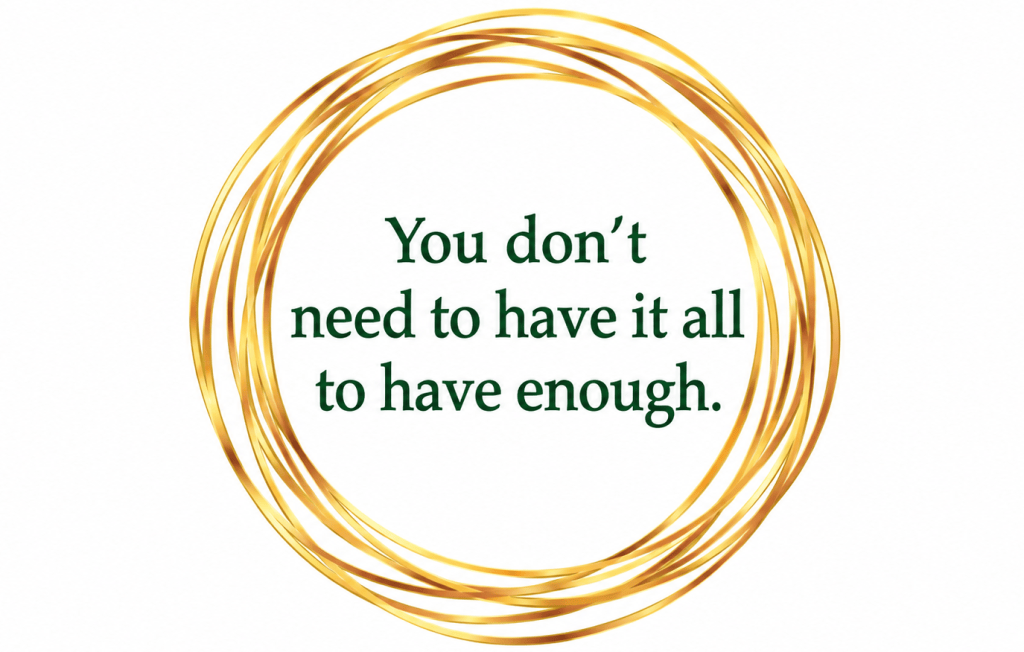
Perhaps having enough is not a matter of accumulating everything we want. Perhaps it is a way of recognizing that we can continue to grow, dream, and work toward a better future without allowing dissatisfaction to define the present. We do not have to have everything to have enough. Sometimes, enough begins when we stop counting what is missing and start appreciating what is already ours.


Leave a comment