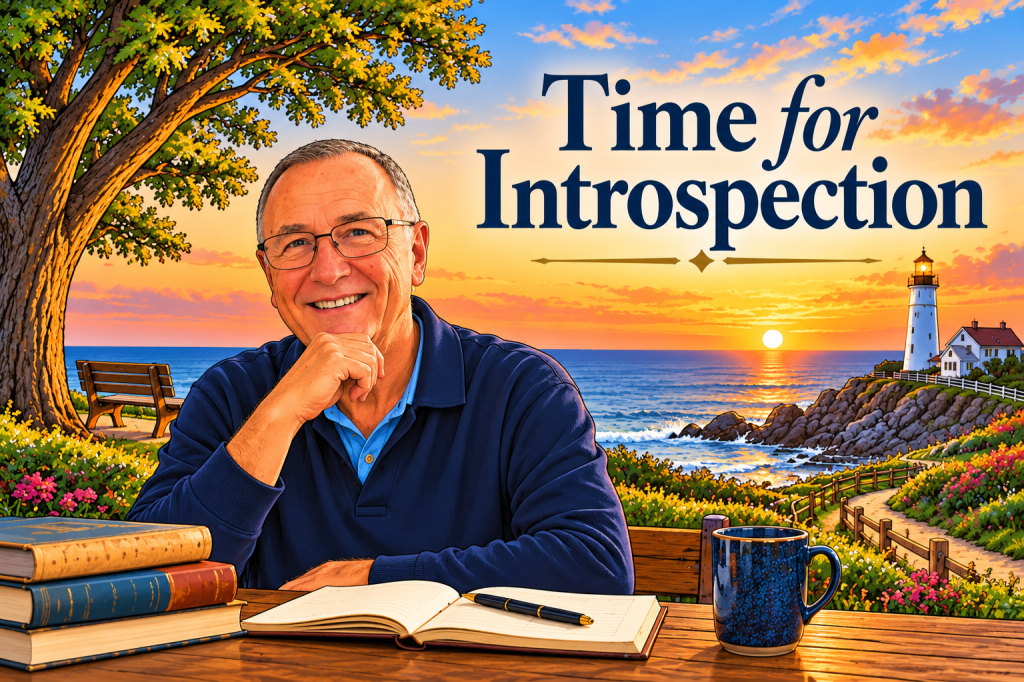
“The unexamined
life is not
worth living.”
Socrates
Introspection means “to look inside.” It is the practice of examining one’s thoughts, feelings, words, and actions, and considering how they affect our own life and the lives of those around us. For much of my adult life, I’ve focused my attention outward — teaching, coaching, mentoring, parenting, writing, and speaking. I’ve invested considerable time and energy in trying to make a positive difference in the lives of others. Now, in retirement, I’m discovering that looking inward may be a more challenging task.
For decades, I enjoyed opportunities to feel capable, effective, productive, and influential. My responsibilities provided structure, purpose, and a sense of being needed. Retirement has changed much of that. While my experience, knowledge, and desire to contribute still exist, the opportunities to exercise them have diminished significantly. I’m not always comfortable with this reality.
I still want to be useful. I want my opinions to matter, my advice to be considered, and my efforts to make a difference. I want to believe that the wisdom accumulated over seven decades has value. But introspection requires me to confront some uncomfortable questions.
Have I allowed what I do to define who I am? Do I confuse being needed with being valued? Am I disappointed because I’ve lost some of my capabilities, or because I have fewer opportunities to demonstrate them? Perhaps most importantly, why do I continue to seek evidence that I’ve made a difference?
There’s also the matter of control. After spending much of my life making decisions, solving problems, and guiding others, accepting that I have little control over the choices and responses of those around me can be frustrating. Even those I love most must live their own lives, make their own decisions, and discover their own truths. Introspection invites me to recognize these feelings without allowing disappointment, resentment, or self-pity to determine my attitude. It challenges me to distinguish between offering wisdom and expecting others to embrace it.
Retirement, it seems, is less about surrendering my purpose than redefining it. Maybe being present matters more than being productive. I’ve come to realize that listening is sometimes more valuable than advising. And maybe the difference I make in someone’s life cannot always be measured by acknowledgment, appreciation, or affirmation.
I don’t expect a time of introspection to provide easy answers, but I hope it will help me become more comfortable with uncertainty, more accepting of my limitations, and more appreciative of the opportunities that remain.
Opportunities to make a difference haven’t necessarily disappeared. They may simply look different now. A thoughtful conversation, an encouraging word, an act of kindness, or something I’ve written might touch someone’s life in ways I’ll never know. I may never receive the affirmation I sometimes long for, but the absence of recognition is not evidence of the absence of influence.
The greatest challenge — and opportunity — of retirement just might be learning to appreciate who I am when my former responsibilities no longer define me. After all, the person I am becoming still has something to offer. There are still relationships to nurture, lessons to learn, stories to share, and reasons to be grateful.
My most productive years may be behind me, but that doesn’t diminish the possibility that my most meaningful moments are still ahead of me.


Leave a Reply