-

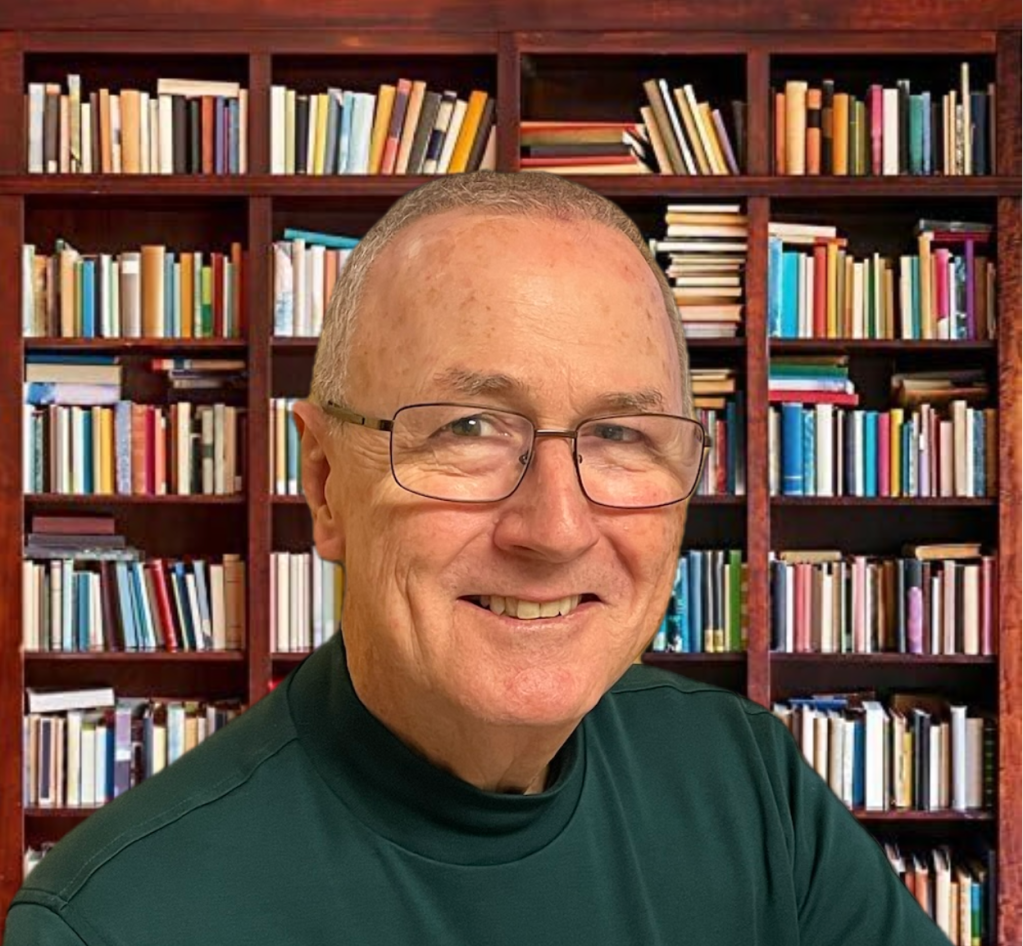
My name is Kevin Carroll. I was born and raised in San Francisco, California, where I attended Saint Ignatius College Preparatory. I am a graduate of both Santa Clara University and the University of San Francisco. Following a 40-year career in teaching and pastoral ministry, I launched a new career as a writer and speaker.
I live in San José, California. My wife, Kathy, and I have three adult sons and five precious grandchildren. I have much for which to be grateful.
I can be reached via email at kmc43sjc@gmail.com
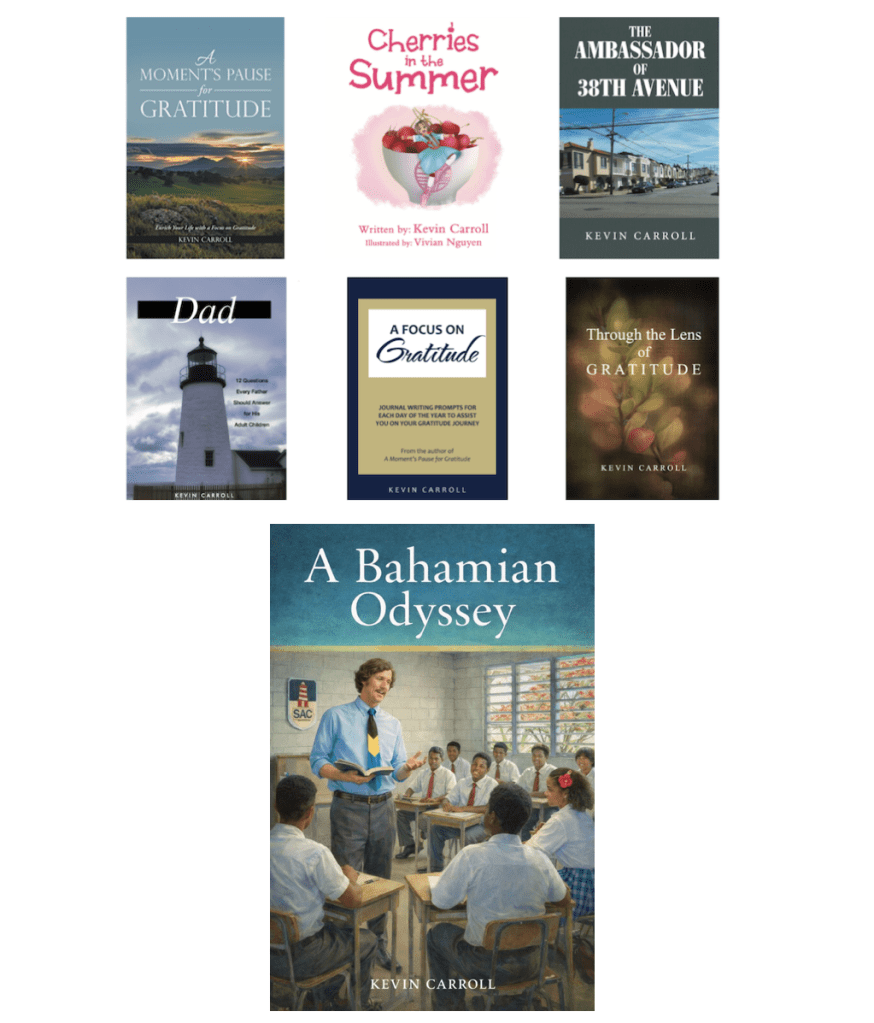
My books are available for purchase online from Amazon. I also have copies of some of these titles at my home for those who would like to buy them directly from me.
A Moment’s Pause for Gratitude (2017)
Cherries in the Summer (2021)
The Ambassador of 38th Avenue (2022)
Dad: 12 Questions… (2023)
A Focus on Gratitude (2024)
Through the Lens of Gratitude (2024)
A Bahamian Odyssey (2026)
-

- March 2026
- February 2026
- January 2026
- December 2025
- November 2025
- October 2025
- September 2025
- August 2025
- July 2025
- June 2025
- May 2025
- April 2025
- March 2025
- February 2025
- January 2025
- December 2024
- November 2024
- October 2024
- September 2024
- August 2024
- July 2024
- June 2024
- May 2024
- April 2024
- March 2024
- February 2024
- January 2024
- December 2023
- November 2023
- October 2023
- September 2023
- August 2023
- July 2023
- June 2023
- May 2023
- April 2023
- March 2023
- February 2023
- January 2023
- December 2022
- November 2022
-
“Good afta-noon!”

“Good manners are
just a way of showing
other people that we
have respect for them.”
Bill KellyWhen I stopped by the Saint Augustine’s campus on Tuesday afternoon, I found myself sitting in the reception area of the main office for about fifteen minutes waiting for the last period of the day to end. I wanted to visit with two teachers who were in class at the time. As I sat patiently waiting for 2:45 to arrive, no less than a dozen SAC students came into the office for various reasons. Without exception, each one acknowledged my presence and greeted me warmly.
“Good afta-noon,” each would say confidently with their Bahamian accent.
It would have been so easy for these students to simply ignore me, an older white gentleman they did not know, sitting on a chair in the corner of the waiting area. In fact, that’s what I would have expected, but SAC students are different. Or, perhaps, it’s Bahamians that are different.
An important component of Bahamian hospitality is good manners. This is evident from the moment visitors arrive at Nassau International Airport. Taxi drivers, merchants in downtown shops, hotel workers, and an impressive percentage of Bahamians I encounter on a daily basis display basic social skills not often seen in Silicon Valley. Bahamian hospitality is real. In a country where tourism is the #1 industry, friendliness and good manners makes a significant difference to travelers visiting the islands.
Henry Clay, a politician from the 1800s, stated, “Courtesies of a small and trivial character are the ones which strike deepest in the grateful and appreciating heart.”
Over the past twenty years, I have developed what might be described as a “grateful and appreciating heart.” And yes, the friendliness of Bahamians in general, and SAC students in particular, is something I admire and appreciate.
Basic courtesy, whether toward those we know or people we’ve never met before, is a valuable life skill — and it requires very little of us to be courteous. Ralph Waldo Emerson wrote, “Life is not so short but that there is always time enough for courtesy.”
-
Integrity Personified
“Live so that when your
children think of fairness,
caring, and integrity,
they think of you.”
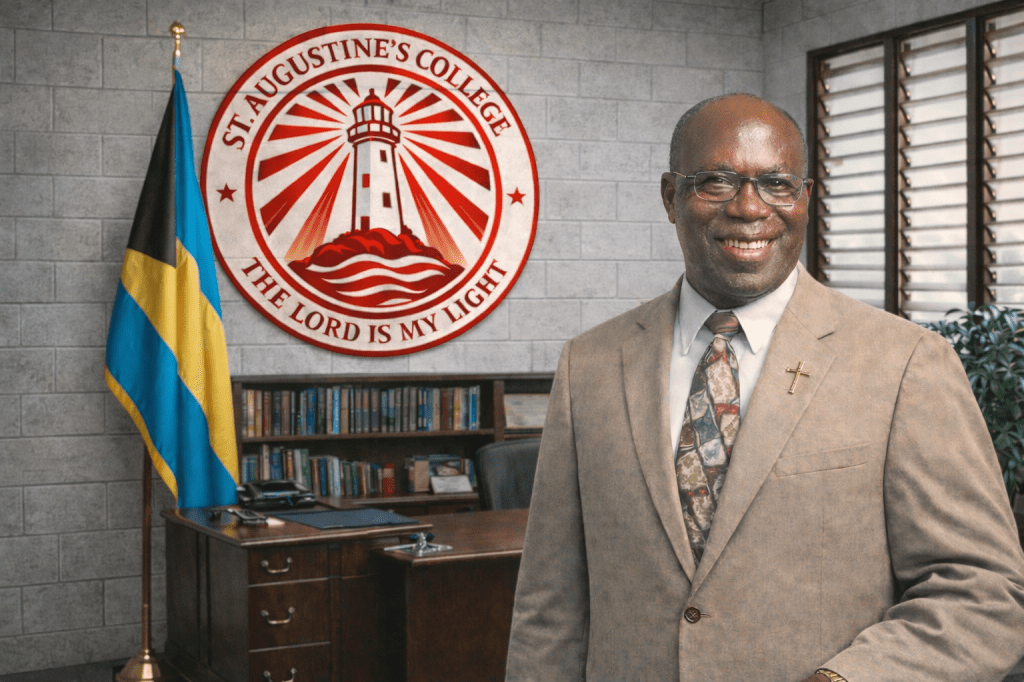
H. Jackson Brown, Jr.There’s not a whole lot more I can say about Lou Adderley than I said in my book, A Bahamian Odyssey. On the dedication page, I wrote:
“It is an honor for me to dedicate this book in memory of Mr. Leviticus “Uncle Lou” Adderley. Mr. Adderley was the headmaster of Saint Augustine’s College in Nassau, Bahamas in 1975. Better known as “Uncle Lou” to those who loved and admired him, Mr. Adderley was a true Renaissance Man. He was a scholar, athlete, man of faith, formidable leader, and loving family man. For me, he was a powerful role model of professionalism, compassion, and integrity. I feel blessed to have known him.”Mr. Adderley graduated from Saint Augustine’s College, where he was the top academic student in the school. He also happened to be the top athlete on campus. He excelled in sports in both high school and college at Saint John’s University in Collegeville, Minnesota. He graduated in 1955 with a Bachelor’s degree in Mathematics. While at Saint John’s, he was a three-time conference champion in tennis and won the conference wrestling title in 1954.
Yesterday, when I stopped by the school, I had the pleasure of giving two copies of A Bahamian Odyssey to Mr. Adderley’s daughter, Daria, who is now a physical education instructor at SAC. One copy was for Daria. The other copy was for her mother, who I remember fondly. When she and Lou would show up to school events together, they seemed like the perfect couple. It seems that, in reality, they were.
In a recent newspaper article on the legacy of Mr. Adderley, his wife, Floridell, was quoted. She said, “We were partners. We looked out for each other. We shared everything. We came together and discussed our family and our finances. He had a humble, gentle, kind, loving heart.”
I should also mention that Mr. Adderley was ordained to the ministry of Permanent Deacon for the Archdiocese of Nassau, serving at Saint Anselm Church in the Fox Hill district.
I learned so much from Mr. Adderley. Apparently, hundreds of others did, as well. He retired from his administrative post at SAC in 1991 and passed away in May 2003 at the young age of 69.
One of Deacon Adderley’s former SAC students, Philip Galanis, said this about his former teacher and administrator: “Deacon Leviticus Adderley was unquestionably a Bahamian ‘man for all seasons.’” Indeed, he was.
-
SAC Today
“There is no better
investment a nation
can make than
education.”
Steve NguyenMuch has changed at Saint Augustine’s since 1975. Most notably, the monastery has closed. No longer do monks live in the facility or work at the school. The monastery property is now owned by the Archdiocese of Nassau. From what I’ve heard, no particular plans for the facility have been adopted as of this time.
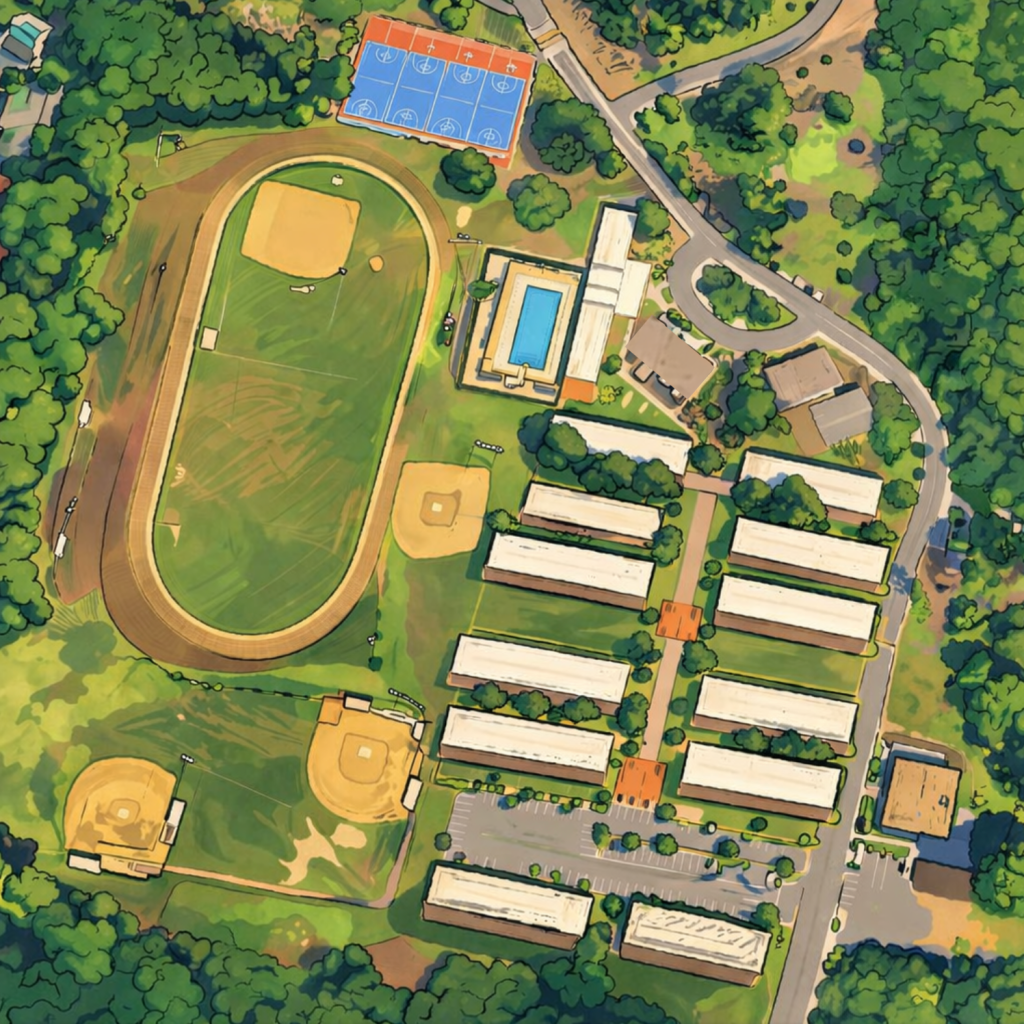
The campus at the bottom of the hill is thriving. The aerial view of the campus shows that there are currently twelve classroom buildings, two more than in 1975. A central outdoor corridor separates the two sets of six classroom wings. In 1975, walking up that corridor towards the administration building afforded a spectacular view of the monastery on the hill above. Today, due to the growth of trees over the past fifty years, the monastery is no longer visible from the campus.
At the end of the campus nearest the monastery, the main entrance to the campus features the administration building and a library/audio visual center. The book signing event for A Bahamian Odyssey will be held in the library on Sunday afternoon from 1-4.
In addition to the academic buildings, a physical education building is located between the swimming pool and the administration building. It houses locker room facilities for boys and girls, along with office and storage space for the Director of Athletics.
On that same side of the campus are the SAC athletic fields and outdoor basketball courts. The athletic facilities are not fancy, but they are quite functional. Saint Augustine’s College is well known for its outstanding athletic teams.
On the opposite side of the campus from the athletic fields is the school cafeteria. Since 1975, they have added an outdoor covered pavilion to expand the seating capacity of the facility.
While the monks sold off some of the property around the campus for residential development, there is still sufficient room for growth at this site. Plans are in the works for a state-of-the-art athletic complex to replace the current athletic facilities.
This campus, and the memories I have of the time I spent teaching at SAC, will always have a special place in my heart.
After a brief visit to SAC this afternoon, I stopped by the home of one of my former colleagues, Winston Carter, who I mention multiple times in my book. He taught at SAC for 45 years! I had not seen him since 1975. Not surprisingly, he didn’t know who I was when I showed up at his front door, but when I showed him the book and introduced myself, his face lit up and he invited me inside. We had a great visit. Meeting with him is one of the highlights of this trip.
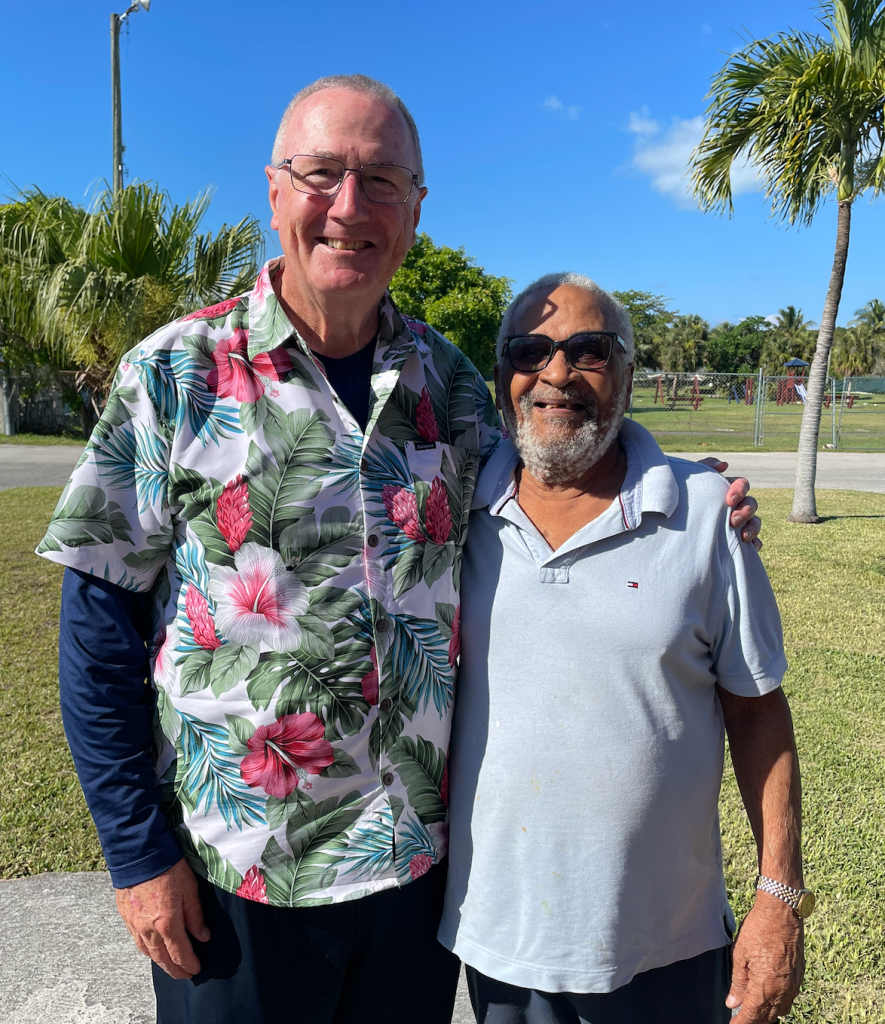
With Mr. Winston Carter -
Top of the Hill
“And so we are going
to establish a school for
the service of the Lord.”
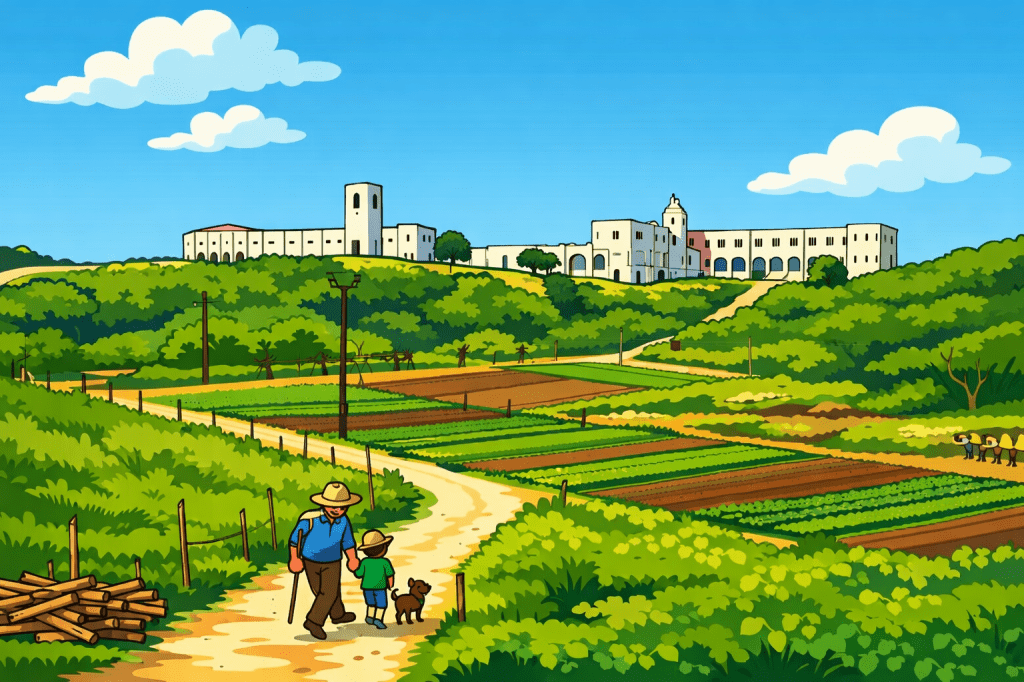
Rule of St. BenedictSaint Augustine’s College was opened in 1945. In 1947, the school moved from it’s original location on West Street to the expansive campus in Fox Hill. A new Benedictine monastery and school building had been constructed at the top of the hill. As the monks settled into their new home, some of them began farming the land at the bottom of the hill. The top photo shows the monastery on the top-right, the school on the top-left, and the farm below.
As time went on, the need for a larger campus could not be ignored. While a small portion of the farm was saved, the new Saint Augustine’s College campus was built at the bottom of the hill to the south of the monastery. More about that tomorrow.
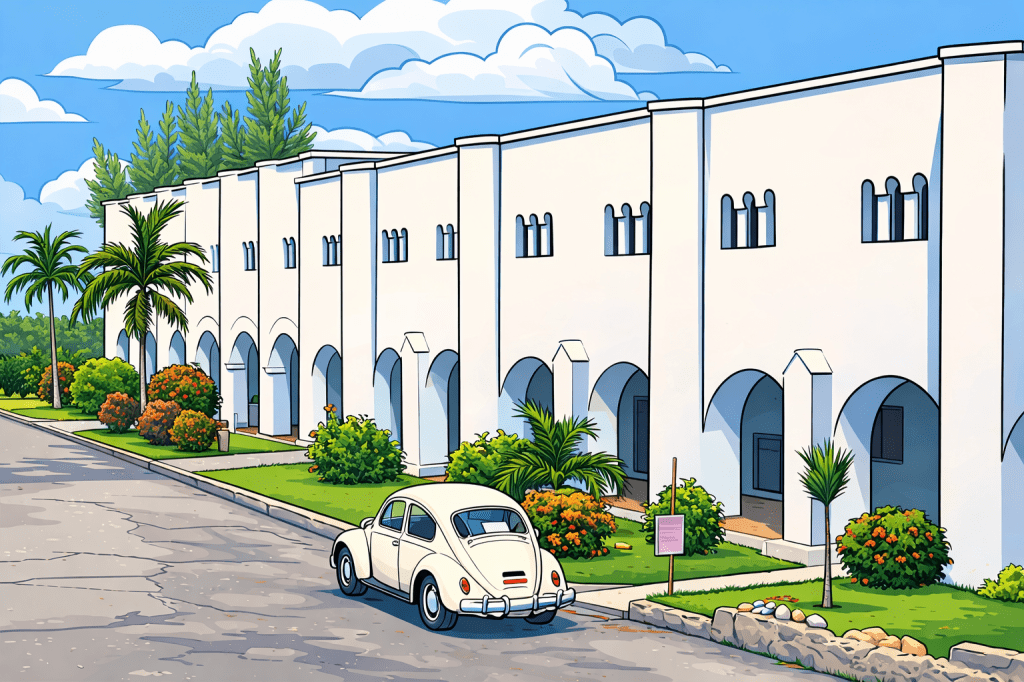
By the time Dan and I arrived in Nassau in 1974, the new campus was well-established. Some of the rooms of the original campus had been converted into guest rooms. One of those rooms was my home for the 1974-75 academic year. It was small. One might even describe it as monastic. What a surprise, right? My meals were with the monks in the monastery dining room, though, for the most part, I joined them only for dinner.
The second image above shows the original school building adjacent to the monastery. The white VW bug was the car provided for Dan and me for the duration of the school year. It’s parked in front of our rooms. It needed to be push-started most mornings, but it served us well, for the most part. Great memories.
-
Small World
“Life is beautiful
because of the
people we meet.”
Simon SinekAnother Sunday in Nassau. I attended the 11:00 a.m. Mass at Saint Francis Xavier Cathedral this morning. I’m glad I did. At the conclusion of the liturgy, a woman made an announcement thanking the volunteers who were outside the church to provide complimentary snacks for churchgoers. She thanked them by name, reading off a list of about a dozen women. One name caught my attention.
Myra Mitchell is one of the students I taught at Saint Augustine’s College fifty-one years ago. When I heard the name mentioned, I wondered if it might be the same Myra. When I exited the church, I approached the woman who had made the announcement and asked her if she would point out Myra. She led me to a table on the other side of the plaza and called her by name, telling her someone wanted to see her. Myra looked at me and her face lit up. She ran around the end of the table and gave me a long hug. We had not seen each other since June 1975.
Myra then surprised me by introducing me to eight other former students who had attended the Mass.
“Mr. Carroll, do you remember me?” another woman asked. “I’m Leonardette.”
“Ross?” I replied.
“YES!” she shouted enthusiastically. Another long, tight hug. Like Myra, I had not seen Leonardette in more than fifty years.
In my book, A Bahamian Odyssey, I mentioned Cedrick Poitier, nephew of renowned actor Sidney Poitier. This morning, I met his cousin, Bruno. I didn’t teach Bruno, but he remembered me, as he was a SAC student at that time, as well.
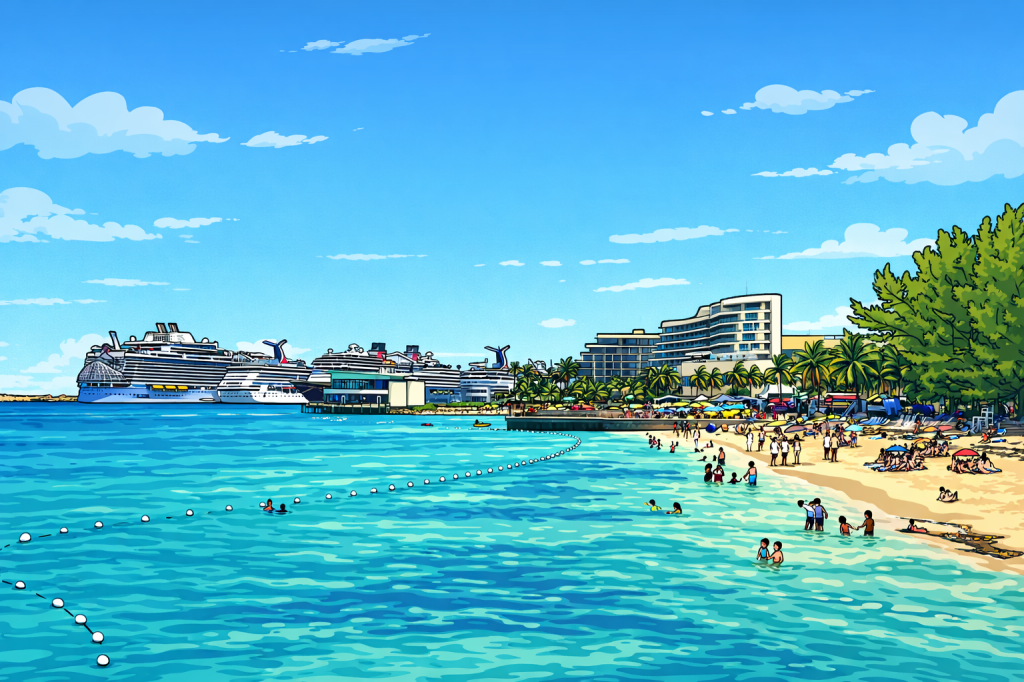
This is how my day got started. After Mass, I walked down to the British Colonial Hotel to enjoy lunch at their poolside restaurant, which offers a view of Nassau harbor. While there, I met people from a variety of places, including David, who told me he was from Kingston, Jamaica. He was a bit surprised when I asked him where he attended high school. He replied, “Campion.”
“I’ve been there!” I told him. “It’s a Jesuit school.”
David was shocked. “Yes, it is. How do you know about Campion?”
I explained that in the summer of 1971, I had visited Jamaica for six weeks with one of my Jesuit teachers from San Francisco and one of my high school classmates. On July 31, 1971, the feast of Saint Ignatius of Loyola, the founder of the Jesuit Order, we attended a celebration of the feast at the Jesuit residence at Campion College. I explained that we were in Jamaica to teach and learn contemporary music for youth liturgies. I told him that a young Jesuit priest, Father Richard Ho Lung, who had been ordained one month prior to our arrival, had written a number of liturgical songs for youth liturgies.
“I knew Father Richard!” David replied.
Yet another “small world” experience. This is why I enjoy striking up conversations with people I meet. We just never know when we’ll find ourselves sitting next to someone with whom we have a mutual acquaintance.
-
All Grown Up

7th Grade Students
in 1975“No distance of place
or lapse of time can
lessen the friendships
of those who are
thoroughly persuaded
of each other’s worth.”
Robert SoutheyYes, it’s been 51 years since I taught at Saint Augustine’s College (grades 7 through 12) in Nassau. Despite this passage of time, I feel blessed to still be in contact with many of my former students. Sadly, a number of them have passed, including three from the photo above, but most of those I taught are alive and well, ranging in age from 62 to 70. Many no longer live in Nassau. Some have moved to the family islands, while others settled in the United States or other parts of the world.
Visiting Nassau provides an opportunity for me to connect with some of these individuals. I’m hoping to see many of them at the book signing event in the school library on the 29th.
It’s humbling, and affirming, to meet up with former students and have them tell me that I made a difference in their life. American historian Henry Brooks Adams wrote, “A teacher affects eternity; he can never tell where his influence stops.” While I certainly agree with this claim, Adams’ words apply to more than just teachers. One of the great challenges of life is to acknowledge that each one of us, regardless of our career path, has the potential to influence others, for good or for bad.
One of my favorite human beings is Jimmy Carter. He may best be known as the 39th President of the United States from 1977 to 1981, but he inspired more people in his years after leaving the White House. He committed himself to volunteering with Habitat for Humanity, a nonprofit organization committed to building more prosperous and vibrant communities by making sure everyone has a safe, affordable place to call home. His commitment to the program was more than just a post-presidential photo-op.
As a skilled carpenter, Carter was a hands-on builder who, with a tool belt and hard hat, worked on-site, bringing national attention to the need for decent housing. In 2002, he was awarded the Nobel Peace Prize, in part due to his commitment to social welfare.
In a memorable statement, Carter said, “I have one life and one chance to make it count for something… My faith demands that I do whatever I can, wherever I can, whenever I can, for as long as I can, with whatever I have, to try to make a difference.”
It is encouraging to see many of my former SAC students doing just that — making a positive contribution to the community by sharing their gifts to make a positive difference in the world.
-
Inconceivable!

“Life is like
the weather…
unpredictable.”
Joe GarciaHaving watched The Princess Bride with my boys, more times than I’d like to admit, when they were little kids, I’m quite familiar with the word inconceivable. Rarely, however, do I have reason to use the word in conversation. This week, it’s the first word that comes to mind as I ponder the weather differences between the San Francisco Bay Area and Nassau, in The Bahamas.
At this time of year, a good number of visitors to Nassau are here to escape the bitter cold of their hometowns. What a tremendous opportunity to trade the cold and snow for the warm Caribbean sunshine and beautiful white sand beaches here in Nassau. How ironic that such is not the case for me this year.
The San Francisco Bay Area has been experiencing a heat wave for the past several days. With temperatures in the upper 80s to mid-90s in San José, it seems odd that I am here in The Bahamas where the high temperature today will be 73º again today. The thought that one would travel to Nassau to escape the heat in San Francisco is, well,… inconceivable.
I’m not complaining. It’s actually quite comfortable here. The sun is hot, but wind in excess of 20 miles per hour has been preventing the temperature from climbing into a more seasonable range. It’s been ideal conditions for walking.
As Joe Garcia points out in the quote above, life can be like this, too. Just when we think we’ve got it all figured out, just when we believe that everything is under control, we are reminded that life is unpredictable. We can make all the plans we want, but life will always play out as it will.
-
The Fish Fry
“It’s a great place
to get a taste of
all the islands.”
Kevin Archer
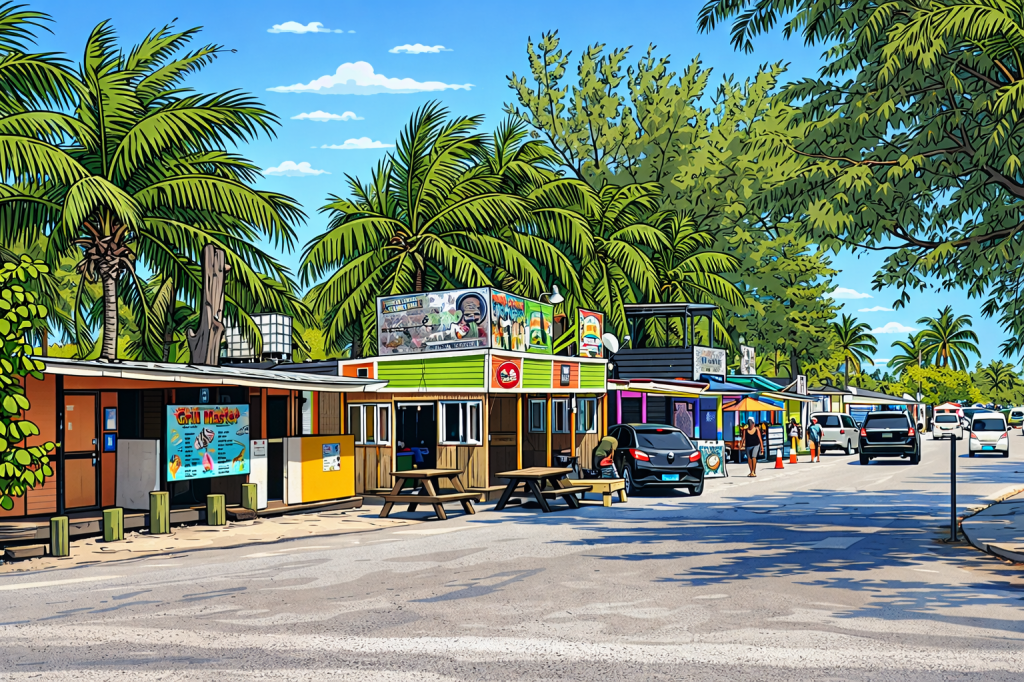
Ministry of AgricultureThe condominium I’m renting for these three weeks is located a short 15-minute walk from Arawak Cay, home of the Nassau Fish Fry. This unique Bahamian experience is a lively waterfront area known for its array of restaurants and food stalls. Locals tell me it’s the place to go to enjoy authentic Bahamian cuisine, especially seafood dishes like fried fish and conch fritters.
The concept of a fish fry became popular during a time when many Catholic communities observed meatless Fridays. Back in the 1980s, local Bahamian fishermen were looking to acquire a stretch of land to sell their fish and conch. Having leased a portion of Arawak Cay from the government, the fish market began to draw locals and tourists alike. What began as a couple of seaside stalls has grown into a collection of more than thirty stalls, stands, and brick-and-mortar restaurants.
In most countries, a fish fry is exactly what it sounds like — a fried fish, usually served with a side order of French fries. In the Bahamas, however, it’s much more than that. The Fish Fry at Arawak Cay has become a culinary gathering place that features some of the freshest and most authentic Bahamian food.
Generally speaking, the hours of operation for the Nassau Fish Fry are 10:00 a.m. to 10:00 p.m., with Friday nights being the most popular. That’s when live Junkanoo bands often provide entertainment. I stopped by for lunch the other day. Sitting at a table with an unobstructed view of five cruise ships docked at Nassau harbor, I enjoyed a plate of jerk chicken. It was served with sides of peas ’n rice and cole slaw.
While I’m eating most of my meals here in the condo, it nice to have the option to get an authentic Bahamian meal nearby.
-
Making a Difference
“We never know which
lives we influence,
or when, or why.”
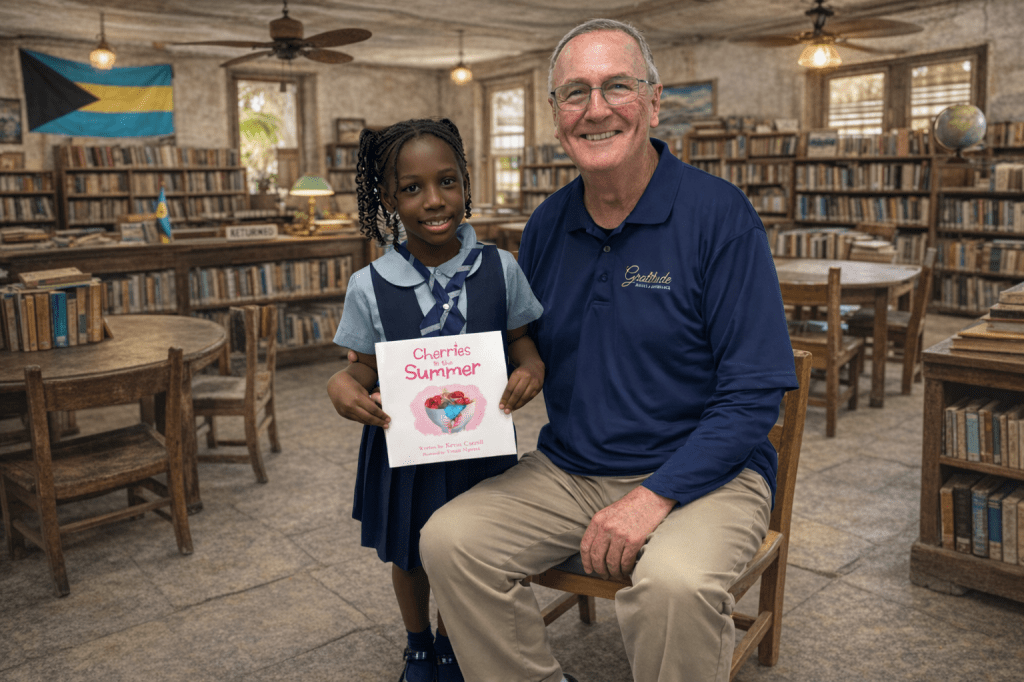
Stephen KingIn the past ten years, the term “social media influencer” has gained popularity. The label applies to those whose engaging social media content, such as photos, videos, and updates, has a profound influence on their followers. These individuals have the potential to influence others in either positive or negative ways.
The concept of an “influencer” is not something new. Certainly throughout history, writers, speakers, teachers, preachers, parents, coaches, and any other number of people have exerted influence, one way or another, on the lives of those with whom they interacted. Making a positive difference in the lives of others is a task to which we are all called.
American novelist, Leo Rosten, wrote, “The purpose of life is not to be happy, but to matter — to be productive, to be useful, to have it make some difference that you have lived at all.”
Each of us, in our own way, has the opportunity to do this. William Paul Young, author of The Shack, tells us that “every time you reach out and touch a heart or a life, the world changes.” We may not notice the change right away, and we may never see evidence of the change in our lifetime, but how we interact with the people we encounter in our life journey will most definitely leave an impression.
Sister Mary Rose McGeady, the former director of Covenant House in New York, pointed out, “There is no greater reward than to make a fundamental difference in someone’s life.”
I think it’s healthy for each of us to pause and consider how we have influenced others in our lifetime. Perhaps our influence was on a large group of people. Quite possibly, it might be just one person who benefitted from coming into contact with us. Each day, we have the opportunity to make a difference in the lives of others. It’s healthy to be aware of this, and to be conscious of how we are influencing those around us.
American author, Colin Beaven, wrote, “Believe with all your heart that how you live your life makes a difference.”
It does!
-
St. Patrick’s Day
“Nassau’s bars and
restaurants offer a
taste of local cuisine,
with a festive twist to
honor Saint Patrick’s Day.”
Dante EscobarIt’s been said that there’s an Irish pub in pretty much every city in the world. My sister, Cathy, and I found an Irish pub in Kyoto, Japan in July 2001. When we walked inside, it looked and felt like any other Irish pub we’d been in. The major difference was that all the bartenders, and many of the customers, were Japanese.
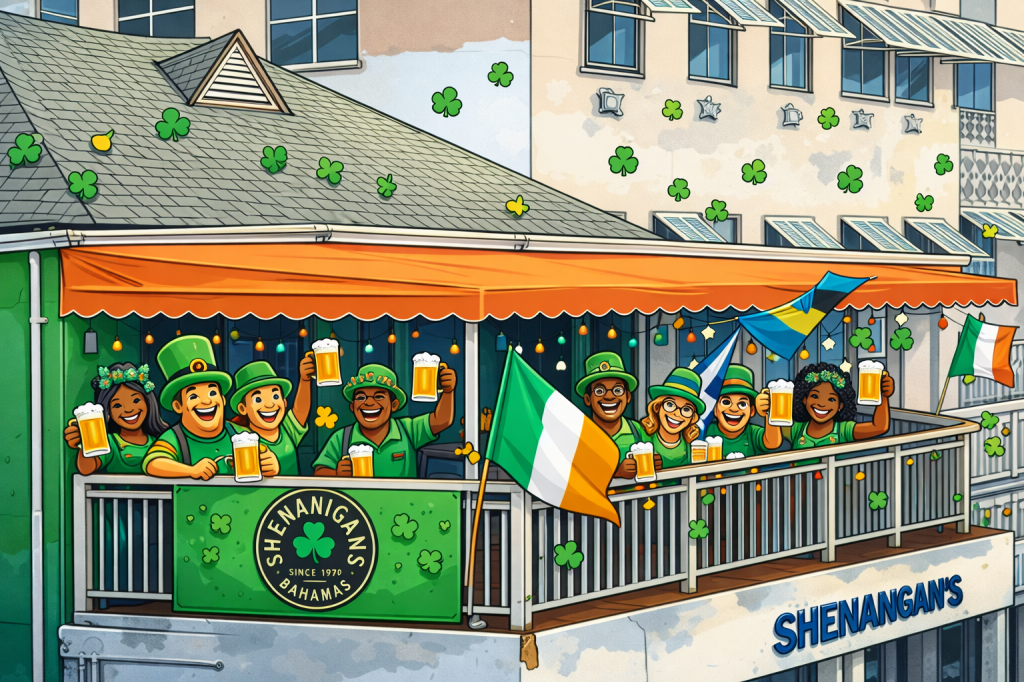
On this Saint Patrick’s Day, I find myself in Nassau, and yes, there is an authentic Irish pub on Bay Street. I’m sure Shenanigan’s will be busy with tourists and locals celebrating St. Patrick’s Day 2026. I will not be one of them. The one day of the year when it’s least likely to find me in an Irish pub is St. Patrick’s Day. Too crowded.
I have not had an alcoholic beverage of any kind since I’ve been here this year. That may change at some point, but I doubt it. When I attend the evening socials here at the community where I’m staying, I get one Bahamian rum punch, without the rum, each night. I don’t need alcohol to thoroughly enjoy myself. And when I wake up each morning, I do so without the after-effects of having consumed liquor.
No doubt, there will be a fair amount of drinking in and around Nassau tonight. The spring break crowd has arrived. All the hotels and resorts are fully occupied, many with young, college-age kids. Even without St. Patrick’s Day, consuming large quantities of alcoholic beverages seems to be the thing to do on spring break. Add St. Patrick’s Day to the mix and conditions for over-imbibing are like the perfect storm. For some, it’s just part of the tradition of spring break. For others, the alcohol provides the liquid courage they need to have their experience of “a good time.”
Happy St. Patrick’s Day to all!
-
Subscribe
Subscribed
Already have a WordPress.com account? Log in now.
 A Beacon of Light