-

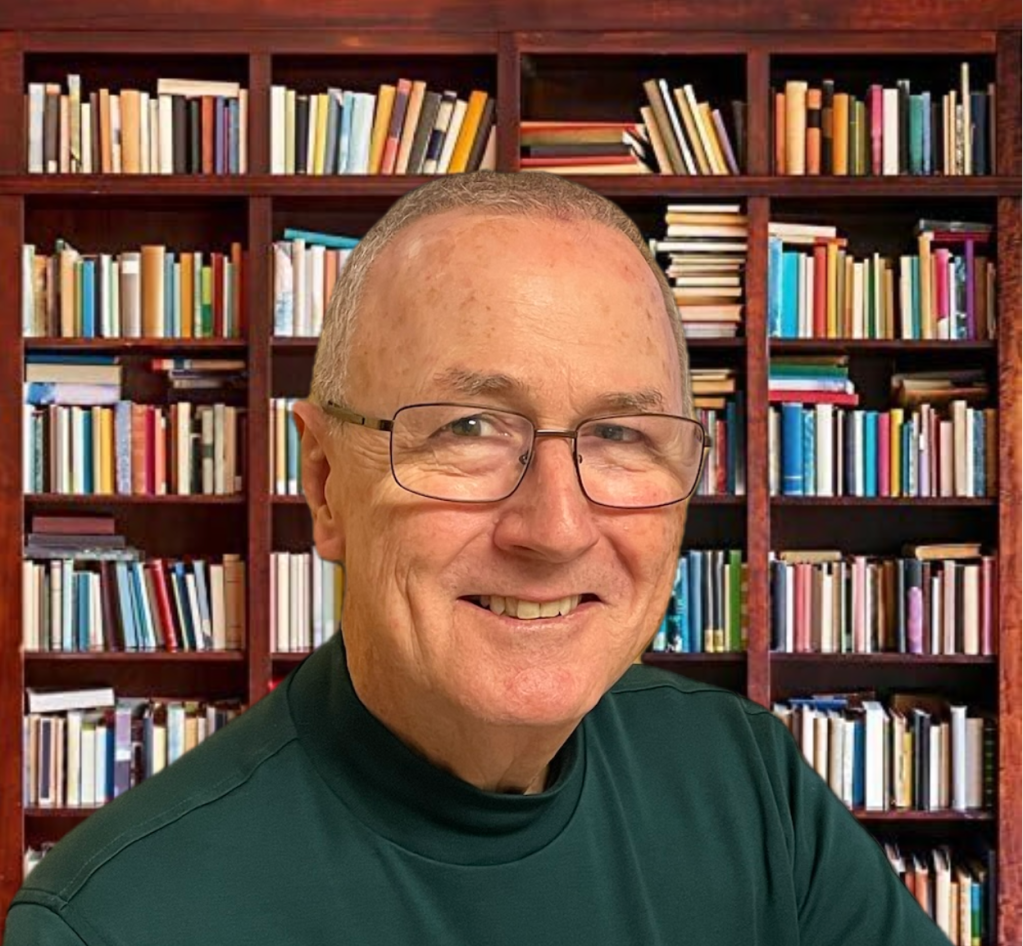
My name is Kevin Carroll. I was born and raised in San Francisco, California, where I attended Saint Ignatius College Preparatory. I am a graduate of both Santa Clara University and the University of San Francisco. Following a 40-year career in teaching and pastoral ministry, I launched a new career as a writer and speaker.
I live in San José, California. My wife, Kathy, and I have three adult sons and five precious grandchildren. I have much for which to be grateful.
I can be reached via email at kmc43sjc@gmail.com
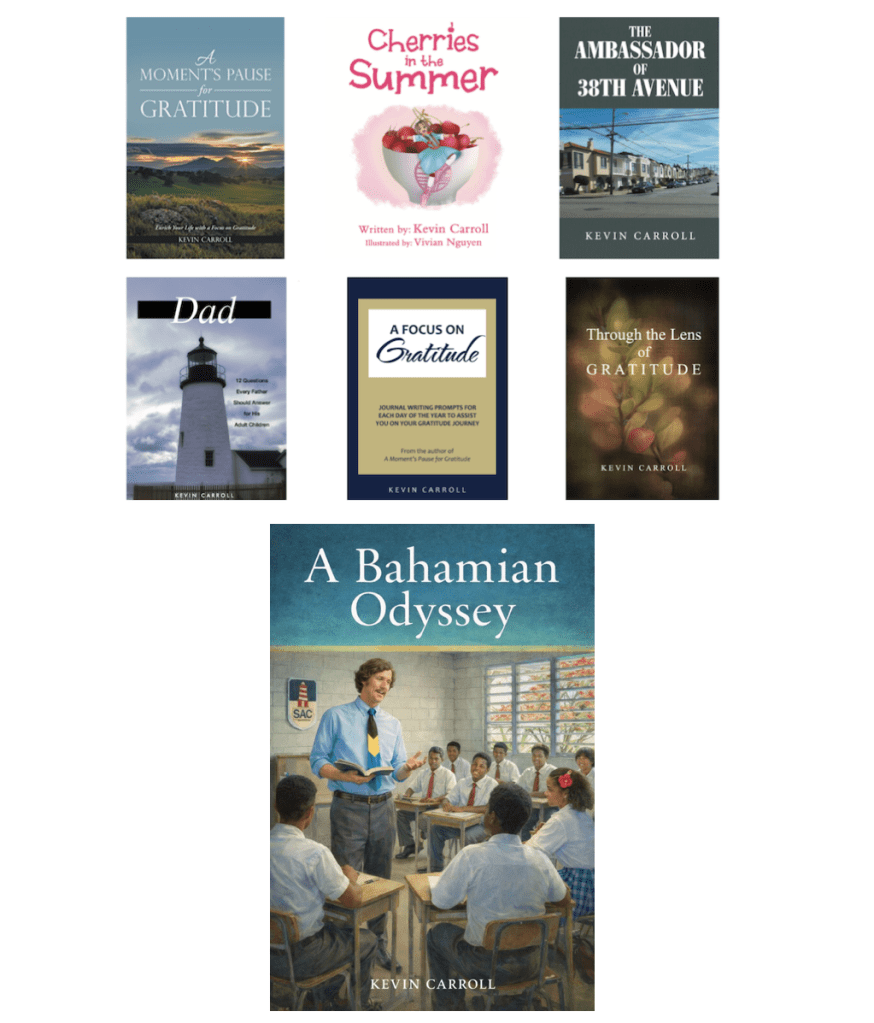
My books are available for purchase online from Amazon. I also have copies of some of these titles at my home for those who would like to buy them directly from me.
A Moment’s Pause for Gratitude (2017)
Cherries in the Summer (2021)
The Ambassador of 38th Avenue (2022)
Dad: 12 Questions… (2023)
A Focus on Gratitude (2024)
Through the Lens of Gratitude (2024)
A Bahamian Odyssey (2026)
-

- October 2026
- September 2026
- August 2026
- July 2026
- June 2026
- May 2026
- April 2026
- March 2026
- February 2026
- January 2026
- December 2025
- November 2025
- October 2025
- September 2025
- August 2025
- July 2025
- June 2025
- May 2025
- April 2025
- March 2025
- February 2025
- January 2025
- December 2024
- November 2024
- October 2024
- September 2024
- August 2024
- July 2024
- June 2024
- May 2024
- April 2024
- March 2024
- February 2024
- January 2024
- December 2023
- November 2023
- October 2023
- September 2023
- August 2023
- July 2023
- June 2023
- May 2023
- April 2023
- March 2023
- February 2023
- January 2023
- December 2022
- November 2022
-
Just How It Is

“We all arrive on Earth
with a round-trip ticket.”
Richard Paul EvansWho is someone you are grateful for that enhances your everyday life? Now, imagine a world without this person. How would your life be different?
This is a potential situation which confronts all of us every day. Tomorrow is promised to no one. All too many people have experienced first-hand the unexpected loss of a friend, neighbor, coworker, classmate, or loved one. It happens. Despite this reality, we go through life day after day taking people for granted.
I’ve been writing about gratitude for almost nineteen years now. Each day, I make it a point to take a moment’s pause for gratitude. Each day, I make a concerted effort to view the world around me through the lens of gratitude. Yet each day I fail to truly appreciate some of the people who make my life better.
According to the American Cancer Society’s 2025 projections, approximately 5,600 people are diagnosed with cancer each day in the United States. This includes over two million new cancer cases anticipated for the year.
Approximately 8,450 people die in the U.S. each day, a daily average of 352 deaths per hour. (This number is based on the estimated total of deaths annually, rather than an exact figure for any particular day.) A fair number of these deaths are unforeseen.
I should point out that death is not the only way we could lose someone who enhances our everyday life. We can lose people we know, people we care about, people we rely on in a variety of ways and for a variety of reasons. It happens. That’s just how life plays out sometimes.
Living gratefully helps us to realize the tremendous value of the people with whom we interact every day. It also reminds us that these individuals, these blessings to us, are not guaranteed. It is for this reason that we need to prioritize living our lives to the fullest, and consistently appreciating the presence of those around us.
Lauren Klarfeld, a writer from Belgium, wrote, “Remember that people are only guests in your story — the same way you are only a guest in theirs — so make the chapters worth reading.”
-
Thanksgiving Gift
“Acknowledging the good that
you already have in your life is
the foundation for all abundance.”
Eckhart TolleIt’s Wednesday, October 1, 2025. Our annual celebration of Thanksgiving Day in the United States is right around the corner. While most people are accustomed to the tradition of gift-giving at Christmas time, Thanksgiving is another appropriate opportunity for us to express our gratitude to others with a small gift.
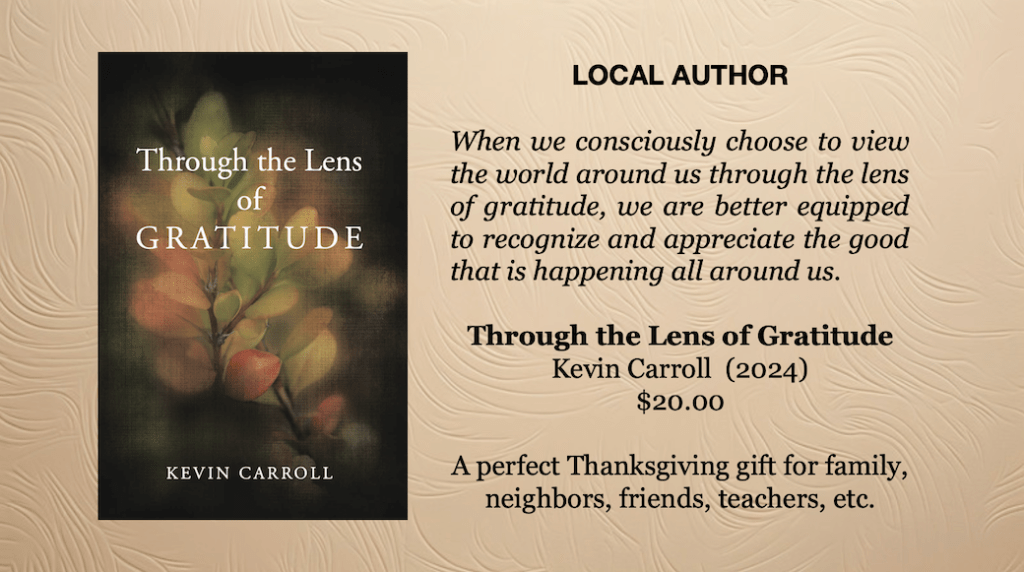
My most recent book, Through the Lens of Gratitude, just might be the ideal gift for family, friends, neighbors, teachers, hair dressers, postal carriers, delivery drivers, or anyone else to whom you would like to express your gratitude.
Our unique worldview, the lens through which we see and experience what’s happening around us, has a profound impact on our level of happiness, how we relate to others, and the overall attitude we project from one day to the next. When we consciously choose to view the world through the lens of gratitude, we are better equipped to recognize and appreciate the good that is happening all around us. In this book, I invite readers to reflect on the people, experiences, and gifts for which they are especially grateful.
Through the Lens of Gratitude is available online at Amazon, Barnes & Noble, and Balboa Press. I also have copies I am happy to sell (and sign) in person. I do not ship books from my home.
Give the gift of gratitude to someone special this Thanksgiving Day.
-
Challenging Times

“If the bath water only got
half a degree warmer
every hour, we would never
know when to scream.”
Marshall McLuhanPositivity is defined as “the state of being positive; a positivity that accepts the world as it is.” I do my best to be a positive person. Negativity brings people down. Positivity generates energy, good feelings, and a greater sense of well-being. Living a life which is consistently positive, however, can be quite a challenge.
Canadian television personality Chantal Sutherland urged listeners, “Never let anyone bring you down.” Well, that’s easier said than done. The Dalai Lama wrote, “Do not let the behavior of others destroy your inner peace.” I embrace these words on a regular basis, yet I continue to struggle with some people and situations in my life.
I think Walt Disney exhibited tremendous wisdom when he acknowledged, “I always like to look on the optimistic side of life, but I am realistic enough to know that life is a complex matter.” Yes, it is! Try as we might, we will all encounter individuals who undermine our inner peace. There will always be situations that leave us feeling stressed or overwhelmed. There will be times in our lives when we struggle to cope with some of the realities with which we are confronted each day. That’s just how life works.
We all find ourselves on treacherous paths from time to time, yet there is hope. When we find ourselves in such situations, it might be beneficial to recall the words of motivational speaker Zig Ziglar. He said, “Difficult roads often lead to beautiful destinations.”
J.K. Rowling, author of the Harry Potter series, was quite familiar with the day-to-day struggles life can bring to us. She acknowledged, “Rock bottom became the solid foundation on which I rebuilt my life.” The predicament here, to which Marshall McLuhan refers in his words quoted above, is recognizing exactly when we’ve hit rock bottom.
It is a well-known fact that there are aspects of our lives which we simply cannot change. We don’t have control over other people. We are powerless to control a number of factors in our lives with which we must contend. The words of legendary entertainer Jimmy Dean offer sage advice on this topic. He said, “I can’t change the direction of the wind, but I can adjust my sails to always reach my destination.” In the end, this is what’s most important. This is what we are called and challenged to do — to be willing to adapt to ever-changing situations.
The struggles of today are just that; they are the struggles of today. Time goes on. Things change. People change. It is critical for us to recognize that these struggles may offer us the opportunity to develop the courage, strength, and skills needed for tomorrow.
-
Inconceivable
“See the line where
the sky meets the sea?
It calls me.”
Disney’s MoanaThe 1987 movie, The Princess Bride, popularized the word inconceivable. Those who have seen the film know exactly what I’m talking about. In reality, this is a word I rarely use. Yet this adjective came to mind yesterday while I was walking along Sunset Dunes Park in San Francisco. (Yes, I was there again!) As I mentioned in yesterday’s blog post, this park, which parallels Ocean Beach in The City, offers spectacular views of the Pacific Ocean. To walk from one end of the park to the other, or simply to stand and look out over the vast body of water, is a sacred experience for me. It reminds me of the Gerard Manley Hopkins quote, “The world is charged with the grandeur of God.”
I was embracing a strong feeling of gratitude yesterday when I had a strange thought. How many Americans have never seen an ocean? My childhood home in The City was located just ten short blocks from Ocean Beach. Sadly, in the first eighteen year of my life, prior to moving to the South Bay for college, I took the ocean for granted. Rarely would I venture down to appreciate the gift that was right there. In fact, I was in my 50’s before I truly developed a sense of appreciation and gratitude for my proximity to the Pacific Ocean.
I recall driving through Nebraska and Iowa on Interstate 80 in the summer of 1980. For miles and miles, all I saw was cornfields on both sides of the highway. I’m grateful for the crops grown in the midwest, but I can’t help but wonder how many people in those states have never had the opportunity to look out over the Pacific Ocean or watch the never-ending parade of waves crashing onto the shore. I wonder how many have never been able to savor the view of the sun reflecting off the water as it sets on the horizon.
It’s inconceivable to me that so many people have never had these experiences. And these gifts of nature are, most likely, inconceivable to anyone who has never had the opportunity to experience them.
Having lived in the South Bay for more than fifty years, I have developed a strong appreciation for the ocean and my proximity to it. As Jacques Cousteau wrote, “The sea, once it casts its spell, holds one in its net of wonder forever.”
-
Sunset Dunes Park

“Sunset Dunes is a success.
It’s good for the environment,
good for our local economy,
and it’s bringing joy to
people of all ages.”
Joel EdgardioWe called it The Great Highway — a four-lane (two in each direction) roadway which parallels the Pacific Ocean in San Francisco. It connected Sloat Boulevard (to the south) with the Richmond District (to the north). The south end of the roadway features the San Francisco Zoo, Lake Merced, and, many years ago, Fleishacker Pool and GETs, a popular shopping center on Sloat Boulevard in the 1960s. The north end of The Great Highway is highlighted by the western edge of Golden Gate Park. In years past, it also was home to Playland at the Beach and the Cliff House. One of the most pleasant features of both ends of The Great Highway is the presence of the two Java Beach Cafés, one at Judah & LaPlaya, the other at 45th & Sloat.
Today, The Great Highway is history. The roadway is still there, but no longer is it available for use by motor vehicles. The 2.3-mile road is now known as Sunset Dunes Park, operated by the San Francisco Recreation & Parks Department. It has become one of San Francisco’s most popular parks. One reason for this is that it is a transformational space that connects people to something bigger than themselves. At Sunset Dunes Park, visitors can experience the power of the ocean, the beauty of the sunset, and the clean ocean air. The park is a space where a child can learn to ride a bike and dream about the future. It’s a place where young people can run, exercise, skateboard, or display their bicycle skills. It’s a place where parents can walk with their small child in a stroller, and where dog owners can walk with their pets. It’s a space where older members of the community can walk, or roll in a wheelchair, and remember special times in their lives. Sunset Dunes Park is a place for everyone — to celebrate, exercise, meditate, relax, reflect, mourn, and heal.
I have had the pleasure of walking both directions of Sunset Dunes Park seven times so far in the month of September. In fact, I’ll be there again today. I have been impressed with the variety of people who visit the park on a regular basis. I appreciate the fact that people respect the park. Rarely have I seen evidence of any type of litter, except around overflowing trash cans, which need to be emptied on a more regular basis by park employees. I am impressed with the cleanliness of the public restrooms at the park. And I am grateful that, without exception, people visiting Sunset Dunes Park seem to consistently treat others with kindness, respect, and dignity.
Of all the places in the greater San Francisco Bay Area, Sunset Dunes Park is now my favorite place to walk, think, reminisce, pray, and focus on the people and things in my life for which I am grateful.
I invite you to enjoy this brief 3-minute video-visit to Sunset Dunes Park.
-
What Really Matters?

“When you can’t do
what you’ve always done,
then you only do
what matters most.”
Robert D. HalesWhen it comes right down to it, what really matters in life? Of course, this question can be answered in many ways, but when responding to this question, a number of common themes are raised. These themes include health, meaningful relationships, a strong sense of one’s purpose in life, living authentically and in alignment with one’s values, personal growth, and overall happiness in life. These seem to be the core aspects which provide a foundation for a fulfilling life, and they are often directly related to our spiritual and personal philosophies.
Let’s take a brief look at each of these:
Health involves taking care of our physical, mental, and emotional well being. This is certainly fundamental to experiencing a full life.
Nurturing meaningful relationships, most notably developing a strong connection with our family and friends, is crucial for our overall happiness. So, too, is experiencing love and support, which are key to our basic need for belonging.
Having a “why” which drives our actions, whether we’re considering a career choice, our dreams, or the way we contribute to others and to society, provides a much-needed sense of direction and fulfillment in life and creates a strong sense of one’s purpose in life.
Living our lives authentically in such a way that we feel true to ourselves, and making choices and decisions that align with our professional and personal values, contributes to a deep sense of satisfaction with life, as well as the confidence which comes with living a life of integrity.
Our personal growth involves continuously learning, growing, adapting, forgiving, and doing everything within our power to become the best version of ourselves. This type of personal growth contributes to a productive and fulfilling life.
Finally, when we speak of finding true happiness in life, we’re speaking of experiencing joy, gratitude, and contentment in our lives. These are often identified as the outcome of a life well-lived.
I would be remiss if I didn’t mention the significance of love in our lives. Having grown up in the Catholic Christian tradition, I have learned the critical importance of loving God, loving my neighbor, and (perhaps most challenging of all) loving myself.
This same tradition emphasizes our responsibility to serve others. Helping those who need assistance, contributing to the life of our community, and acknowledging the interconnectedness of all people are central to most spiritual traditions.
Ultimately, what matters most is that we embrace a personal journey of discovery, one which enables us to identify and understand our own core values and to create a life which is consistently meaningful and aligned with those values.
These are the things that matter most in life.
-
Just Released!
“If you don’t love
like God loves,
you don’t really love.”
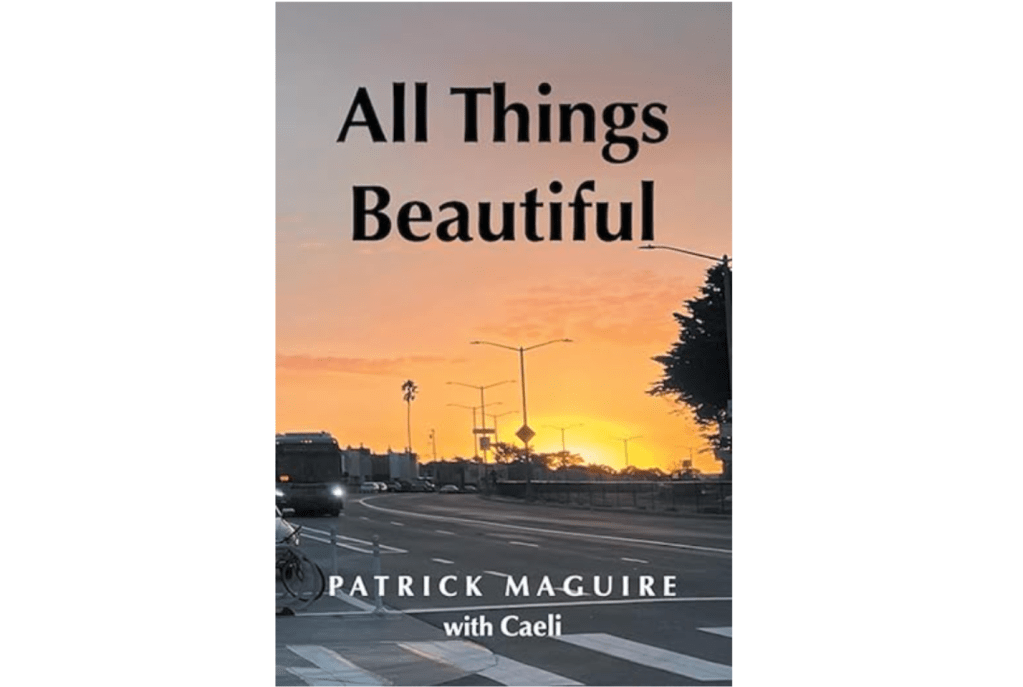
Kevin MaguireI have said many times that everyone has a story to tell. Each one of us has a lifetime of memories, experiences, and lessons learned which have the potential to be both beneficial and motivational for others. Pat Maguire, the founder and owner of Java Beach Café in San Francisco, has a powerful story to tell. Fortunately, he had the courage to write and publish it.
Writing and publishing books, especially books about our own lives, creates a substantial vulnerability which many are not willing to risk. Pat is well aware of this risk, yet he opened his mind and heart to share his story, knowing that this story will resonate with a wide variety of readers.
My friend, Roland Merullo, author of Breakfast with Buddha, The Delight of Being Ordinary, Golfing with God, and a number of other novels, quipped that when a new book is published, it’s not uncommon for the author to look outside to watch for the celebratory parade going by his home. Well, rarely, if ever, does such a thing actually happen. Pat was informed today that his book, All Things Beautiful, was officially published yesterday, September 24, 2025. While he’s certainly excited about this, Pat is much too busy — and much too humble — to be standing around looking for accolades.
I mention Pat’s book here because it is good. Hard times fall on all of us at one time or another. Sometimes these situations are caused by factors outside of our control, while at other times, they result from our own decisions or actions. How we respond to these times of crisis in our lives is within our control. Victor Frankl, a holocaust survivor, wrote this: “The last of human freedoms — to choose one’s attitude in any given set of circumstances.”
All Things Beautiful relates the challenges faced by the author, and reveals how Pat used his freedom, and his acceptance of the love of God, to cope with and overcome a variety of significant obstacles in his life. This inspirational story is one of trust, surrender, and a profound realization of God’s presence in our lives.
Pat’s book is available now from Amazon, and will be available at both Java Beach Café locations in the coming weeks. I highly recommend it.
-
Redwood Rest Resort
“Summer means
happy times and
good sunshine.”
Brian WilsonThis is not my usual blog post. Today, I had the unexpected opportunity to visit Redwood Rest Resort, now simply known as Redwood Resort, in Boulder Creek, California. It was at this venue that my family enjoyed a number of summer vacations in the early 1960’s. At that time, the resort was a cabin-camping experience, though, if I recall correctly, there was an area for camping trailers, too. Several of my parents’ friends, along with their children, would take their summer vacations at the same time we did, so there were five or six families, all with multiple children, enjoying the facilities.
Here are a few photos from then… and today.

The Redwood Rest Kids 1960
Jenkins (5), Hurley (3), Mazza (2),
McCarthy (2), Carroll (4)
(I’m front row with the cap.)
The pool — where we spent
most of our time. (1960’s)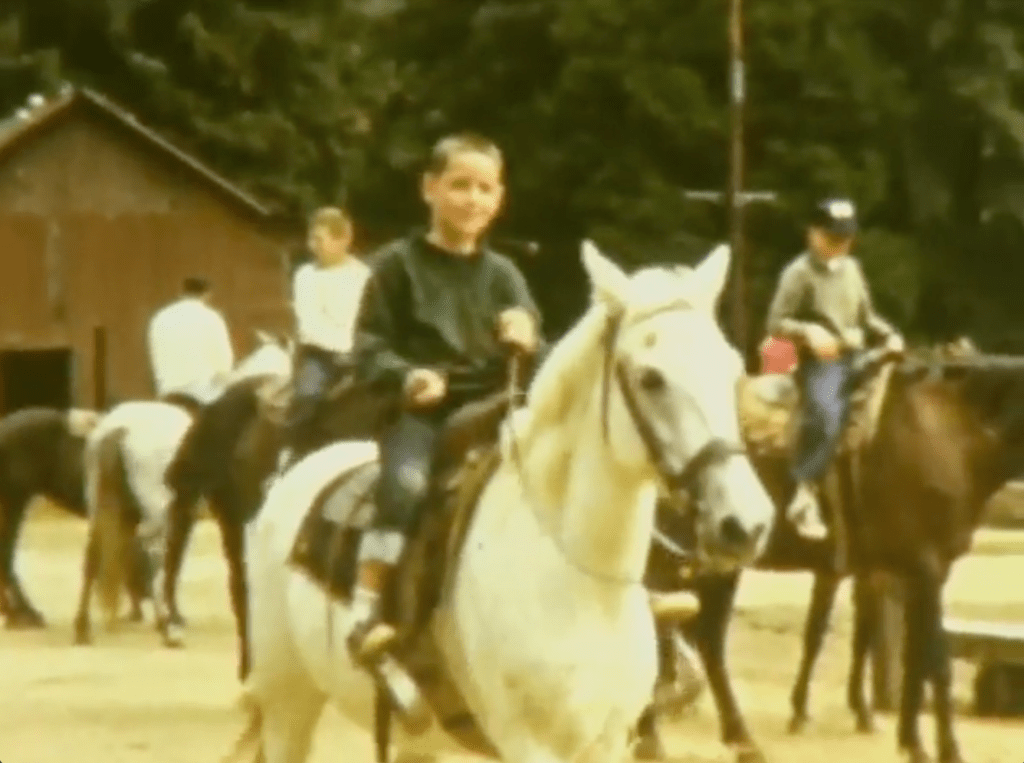
Yeah, that’s me. I always knew
I rode in on a white horse!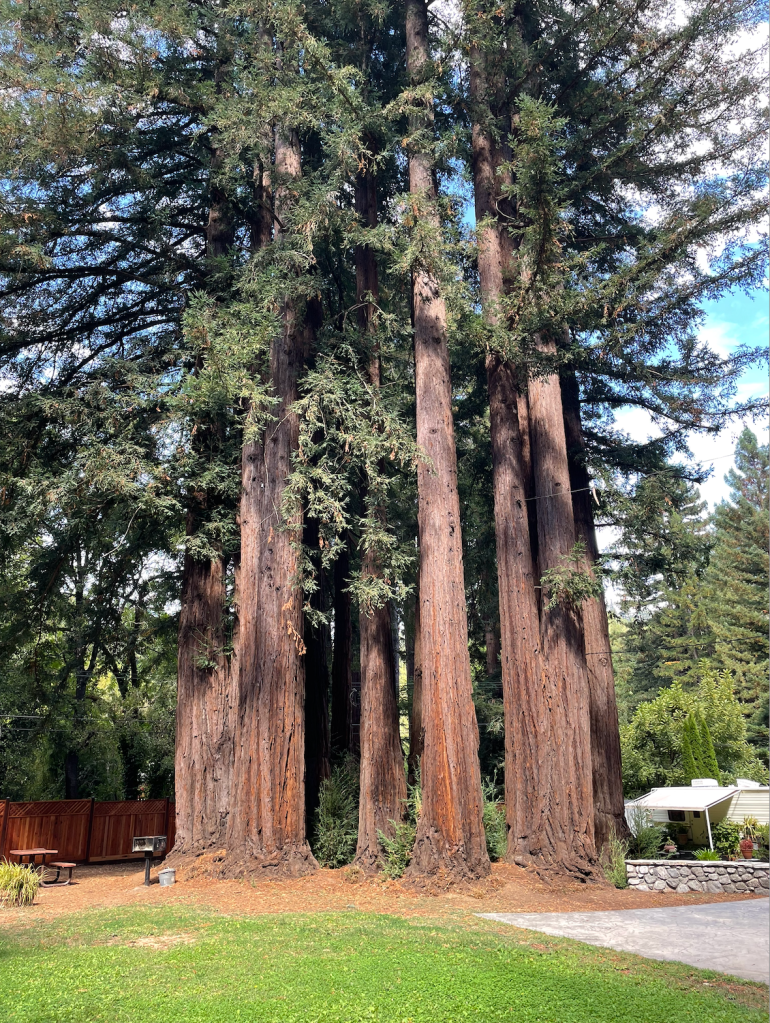
The little grove of redwoods
is all grown up now.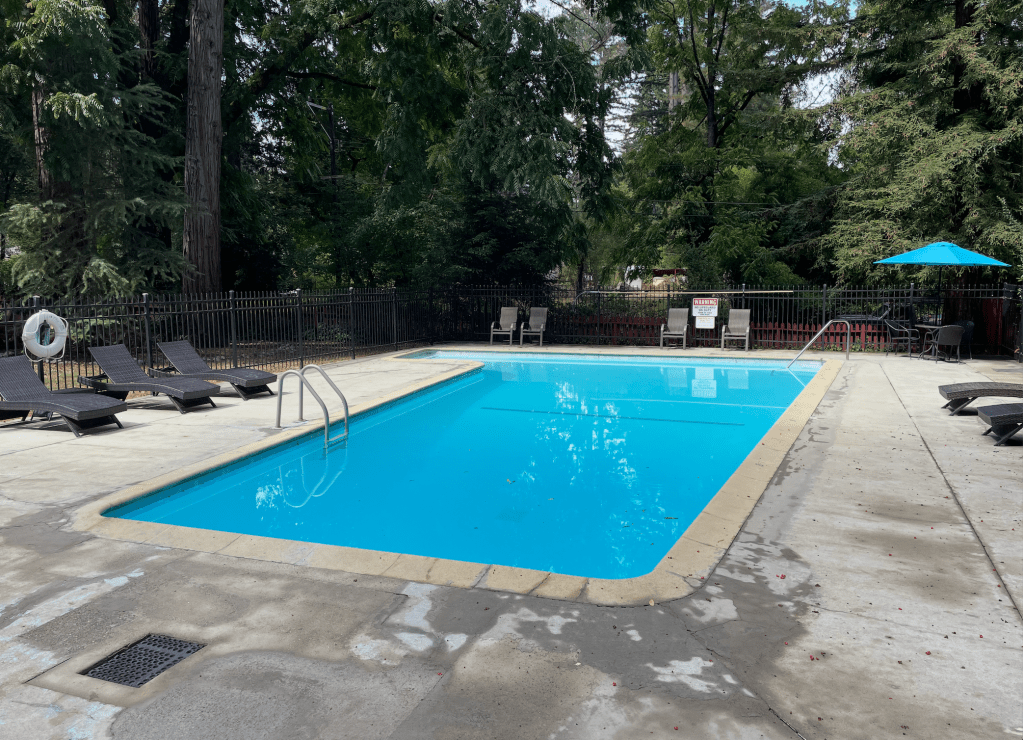
The pool today from in
front of the memorable sign:
“We don’t swim
in your toilet,
so please don’t
pee in our pool.”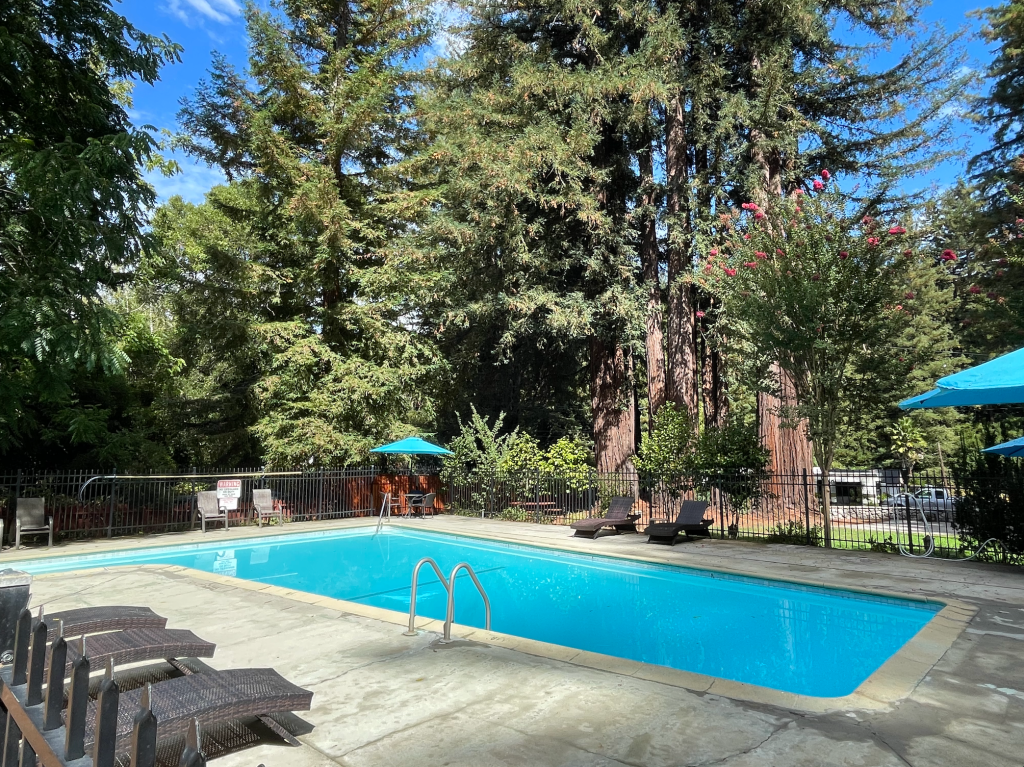
The pool and the grove
of redwood trees.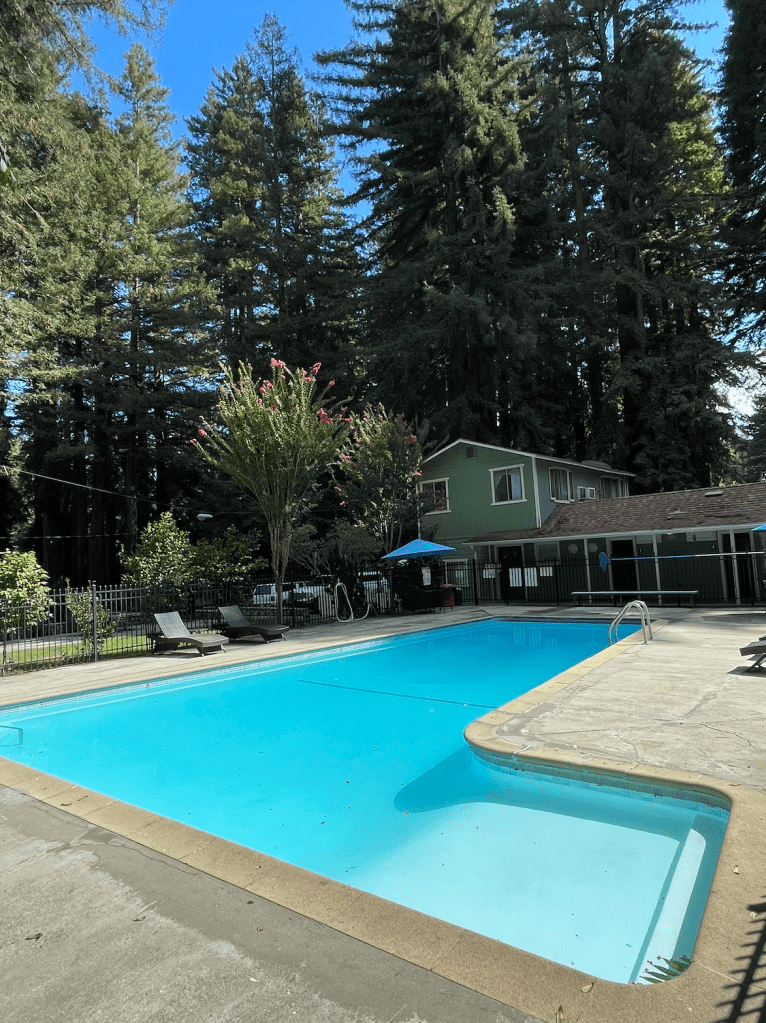
The “kids’ corner” &
the pool building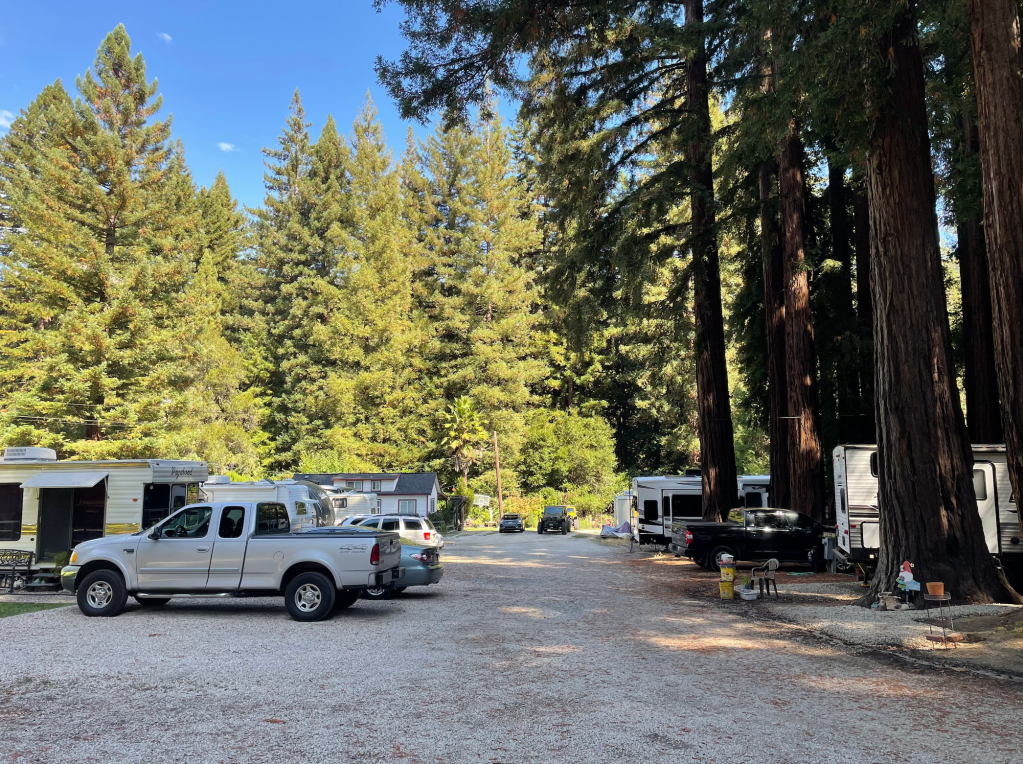
From the pool looking
toward where many of
the cabins used to be.
Much to my surprise,
the stable and corral
are still there!
Seeing the individual stalls
of the stable reminded me
of the horses we loved.Such wonderful memories of times with lifelong friends. With gratitude to our parents who endured our energy and antics throughout the times we spent at Redwood Rest Resort.
-
Loving Others
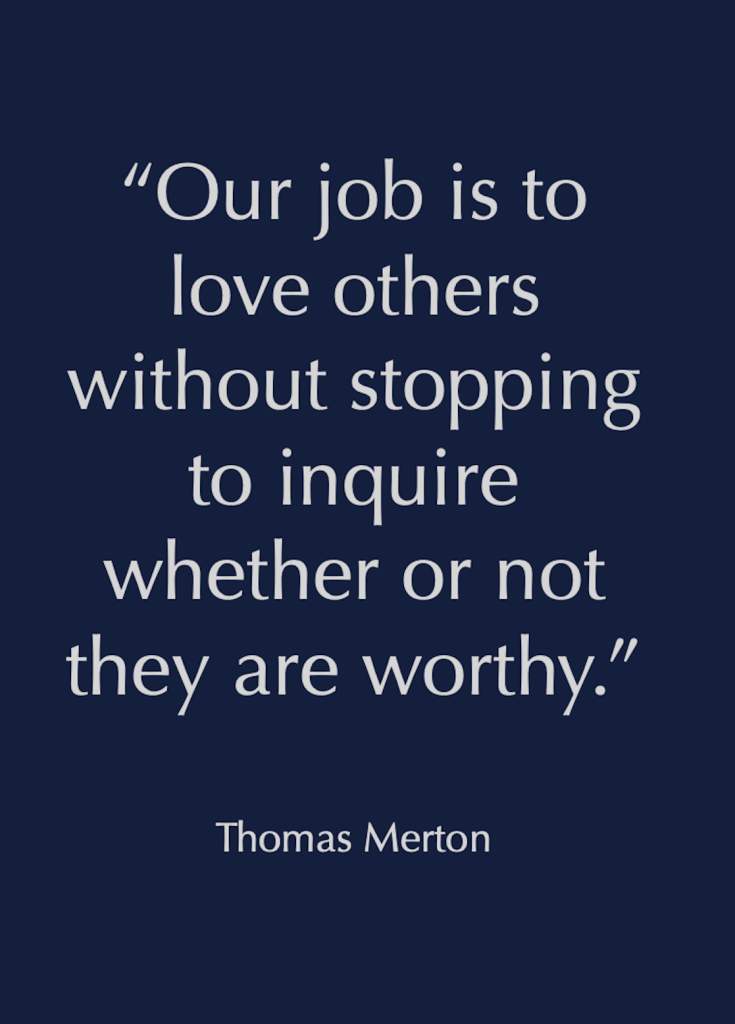
Over the past few months, I have had the privilege of collaborating with Patrick Maguire, founder and owner of Java Beach Café in San Francisco, on the creation of his soon-to-be-published book All Things Beautiful.
Pat is a native San Franciscan. He was raised in an Irish-Catholic family in the lower Sunset District near Ocean Beach and Judah Street. While this may sound quite ordinary, Pat’s life story has been anything but ordinary. In the rollercoaster of life, he has experienced the extremes of numerous peaks and valleys. In his gripping account of his life, Pat opens his heart and shares how these experiences have shaped him, his outlook on life, and his personal spirituality.
While Pat never mentions Thomas Merton by name, one of the most powerful take-aways from his book can be summarized by the quote above. It is a lesson most of us can improve upon in our own lives.
-
Looking Ahead

“It’s okay to feel many
things at once,
including uncertainty.”
The Gottman InstituteI’ve been doing a bit of research on the life expectancy of the average American male. There’s good news and not-so-good news. According to World Bank, American men are expected to live for 78.39 years. I consider this to be not-so-good news, since I’m 71 now. If, however, we consider such factors as maintaining a healthy weight, exercising, and having healthy blood pressure, a man should reach the age of 90. Of course, individual life spans will differ based on genetics and other unique life factors.
It’s common, I would think, for people to be more aware of life expectancy issues as we get older. I had no interest in such mundane things when I was in my 20’s. Today, however, as I consider the baseball game of life, I recognize that I’m currently in the top of the eighth inning.
So what does this mean? Well,… for starters, there’s still plenty of ball to be played. Nothing is less important in life than the score after seven innings. Much can change before the final out. The outcome of an entire game is often determined by what happens in the last two innings. In baseball, the manager has the responsibility to orchestrate a successful outcome. In life, that responsibility rests on our shoulders, and no one else’s.
This is the mystery. Do we make changes to effect a preferred outcome or do we maintain the status quo and allow the game to play out as it will? This is a challenging question. I’ve watched baseball games in which everything was going well before the manager made a pitching change. The starting pitcher exited the game and was powerless as his team squandered a three-run lead and lost the game.
I’ve also attended games in which things were not going well at all, but a strategic move by the manager resulted in an exciting come-from-behind victory.
One of the unique characteristics of San Francisco is the fog. I don’t know who deserves the credit for the photo above (I did not take this shot), but it clearly illustrates the challenges faced by many people. A person driving north on the Golden Gate Bridge, enjoying the breathtaking view of San Francisco Bay, might be confronted with a thick layer of fog which blinds them to what’s up ahead, and yet they drive. A person driving south may have been carefully navigating their way through the dense fog for many miles, only to see it dissipate in a moment and offer a sparkling clear view of what’s up ahead.
In so many ways, life really is a game, the outcome of which is not determined until the final out. As long as the game is being played, possibilities exist to effect the most ideal outcome. The challenge is to make the right decisions at the right time.
-
Subscribe
Subscribed
Have a WordPress.com account? Log in now.

