-

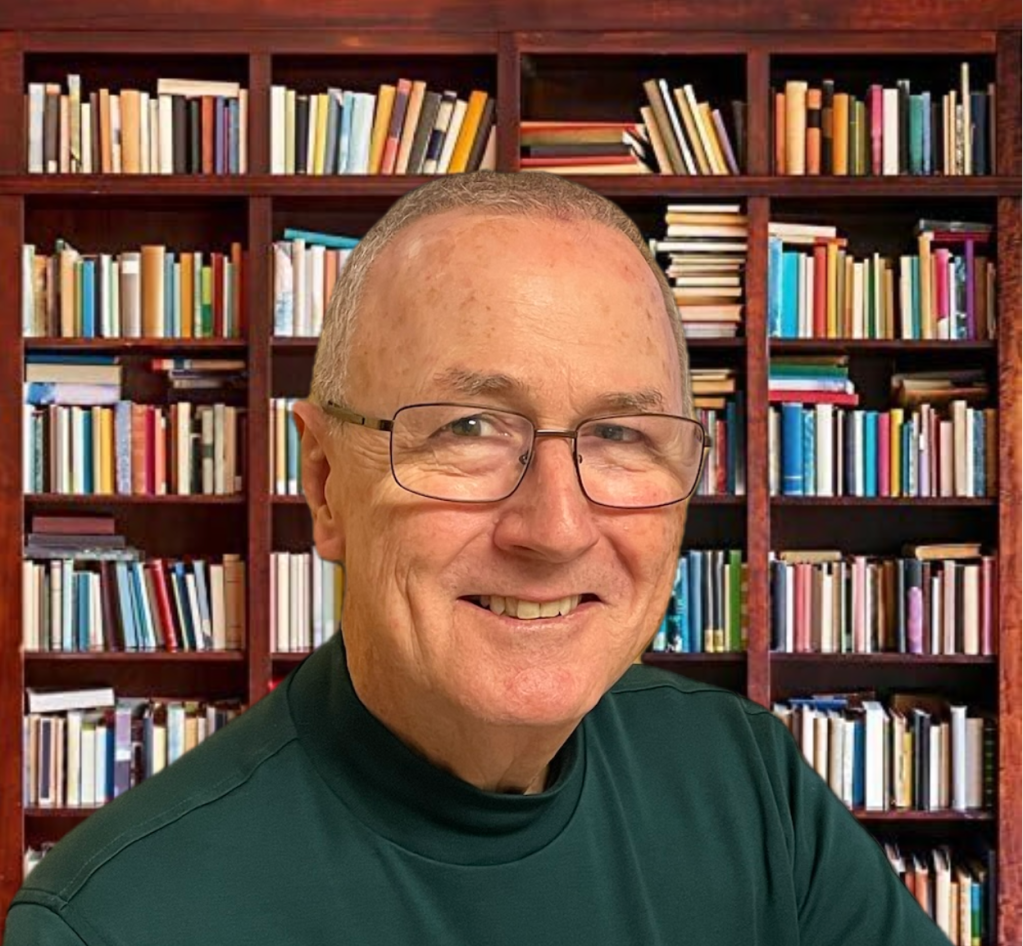
My name is Kevin Carroll. I was born and raised in San Francisco, California, where I attended Saint Ignatius College Preparatory. I am a graduate of both Santa Clara University and the University of San Francisco. Following a 40-year career in teaching and pastoral ministry, I launched a new career as a writer and speaker.
I live in San José, California. My wife, Kathy, and I have three adult sons and five precious grandchildren. I have much for which to be grateful.
I can be reached via email at kmc43sjc@gmail.com
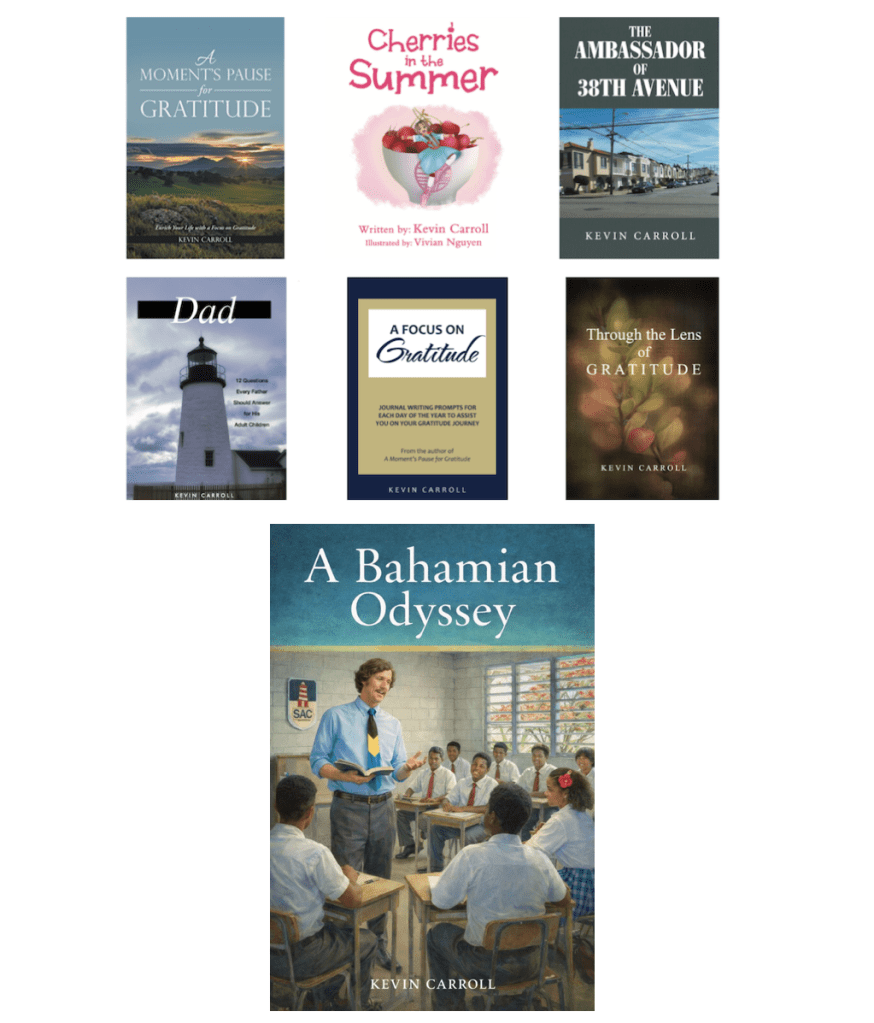
My books are available for purchase online from Amazon. I also have copies of some of these titles at my home for those who would like to buy them directly from me.
A Moment’s Pause for Gratitude (2017)
Cherries in the Summer (2021)
The Ambassador of 38th Avenue (2022)
Dad: 12 Questions… (2023)
A Focus on Gratitude (2024)
Through the Lens of Gratitude (2024)
A Bahamian Odyssey (2026)
-

- October 2026
- September 2026
- August 2026
- July 2026
- June 2026
- May 2026
- April 2026
- March 2026
- February 2026
- January 2026
- December 2025
- November 2025
- October 2025
- September 2025
- August 2025
- July 2025
- June 2025
- May 2025
- April 2025
- March 2025
- February 2025
- January 2025
- December 2024
- November 2024
- October 2024
- September 2024
- August 2024
- July 2024
- June 2024
- May 2024
- April 2024
- March 2024
- February 2024
- January 2024
- December 2023
- November 2023
- October 2023
- September 2023
- August 2023
- July 2023
- June 2023
- May 2023
- April 2023
- March 2023
- February 2023
- January 2023
- December 2022
- November 2022
-
Family
“The bond that links
your true family is not one
of blood, but of respect
and joy in each other’s life.”
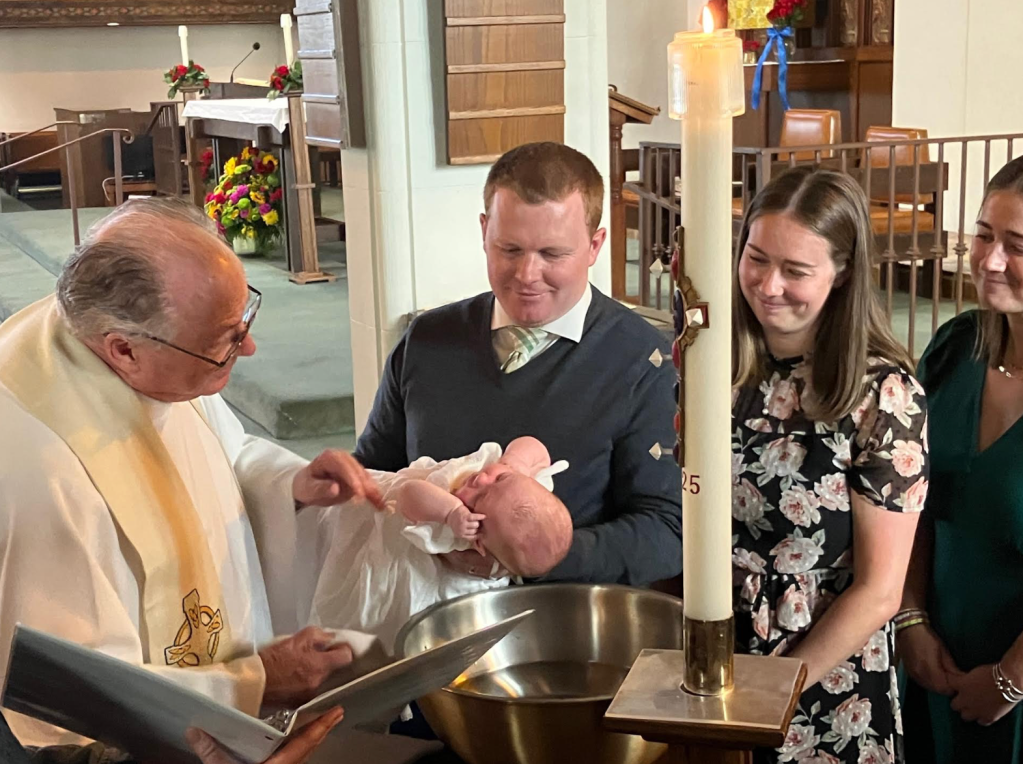
Richard BachMy nephew, Sean O’Donnell, and his wife, Kerry, invited family members to join them yesterday for the baptism of their daughter, Aiofe, in San Francisco. Following the ceremony at Saint Gabriel Church, the family gathered in the back courtyard (“Wawona Gates”) of the United Irish Cultural Center for a celebratory reception. The event was a reminder to me of the importance of family.
The reception was well-attended. The O’Donnell side of the family is quite large. With three generations of O’Donnells represented, along with their spouses, children, and grandchildren, the Carroll side of the family was significantly outnumbered. That’s okay, because in the forty years since Jim O’Donnell and my sister, Peggy, married in September 1985, the O’Donnell and Carroll families have basically merged into one big family. It’s always a pleasure to get together with them.
At yesterday’s event, however, there was another segment of this growing Irish family. I had the pleasure of meeting Kerry’s parents and her sister, Maura. In my conversations with them, I experienced that same sense of family connection. Getting to know them made me wish I had met them all many years earlier. What good people!
Spanish philosopher George Santayana wrote, “The family is one of nature’s masterpieces.” It most certainly is. The family unit is ever-changing, constantly growing, perfectly imperfect, and the foundation of a civil society. It’s been said that families are like branches on a tree. We grow in different directions, yet our roots remain as one.
As I mentioned, yesterday’s gathering reminded me of what a blessing it is for me to me to be a part of my family — including all the various branches which have grown from our common roots.
Sir John Bowring, the former governor of Hong Kong, wrote, “A happy family is but an earlier Heaven.” At the reception yesterday, I experienced another taste of Heaven.
-
It’s Today!

“When you rise in the
morning, think of what
a precious privilege it
is to be alive.”
Marcus AureliusWe — that’s you and me — take so much for granted. I pride myself on living my life with an Attitude of Gratitude. I do my best to be A Beacon of Light in the world. I make it a point to take A Moment’s Pause for Gratitude every day. I also make an effort to see all of life Through the Lens of Gratitude. Despite these things, there are many mornings when I wake up and forget that life itself is a pure, undeserved gift, one for which we should be immensely grateful.
In the United States, we celebrate Thanksgiving Day in late November. It’s a wonderful holiday, one which, for many, causes them to reflect on the blessings in their life for which they are grateful. Others, unfortunately, just spend the day watching football and eating turkey.
Today, however is WORLD GRATITUDE DAY! This is a global movement, a time for women and men all over the earth to pause, to reflect on the blessings in their lives, and, if possible, to express their gratitude to those responsible for those blessings.
It’s no secret that we are living in challenging times. Many people might find it difficult to see the good in the world when we are constantly bombarded with negativity from all forms of media. I will say again what I’ve said many times before: I believe our world, and those living in it, are basically good. Yes, there is a presence of evil. This is indisputable. Generally speaking, however, most people are well-intentioned, peaceful, and making a concerted effort to see the positive aspects of life each and every day.
So on this World Gratitude Day 2025, take more than just a moment’s pause for gratitude. Do your best to see the good around you. Do your best to be the good in the world. Be conscious throughout this day of the many things for which you have to be grateful, then express that gratitude freely and openly. Gratitude makes a difference!
-
Brothers

“It takes two men
to make one brother.”
Israel ZangwillWhen my brother Tom and I were younger,… MUCH younger, we occasionally went on bike rides together in San Francisco. There are two excursions I distinctly recall. On one occasion, we rode our bikes around Lake Merced to Brotherhood Way. Being the older brother (he was in high school, while I was still an elementary school student), Tom most often set the course for the day. On this day, we rode up Brotherhood Way to the entrance to Holy Trinity Greek Orthodox Church. The large, circular structure was impressive. Tom suggested that we go inside. Despite my belief, at the time, that Catholics were not allowed to enter non-Catholic churches, we ventured inside. I was amazed by the stained glass windows and the various icons and murals adorning the walls of the worship space.
On another bike ride, Tom and I rode up to the Palace of the Legion of Honor in Lincoln Park. Talk about impressive structures! This museum, which is 100 years old, is located near Land’s End and offers spectacular views of the Golden Gate Bridge. It wasn’t until we arrived that I was informed that the reason for our visit was to listen to a pipe organ concert. I have to admit that I enjoyed it. If Tom had mentioned the concert prior to our departure from home, I seriously doubt I would have joined him.
Well, Tom and I don’t ride bikes much anymore. In fact, it’s been more than 15 years since I’ve ridden mine. We met up this morning at the Caltrain Station in San Francisco for a walk in The City. Tom came down from the University of San Francisco, where he is staying for the weekend, and I took the train from Santa Clara. I arrived in The City at 10:00 and we began our walk.
It was a perfect day in San Francisco, which is not surprising as it is this time of year (September-October) that The City gets its best weather. We walked along King Street, past Oracle Park, then along the Embarcadero all the way around to Fisherman’s Wharf. We stopped for lunch at Capurro’s Restaurant on Jefferson Street (directly across from the old cannery building). The owner, Paul Capurro, stopped by our table to chat with us for a while. I met Paul a couple of years ago when we had a Saint Gabriel Class of ’68 lunch there. I also had lunch there with my friend Angellie last Saturday. Paul and my brother had a mutual friend who was close with both of them. Bert Keane was one of Tom’s classmates at Saint Ignatius, and they worked together for a while at the Jesuit Retreat Center in Los Altos. Paul and Bert were long-time friends and handball partners at the Olympic Club. Sadly, Bert lost his battle with cancer a few months ago.
In all, our day was memorable for all the right reasons. I have always been grateful for Tom’s presence in my life. Now that he’s back in California and living at Loyola-Marymount University in Los Angeles (after ten years in Rome), I get to see him on a more regular basis. I’ll be planning another trip south after the first of the year.
-
All Grown Up!
“Our fingerprints
don’t fade from the
lives we’ve touched.”
Judy BlumeHow ironic that the quote above is from author Judy Blume. I was not familiar with her work until 1979, when I was hired to teach junior high literature at Saint Christopher School in San José. The principal had told me to select books for the seventh and eighth grade students to read. I had no idea what books would be appropriate for junior high kids, so I went to the local bookstore to ask for advice. The woman there gave me a nice selection of books, which included a book from Judy Bloom — Iggy’s House.
Tonight I had the privilege of spending a couple of hours socializing with many of my former students from the Saint Christopher School class of 1980. I enjoyed seeing the looks on the faces of several of them who I greeted by name, but they didn’t recognize me. They thought I was one of their classmates! (I felt good about that.) One woman said, “You looked so familiar, but I was thinking that you were in our class. I couldn’t figure out who you were.”
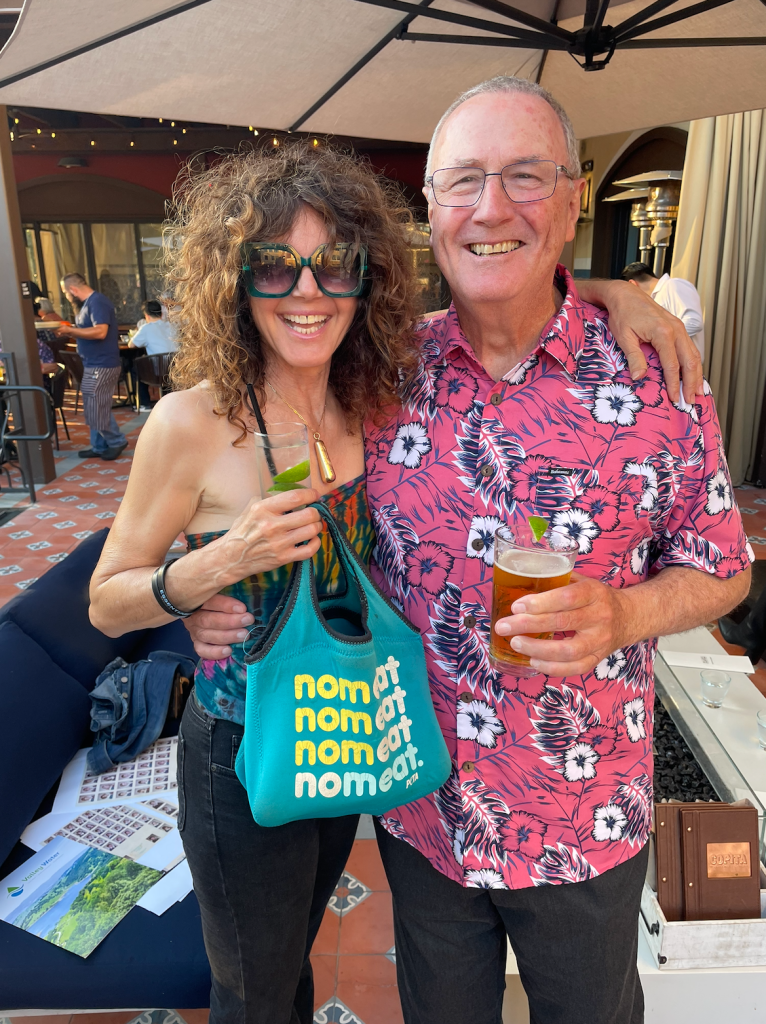
Lots of memories were shared this evening. One in particular was shared by Elise Duran (in the photo above), who was not only one of my students, but also played on the 8th grade girls’ basketball team I coached. She recalled a game we played at Saint Clare School in Santa Clara. It had been an unusually physical game. In the first half, the Saint Chris girls were getting beaten, both physically and in points scored. The game official seemed to think he should just let them play. So at halftime, I told my girls to be just as physical and not worry about fouls, as none were being called.
With less than a minute remaining in the game, Saint Chris had come within one point of tying the game. We regained possession of the ball after a missed free throw by a Saint Clare player, so I called a time out with only eight seconds remaining in the game. I quickly designed a simple play. The point guard would pass the ball to Elise on the right side of the court. She would immediately shoot the ball, but didn’t have to worry about whether or not it went in the basket. All four of her teammates, knowing she was going to shoot the ball, would be in a position to get the rebound and put up what would hopefully be the game-winning shot.
Lisa, the point guard, got the ball out to Elise on the side, but a Saint Clare player defended her well and wouldn’t let her get the shot off, so Elise began to dribble the ball toward the baseline. As the clock ticked down, she stopped and threw the ball with both hands from over her right shoulder. Much to everyone’s surprise, the ball hit nothing but net. Elise had scored the game-winning basket!
It turned out to be a magical season for that 8th grade girls’ team, as they went undefeated in league play to win the championship. They certainly didn’t dominate their opponents. Four of the eight league games were decided in overtime. It was just one of those magical times for an amazing group of girls.
Tonight’s reunion was a blessing for me. To see all these “kids” all grown up now was a real treat. I am proud to have been a small part of their lives 45 years ago. As Judy Blume said, “Our fingerprints don’t fade from the lives we’ve touched.” These men and women left a lasting impression on me, too.
-
Our Presence

“Never underestimate
the power of
your presence.”
Theo BoydThroughout my life, there have been numerous times when I have made the decision not to attend a function to which I had been invited — or to which one might have expected me to attend. Such events could include weddings, funerals, birthday parties, class reunions, or just gatherings of friends. My reasons for not attending were varied. I might have been tired. I might have been apprehensive about others I would inevitably see at the event. Whatever the reason, I always had the feeling that no one would notice my absence. With so many others attending, surely I would not be missed.
Much to my surprise, more often than I would like to admit, I would get a phone call or text message after the event asking where I was — and letting me know that I had been missed.
Theo Boyd’s quote above is powerful. This is a lesson I wish I had learned and embraced at a much earlier stage in my life. Our presence, even though we may not realize it, is important. People do notice. I certainly did.
When my Dad died, Saint Gabriel Church was filled to capacity on both Wednesday night for the Rosary and Thursday morning for the funeral Mass. When all the services were over, and in the days that followed, I reflected on who was there, and who wasn’t. It was a painful realization to acknowledge that not one person from my workplace, where I had worked for 24 years at that time, attended either service. It was also painful to accept that, unlike my siblings, very few of my friends attended the services.
Our presence does matter. Whether we show up or not does make a difference in the lives of others. Our presence is a gift — a precious gift of our time and attention. When we show up at these types of events, we are letting others know that we support them, that we care about them, and that they make a difference in our life, too.
Author John Eldredge wrote, “The gift of presence is a rare and beautiful gift. To come — unguarded, undistracted — and be fully present, fully engaged with whoever we are with at that moment.”
I’ve been invited to attend tonight’s 45th class reunion of students I taught back in 1980. My initial thought was to skip it. Surely I wouldn’t be missed. Then I began thinking about Boyd’s quote. Students in this class intentionally invited me to attend their event. They were 13 and 14 year olds when I taught them. Today, they are in their late 50’s. I’m sure I will recognize some of them, but not all. I’m sure I will remember most of them, but not all. But they will more than likely remember me, though they may not recognize me.
My gift to the Saint Christopher class of 1980 is my presence at their reunion tonight. Their gift to me is the invitation to join them for this celebration. I hope most of the students in that class grace each other with their attendance at the reunion. Their presence matters, too.
-
Two Rules

“Speak less than
you know;
have more than
you show.”
William Shakespeare
(Paraphrased)It’s an interesting thing… research from more than thirty years ago indicates that some male college professors have been known to teach in such a way that the learner could not possibly understand clearly what he was teaching. For example: Instead of saying something as simple and clear as “People who live in glass houses shouldn’t throw stones,” a professor might, instead, say something like this: “Men, women, and children, residing in virtuous modules, should refrain from projecting, by physical or mechanical means, any type of geological specimen.”
It is suggested that, perhaps, the reason for such a pretentious style of teaching is that the professor, having more knowledge than his students, perceives himself to have a higher status than those sitting in the classroom. To share the knowledge he possesses with his students, therefore, would enable those students to know more of what he knows, thereby minimizing the disparity of knowledge between the two. This, of course, could be seen as a threat to the professor’s status.
I guess it’s also possible that those professors may have seen the image above. This image, which is meant to be humorous, rather than instructive, is not such a good idea for anyone in the teaching profession.
In William Shakespeare’s King Lear, the words quoted above (or something like them) were spoken by the Fool. They suggest that one should develop his inner character and knowledge, characterized by modesty, wisdom, and restraint, rather than seeking the approval of others. It is a call to be humble, to select one’s words carefully, and to allow one’s actions and accomplishments to speak for themselves.
Sadly, and all too often, individuals attempt to impress others with their words and with an inflated portrayal of their worldly possessions. I know I am guilty of having done this. There have been times when, in an attempt to impress someone, I have said more than needs to be said or exaggerated my actual status. I’m not proud to admit this, but it’s true.
It’s interesting that, in King Lear, it was the Fool who spoke such words of wisdom.
-
A Simple Thought

-
A Special Day

“I know for certain that we never lose the people we love, even to death. They continue to participate in every act, thought, and decision we make. Their love leaves an indelible imprint in our memories. We find comfort in knowing that our lives have been enriched by having shared their love.”
Dr. Leo Buscaglia• • •
Happy Birthday, Mom!
(She would have been 96 years old today.)
-
A Special Day

“God loves us,
God loves you all,
and evil will
not prevail.”
Pope Leo XIVWhat an exciting day for Kathy, my brother Tom, and the other pilgrims who attended the morning Angelus prayer with Pope Leo XIV today. Kathy, Tom, and more than a dozen others have spent the past thirteen days exploring the history of Saint Ignatius of Loyola.
The pilgrimage began in Spain, where the group visited Loyola, the birthplace of Saint Ignatius, as well as Manresa and Montserrat, where Ignatius had profound spiritual experiences. They are now in Italy, where they are able to visit the place Ignatius was ordained to the priesthood, where he celebrated his first Mass, and where the Society of Jesus (Jesuits) was officially recognized and approved by Pope Paul III in 1540.
Today, the group had the opportunity to see Pope Leo XIV in person at Castel Gandolfo, the pope’s summer residence. It is located in the town of Auburn Hills, just outside of Rome.
I happened to wake up at exactly 2:00 this morning, which is 11:00 a.m. in Rome, so I came here to my home office and watched the livestream of the prayer service. It was amazing for me to think that Kathy and Tom were both in attendance.
No doubt, this will one of the most memorable experiences in their lifetimes. Even though I watched from home, it will be memorable for me, as well.

-
The American Dream

“The faith that anyone could
move from rags to riches
was once at the core of
the American Dream.”
Robert ReichSince the founding of our country, the definition of the American Dream has been constantly evolving. The term means different things to different people. The American Dream in 2025 seems to be considerably different from my understanding of it in 1975.
It used to be that if you worked hard and followed the rules, you could attain the American Dream. Evidence of having reached this point was a job, home ownership, and a family. This is no longer the case. For younger Americans in 2025, the American Dream is not defined the same way.
Home ownership, which was once the cornerstone of the American Dream, is no longer attainable for many young people. Working for one company for 40 years and retiring with a pension and health benefits for life is, for most, a thing of the past. In 1940, 92% of young people could expect to be more financially secure than their parents were. Today, that number is closer to 50%.
The American Dream in 2025?
According to a recent survey conducted by Howdy.com, a high tech recruitment company, 76% of Gen-Z and millennials believe that the American Dream is the opportunity to work from home. In that same survey, apparently due to changes in the economic and political structures of our country today, 77% indicated that they believe life would be better outside the U.S. I have to admit, this surprises me.
Job portability, the freedom to work from home, or some other place of choice, was not an option for Baby Boomers. During the pandemic, however, and due to the many innovations in technology over the past forty years, workers have proven that working productively outside the traditional office environment is possible for many professionals. This alternative work environment offers workers the opportunity to live anywhere they want.
Investopedia, a financial education website founded in 1999, is known for its comprehensive financial dictionary. They developed their own definition of the American Dream: “The belief that anyone, regardless of where they were born or what class they were born into, can attain their own version of success in a society in which upward mobility is possible for everyone.” I think the key phrase here is “their own version of success.” This can vary from person to person.
Bridgeworks, an organization based in Minnesota, has been helping organizations navigate the complexities of a multi-generational workforce for almost 30 years. They identify the images, mantras, and icons of the various generations. For those born before 1945, for example, the image was the self-made man. The mantra was “Pull yourself up by the bootstraps.” Icons included Walt Disney and Henry Ford.
For Baby Boomers, those born between 1946 and 1964, the image was the single-family home with a white picket fence. The mantra was “Keepin’ up with the Joneses.” Icons for Boomers included the Kennedys and the Cleavers (from the popular TV sitcom Leave It to Beaver.)
Gen-Xers, born between 1965 and 1979, embraced the image of the corner office. The common mantra was “Success is the best revenge.” And a popular icon for this generation was Michael Jackson.
Those born between 1980 and 1995 are referred to as Millennials. For them, it’s all about living for the journey, rather than simply the destination. Their mantra was “You can do anything you put your mind to.” The well-known icon for this generation is Mark Zuckerberg.
Finally, there are those born after 1995. Some refer to them as Gen-Edge. These younger Americans cling to the image of having and being enough. Their mantra is “Success isn’t given, it’s earned.” One impressive icon to whom this generation relates is Malala Yousafzai.
The American Dream is not dead. It simply continues to evolve. In 2025, the American Dream is more of a mindset than an accumulation of wealth and possessions. As Viktor Frankl wrote in his book Man’s Search for Meaning, the last of the human freedoms is to choose one’s attitude in any given set of circumstances.
-
Subscribe
Subscribed
Have a WordPress.com account? Log in now.

