-

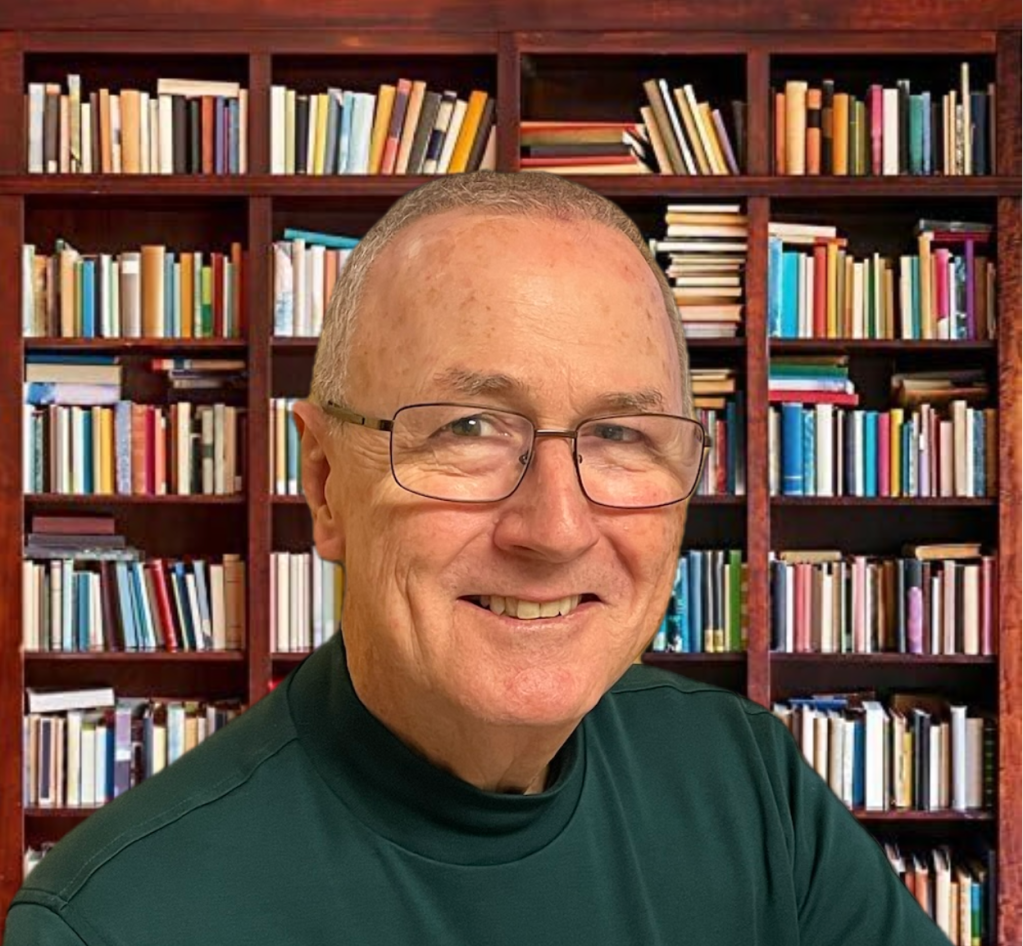
My name is Kevin Carroll. I was born and raised in San Francisco, California, where I attended Saint Ignatius College Preparatory. I am a graduate of both Santa Clara University and the University of San Francisco. Following a 40-year career in teaching and pastoral ministry, I launched a new career as a writer and speaker.
I live in San José, California. My wife, Kathy, and I have three adult sons and five precious grandchildren. I have much for which to be grateful.
I can be reached via email at kmc43sjc@gmail.com
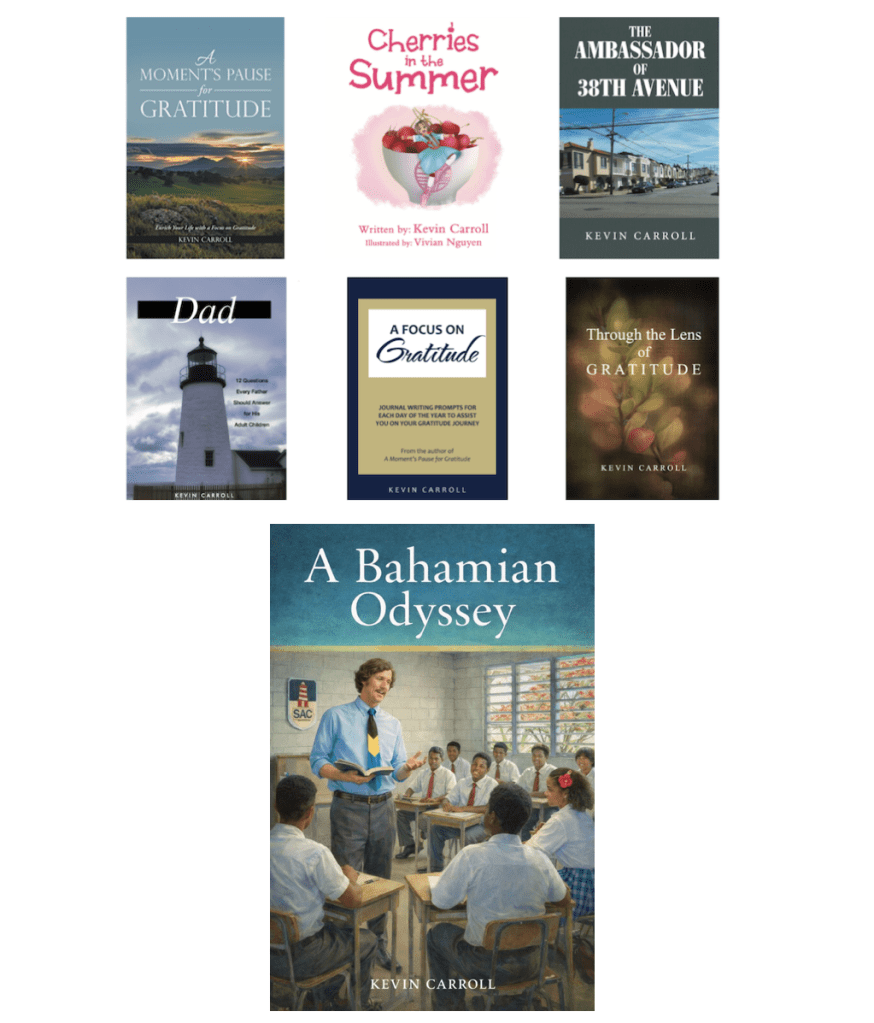
My books are available for purchase online from Amazon. I also have copies of some of these titles at my home for those who would like to buy them directly from me.
A Moment’s Pause for Gratitude (2017)
Cherries in the Summer (2021)
The Ambassador of 38th Avenue (2022)
Dad: 12 Questions… (2023)
A Focus on Gratitude (2024)
Through the Lens of Gratitude (2024)
A Bahamian Odyssey (2026)
-

- October 2026
- September 2026
- August 2026
- July 2026
- June 2026
- May 2026
- April 2026
- March 2026
- February 2026
- January 2026
- December 2025
- November 2025
- October 2025
- September 2025
- August 2025
- July 2025
- June 2025
- May 2025
- April 2025
- March 2025
- February 2025
- January 2025
- December 2024
- November 2024
- October 2024
- September 2024
- August 2024
- July 2024
- June 2024
- May 2024
- April 2024
- March 2024
- February 2024
- January 2024
- December 2023
- November 2023
- October 2023
- September 2023
- August 2023
- July 2023
- June 2023
- May 2023
- April 2023
- March 2023
- February 2023
- January 2023
- December 2022
- November 2022
-
Providence, RI
“What cheer?”
Motto of Providence, Rhode IslandI woke up in Rhode Island this morning — Providence, Rhode Island. Yesterday’s flights from San José (we had a stop-over in Denver) were quite pleasant, as far as air travel goes these days. From San José to Denver, the woman sitting next to Kathy engaged her in lively conversation from take-off to landing.
On the flight from Denver to Providence, I noticed right away that there was a young mother with three children, ages 10, 8, and 17-months, sitting directly across the aisle from us. I knew right then that it was going to be a chaotic three hour flight. It wasn’t. The kids, all three of them, were angels. It was a military family. Dad was driving a U-Haul with all the family’s belongings from Colorado Springs, where they’d lived for several years, to a town near Providence, where his new assignment took him. The 17-month-old boy would have been a great playmate for my grandson, Henry.
Enough about yesterday. Today is the first day of the rest of our lives, right? So here we are in Providence, preparing to board our New England Islands cruise, which will take us to Block Island, Newport, Martha’s Vineyard, Nantucket Island, New Bedford (MA), and Bristol. We have a lot of sightseeing to do in the next week.
Did you know that Rhode Island is not an island? Just aking.
Our adventure today begins with breakfast here at the hotel, followed by a bus tour of the must-see sites in Providence. We will board the American Star around noon time before it sets sail (no, it’s not a sailboat) for Block Island. I’m looking forward to a relaxing day.
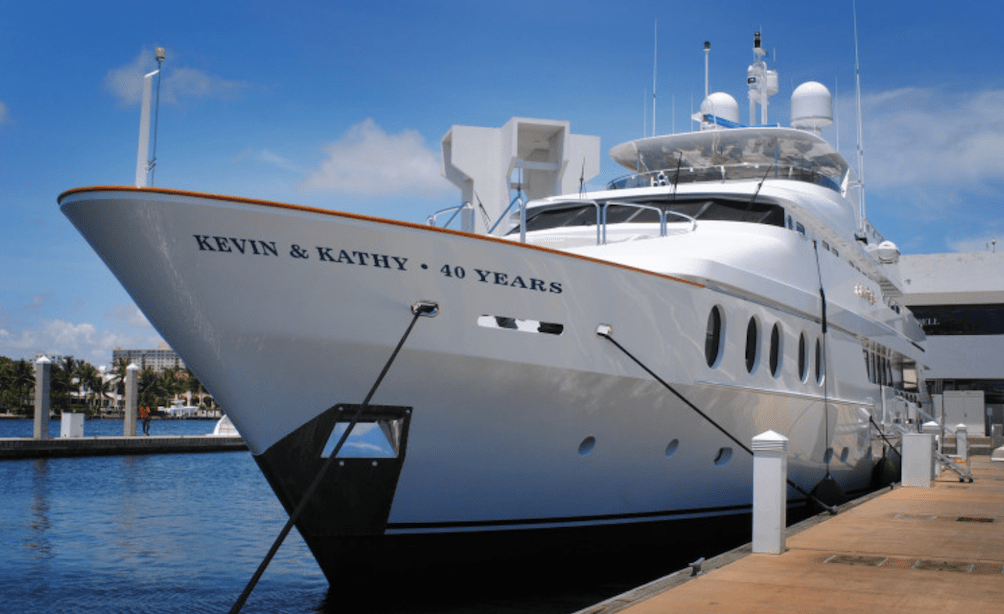
Now, about the American Star,… the ship in the photo above is NOT our vessel for this cruise. It’s simply the justification for it. Tomorrow, June 29th, Kathy and I celebrate the 40th anniversary of our marriage. 40 years! More on that tomorrow.
For now, it’s time to head down to breakfast in the Mozart Room, located on the Mezzanine Level of the Renaissance Providence Downtown Hotel. The window of our room looks directly across the street to the Rhode Island State House. Impressive structure, especially last night when it was all lit up.
As for the motto of the City of Providence quoted above… maybe someone will explain this to us today. I don’t get it.
-
On Our Way!

“The greatest adventure
is what lies ahead.”
J.R.R. TolkienAnd we’re off… together this time. Kathy and I certainly don’t qualify as avid travelers or frequent flyers, but we have traveled a bit in the past forty years. Since we’ve been married, Kathy has taken a few trips without me — to Chicago, Seattle, New Jersey, some God-forsaken place in Texas, and a fall foliage cruise in the Northeast, to name just a few. She also spent 36 memorable days without me in scenic Los Altos, California! I’ve taken a few trips without Kathy, too — to Japan, the Bahamas, Los Angeles, Washington, D.C., Pacific Grove, Palm Springs, and San Diego.
In addition to those trips, Kathy and I have traveled together many times — to Chicago, Orlando, the Bahamas, Nagasaki (Japan), Fort Wayne (Indiana), Lake Tahoe, Twain Harte, Pacific Grove, Eureka, Spokane, Seattle, Solvang, San Diego, Los Angeles, Las Vegas, the upper Michigan peninsula, Carmel by the Sea, Santa Barbara, and San Louis Obispo. I’m probably missing a few other places.
Last summer, Kathy and I embarked on our first cruise together. It was a river boat cruise on the Columbia River, from Astoria, Oregon to Lewiston, Idaho. The journey followed the path of the Lewis & Clark Expedition, but in reverse. We enjoyed it immensely, so we signed up to take another cruise this summer — a New England Islands cruise from Providence, Rhode Island to Block Island, Newport, Martha’s Vineyard, Nantucket, New Bedford (Massachusetts), and Bristol, RI. At the end of the excursion, we’ll spend a few extra days in Bristol visiting with my high school classmate, Steve Aveson, and his wife Karen.
Our 2025 adventure begins today. We fly out of San José this morning, arriving in Providence, Rhode Island around 8:00 tonight. Tomorrow we’ll board the American Star for the cruise. It’s a small ship, carrying only 200 passengers. Kathy and I prefer this to the mega-cruise ships which are like floating cities. American Cruise Lines offers a variety of small boat cruises across the United States. One more we would like to take some day is to Alaska.
Last year’s cruise was, essentially, a practice run. I wanted to see how I coped with being on a ship for a week. Kathy has been on several cruises in her life, but last year’s was my first. At no time did I feel queasy, so we booked the 2025 trip to celebrate our 40th wedding anniversary.
Kathy and I married on June 29, 1985. I’ll never forget the headline of the Sports section of the San José Mercury News that day: “CARROLL SAYS HE’LL FIND ESCAPE CLAUSE.” Apparently, the Golden State Warriors center, Joe Barry Carroll, was unhappy playing for Golden State and wanted out. The timing of the headline could not have been more perfect. Well, it’s been forty years and I still have not found an escape clause!!!
I don’t know how much I’ll be writing over the next week, but, if nothing else, I’ll post a few photo updates of our trip. We will return to San José on the evening of July 7th. I’m looking forward to including you in our adventure.
-
Why Things Happen

“Every single thing that has
ever happened in your life
is preparing you for a moment
that is yet to come.”
John SpenceI would guess that I’m not alone in wondering why some things have happened in my life. Whether they be good things or bad, it’s human nature to consider why life happens to us the way it does. In fact, I think it’s more than just human nature. I think it’s our responsibility as humans to give serious thought to why we experience the things we do in life.
When I was a junior in high school, sitting in the hallway with a group of friends, one of my teachers asked me to stop by his office. He offered me the opportunity to work in Jamaica the following summer. I accepted the unexpected invitation, but why me? One week to the day before leaving for Montego Bay, I found myself in an isolation room at Saint Mary’s Hospital with an infected blood clot in my ankle? Why me? In early spring of my senior year, the same teacher invited me to consider working as a dormitory prefect at Bellarmine College Prep in San José the following academic year. Sure, but why me? Two years later, that teacher contacted me at Bellarmine to ask if I would consider accepting a teaching job in a Catholic high school in Nassau, Bahamas. Again, I accepted, but why me?
This pattern of unsolicited opportunities, as well as a few disappointments, has continued throughout my life. While I was unaware of the “why” at the time of each experience, in retrospect, the reasons became clear. Each opportunity seemed to be preparing me for a moment yet to come.
Last Friday, I happened to meet a woman who, like me, was enjoying breakfast at the Java Beach Café in San Francisco. She was wearing a San Francisco Fire Department sweatshirt, so I struck up a conversation. She confided in me that she had been laid off from her job earlier in the morning. While news of her termination was initially upsetting to her, she had already considered the possibility that the experience would offer her an opportunity to pursue a career doing something she enjoyed more than what she had been doing, and in an environment more supportive and collegial than the one she was leaving. I was impressed.
There are still experiences for which my “why” remains a mystery. Why were two of my cars (1993 and 2010) totaled by irresponsible drivers? Why did I miss noticing the 18” curb in the Bahamas this past March, resulting in my face-plant on the pavement in the intersection? Why do I have such distaste for cucumbers, coffee, and cilantro? I just don’t know, and I may never know about these things. I do, however, recognize that many of my life experiences prepared me for opportunities I was not aware would arise in my future.
Author Harold Kushner, in his book When Bad Things Happen to Good People, urges readers to ask a different question. Rather than asking “why,” he recommends that we ask ourselves, “Where do I go from here?” I believe this is a much healthier response to life’s difficult times. It is a question of resilience, rather than regret.
Alexander Graham Bell once said, “When one door closes another one opens, but we often look so long and so regretfully upon the closed door that we do not see the ones which open for us.” This is the challenge with which we are all confronted.
The open doors are there for us if we are open to seeing them, and if we are courageous enough to walk through them.
-
Be the Light
“Be the lighthouse in
the sea of darkness.”
UnknownI am a firm believer in the overwhelming good which exists in our world today, yet, like you, I am well aware of some of the somber darkness with which many of us struggle. If we take a quick look back at human history, we’ll likely find that every generation has had to cope with similar feelings of fear and gloom, though for different reasons. Life is not always easy, but the world is always basically good.
When I began my 31-year career at Saint Lawrence in Santa Clara, California, my office, which had been a storage room for many years, had no furniture. Through the kindness of an office furniture company with whom I had previously done business, I acquired a magnificent desk and chair, along with two simple chairs for visitors. The office walls, two of which had been newly wood-paneled, were blank. I went to a store owned by the parents of one of my former students who provided four beautifully-framed prints — two were of sunsets and two were of lighthouses. I didn’t really have any particular reason for the lighthouse prints, but apparently, people who visited my office noticed them.
At Christmas time, my secretary gifted me a bottle of Old Spice after-shave in a bottle the shape of a lighthouse. I used it as a paperweight on my desk for 30 years. The following summer, one of the women who worked in the Saint Lawrence Extended Care Center returned home from a vacation in Hawaii with a clear paperweight engraved with a lighthouse. She told me that when she saw it in Maui, she thought of me. This was just the beginning.
Over the next 30 years, I ended up with dozens of ceramic lighthouse figurines, lighthouse calendars, lighthouse keychains, and assorted other lighthouse-themed gifts. It was clear to me that people definitely believed that I was an avid collector of lighthouses. Well, by then, I guess I was, though it was never my intention to do so.
Through the years, I’ve come to embrace the lighthouse as a symbol of hope and inspiration. This is precisely why I chose the name A Beacon of Light for this blog, and adopted the lighthouse logo shown above for use on this blog and on my business cards.
I have my down-days like anyone else, but, for the most part, I try to stay upbeat and positive in both my writing and my interaction with others in my life. Difficult as it may be from time to time, I prefer to see the cup as half-full. I believe in the goodness of people. I believe that the best days of my life have not happened yet. I believe that the stresses and concerns of today will pass in time, though I expect that they will be replaced by new stresses and concerns. That seems to be how life works.
As I’ve mentioned in previous blog posts and in my books, there are only two things in life over which we have complete control: our own effort and our own attitude. For this reason, I write with the hope of nurturing positivity in the world. I want to be that beacon of light for those who need a bit of inspiration to help them navigate the choppy waters of our world today with grace, confidence, and gratitude.
-
Flip the Script
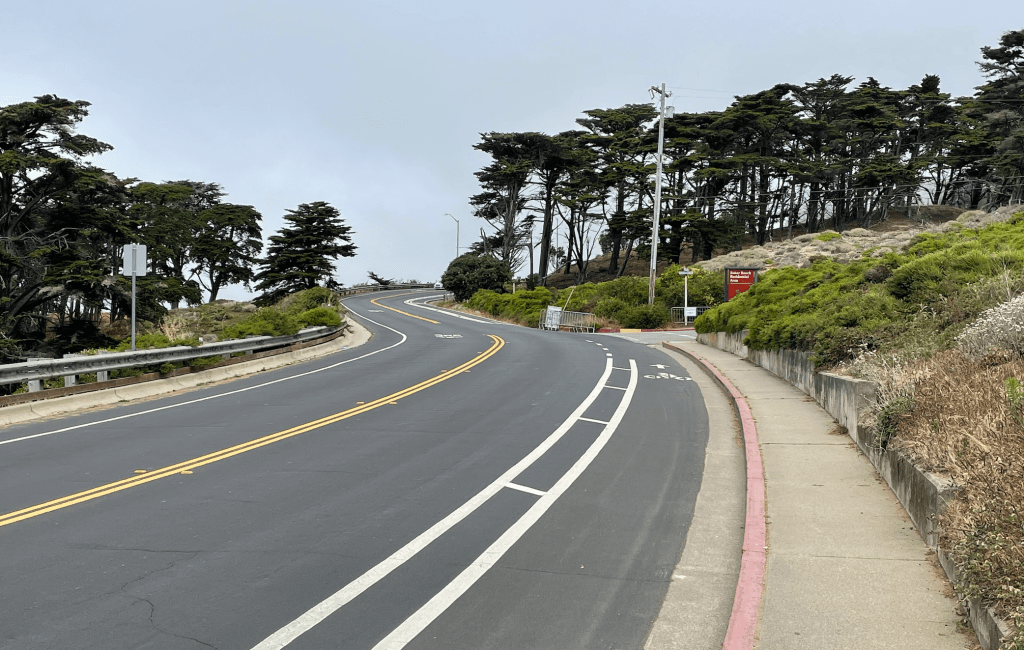
Lincoln Boulevard, San Francisco “A city that outdistances
man’s walking powers
is a trap for man.”
Arnold J. ToynbeeIf you live in San Francisco, or anywhere in the greater San Francisco Bay Area, you are most certainly aware of the Bay-to-Breakers race, which takes place in The City on the third Sunday in May each year. The event is a 7.5-mile race for serious runners. It’s also an annual 7.5-mile experience for thousands of others who run or walk, many in bizarre costumes, from the San Francisco Bay on the east side of The City to the Pacific Ocean on the west side. If you’re not familiar with this phenomenon, click here to watch a two-minute video: Bay-to-Breakers.
I have never participated in the Bay-to-Breakers race, though I have attended a few Bay-to-Breakers parties at the home of my friend, George Horsfall, who lives in a home just a few doors down from the dreaded Hayes Street hill. After enjoying a delicious breakfast at George’s with a number of others, we would walk up Steiner Street to watch the runners and walkers pass by Alamo Square. It’s an unforgettable event.
Yesterday, I flipped the script. I took Caltrain to The City, then the N-Judah streetcar to Ocean Beach at Judah Street. As I do quite often, I began my day with a delicious bowl of oatmeal with dried cranberries at Java Beach Café. After breakfast, rather than a Bay-to-Breakers experience, I began my Breakers-to-Bay walk. Instead of a direct path through the heart of San Francisco, I opted for a more circuitous route.
I started walking north on The Great Highway at Judah. I turned east on Clement and walked to 25th Avenue. I continued north on 25th to California Street, where I enjoyed a veggie burger and vanilla shake at Bill’s Place. Back on 25th, I continued north to Lincoln Boulevard, which led me to the Golden Gate Bridge. From there, I made my way down to Crissy Field, past the Marina Green, through Fort Mason to Aquatic Park and Fisherman’s Wharf, then along the Embarcadero past the Ferry Building and Oracle Park to the CalTrain station at 4th & King Streets.
Along the way, I met and conversed with a variety of people from around the globe — Oregon, Philadelphia, the Philippines, Tunisia, Jordan, and Poland, to name a few. This reminded me of what poet Maya Angelou said about walking in The City. She said, “In San Francisco, I can walk down the street and meet people who are not like me, who do not think like me, who do not look like me. And yet, we can walk down the street together.” Yes, this is San Francisco!
By the end of the day, I had walked 34,000 steps… more than 15 miles! One segment of the walk was especially meaningful for me.
It was about 25 years ago when my Dad and I took a long walk in The City. We walked from Letterman Hospital to the Ferry Building. The most challenging part of the walk for both of us was the segment of Lincoln Boulevard leading up to the Golden Gate Bridge. I was fairly young then, but Dad was a veteran walker in The City. As we climbed the slope overlooking the entrance to the Golden Gate, I struggled, but I didn’t want Dad to know I was struggling. I just wanted to keep up with him. Several years later, I learned that Dad was struggling on that hill, but he didn’t want me to know he was struggling. He just wanted to keep up with me!
Dad was very much on my mind as I navigated my way up that hill for the first time in 25 years.
-
Grandkids

“Few things in life
are more delightful
than grandchildren
fighting over your lap.”
Doug LarsonLove. Love. Love. This is what our grandchildren bring into our home each time they visit us. When I was a child, I never gave a thought to being a grandparent myself. Even when our own kids were born, the thought of being a grandfather some day was the furthest thing from my mind. When Tom and Hillaray married in 2012, the thought may have crossed my mind, but it wasn’t something to which I paid much attention, if at all.
In 2014, however, Tom and Hilla informed Kathy and me that we would be grandparents in September. Even then, I’m not sure that the reality of the situation really sunk in. Grandparents were old people, right? Kathy and I were certainly not old. It took awhile for me to fully embrace my role as “Papa.”
I am now an 11-year veteran grandpa. It’s who I am. It’s what I do. It’s what I enjoy. Kathy and I have been blessed with five delightful grandchildren. Each one has a unique personality, their own set of likes and dislikes, their own temperament, and their own quirks. They are children in every sense of the word — spirited, innocent, funny, precocious, affectionate, creative, energetic, caring, fashionable, and unconditionally loving. All those who told me that being a grandfather would be an amazing experience for me were absolutely correct. I love this gig!
There are many people in my life for whom I am grateful. I wouldn’t know where to begin listing them, and the list would be extraordinarily long. All five of our grandkids are high on my list. As I’ve said so many times before, I have so much for which to be grateful, and so many for whom to be grateful. Life is good.
-
68 and Feeling Great!
“Beautiful young people
are accidents of nature,
but beautiful old people
are works of art.”
Eleanor RooseveltIt’s a truth that cannot be denied. Kathy and I are getting older. I don’t think we’ve reached the age when the term “old people” applies to us yet, but with each passing year, we are getting closer to that point. I’m okay with this, and so is Kathy. Getting older certainly beats the alternative.
Our hearing isn’t quite as sharp as it used to be, nor is our vision. Kathy and I have both paid the price for too many hours in the sun without sunscreen in our younger years. Our bodies make noises they didn’t make twenty years ago, noises which resemble the “snap, crackle, and pop” from the Kellogg’s Rice Krispies breakfast cereal. While we still enjoy walking, running is no longer an option for either of us. When we sit or stand or lay in one position for long periods of time, it can be quite a challenge to get up and moving again. Despite all this, we are alive and well.
Today we celebrate Kathy’s birthday. We had a nice family dinner and swim party yesterday afternoon to celebrate our granddaughter’s birthday. All the kids and grandkids were with us. So there won’t be a big celebration today. Kathy’s totally okay with this. She and I agree that, with each passing year, there is no reason to make a big deal out of our birthdays. I suspect that in the years to come, we will continue to acknowledge birthdays for ages ending in zero and five. It’s well and good if the others pass without any fanfare.
I have a tremendous sense of gratitude for Kathy’s presence in my life. I’m grateful that she has been, and continues to be, a remarkable mother and grandmother. Despite our differences, we make a good team.
One week from today, we celebrate another milestone in our lives — our 40th wedding anniversary. It’s been quite a ride. I can’t think of anyone else who would have put up with me for this long!
Happy Birthday, Kathy!
-
Penny’s Big Day

Happy Birthday to my granddaughter, Penelope! Birthdays are special occasions for all of us. We gather to acknowledge the growth of someone we love dearly. Today is a day for such a celebration.
Kathy and I are grateful that Penny, along with her Dad (Steve), Mom (Morgan), sister (Scarlett), and brother (Henry) live just two doors down from us here in San José. We see them just about every day, so we’ve had the opportunity to watch Penny grow day by day. She has transformed from baby to toddler to responsible older sister. She loves being creative, dancing, and reading. Her presence in our lives is a true blessing.
I have no recollection of my own childhood birthday parties, though I know I had them. Home movies from the late 50s show a bunch of kids wearing birthday hats sitting around a table in our garage. The first birthday party for a friend I recall attending was for my 38th Avenue neighbor, Donna Ostrom. It was probably her 5-year celebration. I won a prize for winning the drop-the-clothespin-in-the-bottle game.
A number of Penny’s classmates will attend her party today. If I’m not mistaken, the first school birthday party I was invited to was for my classmate, Davina Cosenza. All I remember about it is that the week leading up the the party seemed like the longest week of my life. I was so excited about going to her party.
Today we celebrate Penny… with gratitude!
-
San Francisco

“San Francisco has
only one drawback —
’tis hard to leave.”
Rudyard KiplingThose who know me are well aware that I enjoy spending days in San Francisco. I was born and raised there. The City will always be “home” to me.
I’ve lived in the South Bay since 1972 — for five years in San José (just off The Alameda and Highway 17), seven years in Santa Clara (near Santa Clara University), and in West San José since 1986. While I’ve spent most of my life here in the Santa Clara Valley, I will always consider myself to be a City kid.
In my retirement, I enjoy taking CalTrain from Santa Clara to San Francisco. I get around to different parts of The City by walking or using public transportation, normally logging between 15,000 to 20,000 steps in a day. Most often, I take these day-trips alone.
Yesterday, I met up with my long-time friend, Dan Pasini, for a trip to The City and a ferry boat ride to the charming little town of Sausalito. Dan lives in San Carlos, so I texted him to let him know which train I was on. He boarded the same train when it arrived in San Carlos. We stopped in Burlingame for breakfast at Copenhagen Bakery & Café before continuing our journey to San Francisco. We boarded the Golden Gate Ferry at the Ferry Building on the Embarcadero at Market Street and arrived in Sausalito around 1:00.
We enjoyed lunch at the same restaurant my friend, Pierce Murphy, and I had visited a couple of weeks ago. The Sausalito Bakery & Café serves delicious sandwiches and offers a delectable array of baked goods for dessert. The quaint environment and the outstanding service make it an ideal place for a casual lunch.
After walking around downtown Sausalito for a while, stopping in to various businesses along the way, we boarded the boat for the ride back to San Francisco. As the vessel passed Alcatraz Island and began its approach to The City, I was able to capture the spectacular photo of the San Francisco skyline shown above. I always tell people I’m not a photographer, but the camera in my iPhone often makes the photos I take appear to be professionally done. I’m pretty sure this is the best skyline photo of The City I’ve ever taken.
After disembarking, Dan and I made our way back to the CalTrain station for the ride back to the South Bay. A gorgeous, though somewhat breezy, day in The City with a friend of almost 55 years is a priceless combination. I thoroughly enjoy Dan’s companionship.
It’s been said that friendships are a lot like tending to a garden. Just as plants need to be watered and cared for, friendships need to be maintained and nourished. I am grateful for Dan, for the gift of his time, and for his friendship.
-
Winning
“It’s not whether
you win or lose,
but how you
play the game.”
Grantland RiceA popular saying displayed on T-shirts and bumper stickers in the 1980s promoted a hedonistic, yet popular mindset. “He who dies with the most toys wins.” These words were originally attributed to American businessman Malcolm Forbes. Another perspective on life is reflected in a similar quote: “He who dies with the most toys is dead.” It’s true,… you can’t take it with you.
Winning is good. Losing is bad. Winners are admired. Losers are…, well, losers. No one wants to be labeled a loser, right?
When I played competitive sports in my younger years and would return home after a game, my father would often ask, “Did you win?” That question impressed upon me the importance of winning. I don’t recall him ever asking, “Did you give it your best shot?” or “Did you have fun?”
Grantland Rice, an American sportswriter, died in July 1954, when I was just six weeks old. He left behind a gem of wisdom we’ve all heard, but few seem to have understood or embraced. Rice wrote, “It’s not whether you win or lose, but how you play the game.”
Despite the fact that I heard these words countless times in my youth, the meaning never quite sunk in. Why? Perhaps it’s because a number of influential people in my life, most notably coaches, contradicted these words and impressed upon my teammates and me the critical importance of winning. Finishing a season in second place was a disappointment. Oakland Raiders’ owner, Al Davis, promoted the “Just win, baby” philosophy. Doing one’s best wasn’t good enough if you didn’t finish the season #1.
Green Bay Packers’ coach Vince Lombardi seemed to have a more healthy perspective. He said, “Winning is not everything — but making the effort to win is.”
UCLA’s legendary men’s basketball coach, John Wooden, whose teams won ten national championships in twelve seasons, downplayed the importance of winning. “If there’s anything you could point out where I was a little different, it was the fact that I never mentioned winning,” he quipped. He always told his players, “Just do the best you can. No one can do more than that.”
Wooden also pointed out, “You can lose when you outscore somebody in a game.” In other words, a win is not something to be proud of if you haven’t put forth your best effort. And a loss is not something to be ashamed of if you have put forth your best effort.
In his book, The Score Takes Care of Itself, former San Francisco 49ers’ head coach, Bill Walsh, wrote, “Concentrate on what will produce results rather than on the results, the process rather than the prize.”
It took me a long time — much too long — to comprehend and accept the validity of Rice’s oft-repeated words. Commitment, sportsmanship, and effort are much better indicators of success than a simple win.
-
Subscribe
Subscribed
Have a WordPress.com account? Log in now.

