-

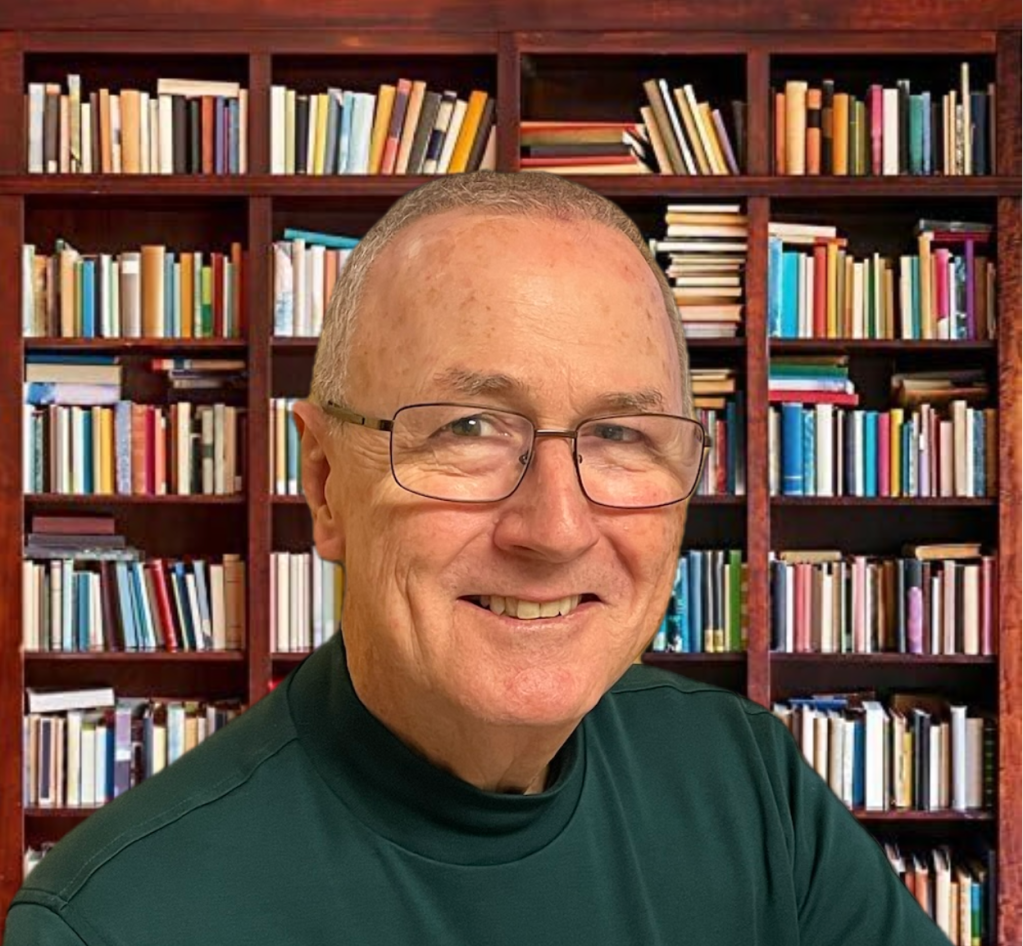
My name is Kevin Carroll. I was born and raised in San Francisco, California, where I attended Saint Ignatius College Preparatory. I am a graduate of both Santa Clara University and the University of San Francisco. Following a 40-year career in teaching and pastoral ministry, I launched a new career as a writer and speaker.
I live in San José, California. My wife, Kathy, and I have three adult sons and five precious grandchildren. I have much for which to be grateful.
I can be reached via email at kmc43sjc@gmail.com
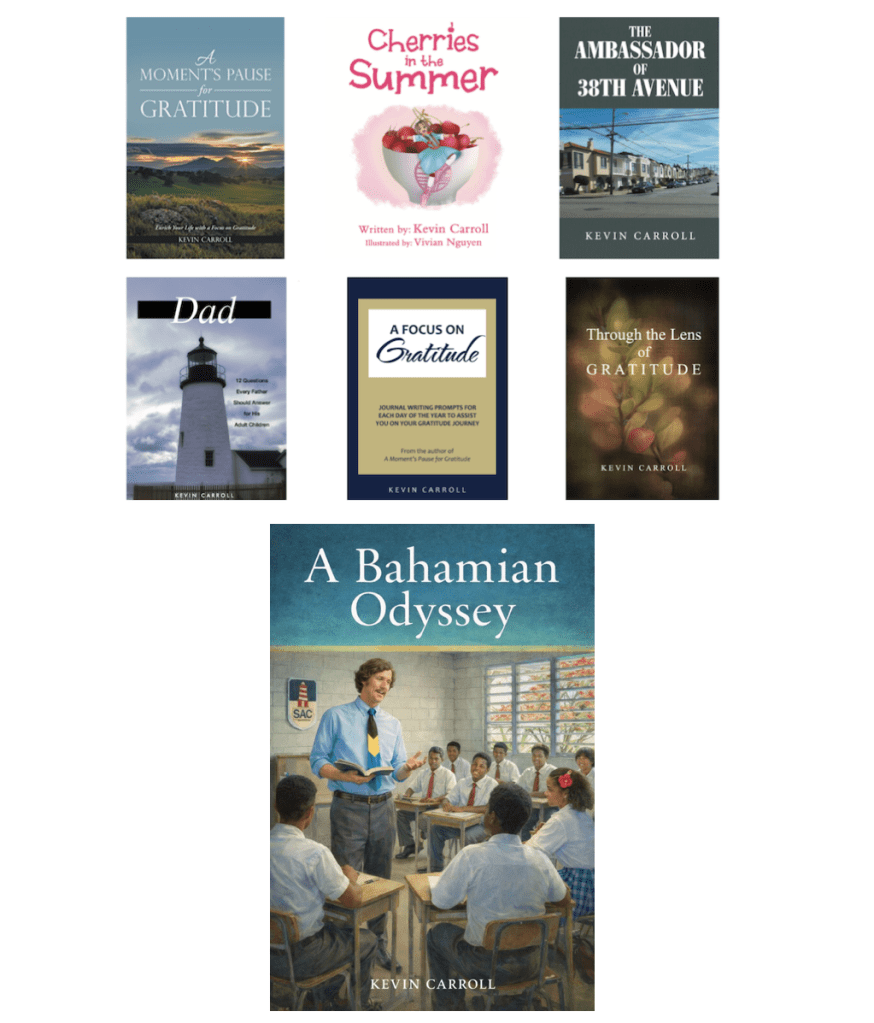
My books are available for purchase online from Amazon. I also have copies of some of these titles at my home for those who would like to buy them directly from me.
A Moment’s Pause for Gratitude (2017)
Cherries in the Summer (2021)
The Ambassador of 38th Avenue (2022)
Dad: 12 Questions… (2023)
A Focus on Gratitude (2024)
Through the Lens of Gratitude (2024)
A Bahamian Odyssey (2026)
-

- October 2026
- September 2026
- August 2026
- July 2026
- June 2026
- May 2026
- April 2026
- March 2026
- February 2026
- January 2026
- December 2025
- November 2025
- October 2025
- September 2025
- August 2025
- July 2025
- June 2025
- May 2025
- April 2025
- March 2025
- February 2025
- January 2025
- December 2024
- November 2024
- October 2024
- September 2024
- August 2024
- July 2024
- June 2024
- May 2024
- April 2024
- March 2024
- February 2024
- January 2024
- December 2023
- November 2023
- October 2023
- September 2023
- August 2023
- July 2023
- June 2023
- May 2023
- April 2023
- March 2023
- February 2023
- January 2023
- December 2022
- November 2022
-
Imagine That!
“Imagination is the
beginning of
creation.”
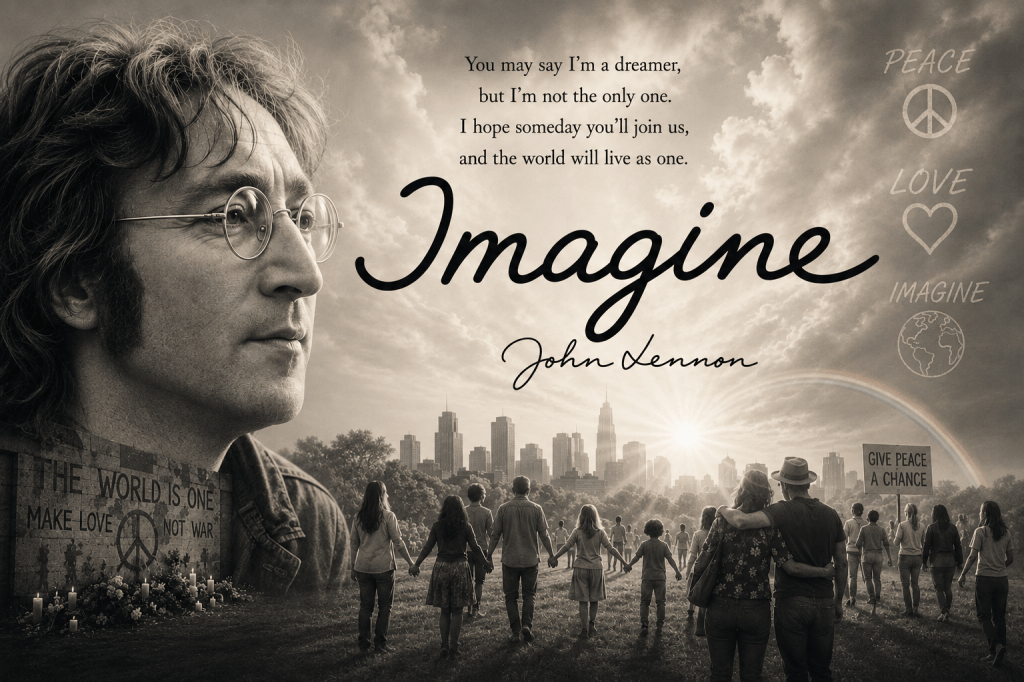
George Bernard ShawOur ability to imagine is a tremendous gift. It allows us to visualize a preferred future. Sadly, our imagination can also cause us a great deal of anxiety when we obsess over things we fear about the future — things which, quite often, fail to materialize.
Shaw’s quote above is just the beginning of a longer statement. He continued, “You imagine what you desire, you will what you imagine, and at last, you create what you will.”
Peter Drucker, an Austrian-American educator and author, places responsibility for the creation of a preferred future right on us. He wrote, “The best way to predict your future is to create it.” We cannot wait for others to do it for us.
Victor Hugo, a French author and politician, reaffirmed the belief that using our imagination can be beneficial to creating a better life down the road. He wrote, “There is nothing like a dream to create the future.”
Using one’s imagination, visualizing a preferred future, is a strategy available to us all. I learned first-hand that this is true in the world of athletics. Using the process of visualization prior to each game, a basketball team I coached in 1980, which had not won a game in three years, finished the league season undefeated. Same players. Same game. Different approach. By seeing (in their minds) themselves repeatedly and successfully performing on the court, the players were able to approach their games with greater confidence in themselves.
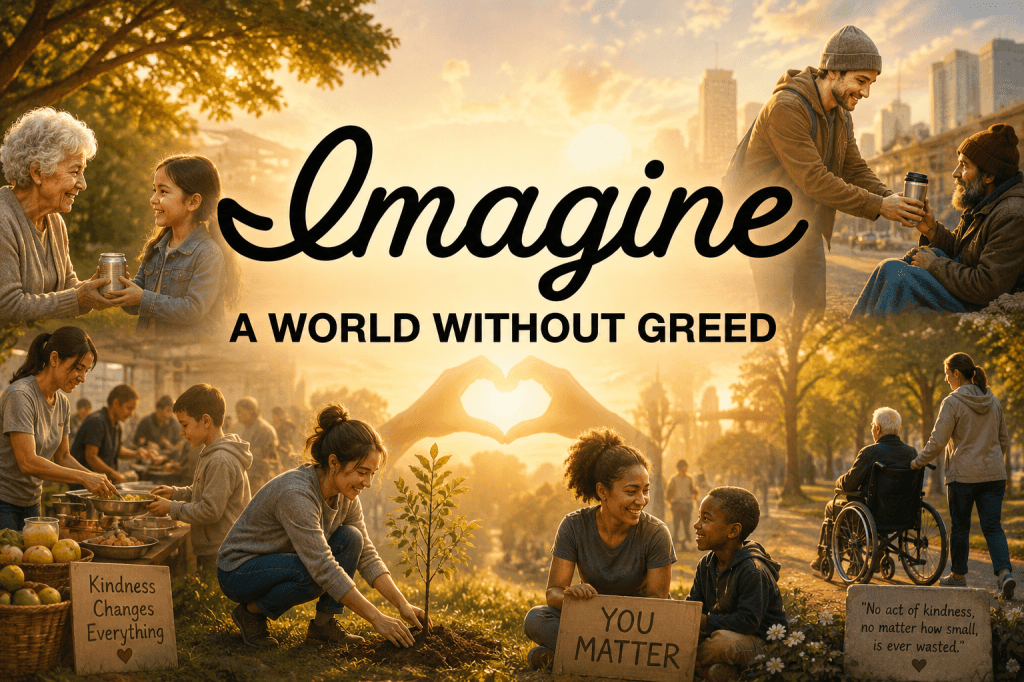
Here are a few prompts to help you imagine… and to visualize a preferred future for you and your loved ones.





Feel free to share
this post. -
08.08.26
August 7, 2026 -
Compassion
“Suffering gives a
human depth,
humility, and
compassion.”
Eckhart TolleWe live in a culture which trains us, from our earliest days, to see life as a competition. During our years in school, we compare height, test scores, grades, playing time on athletic teams, and awards earned. As we get older, we find ourselves comparing car types, social media followers, salaries, vacation destinations, and the square footage of our homes. This experience of comparison has a significant effect on how we view the world in which we live. It also affects how we see ourselves and those around us, because we may perceive the success of others as a personal threat.
When this mindset takes hold, it becomes difficult, if not impossible, to embrace the trust and cooperation that holds our society together. Not only do we trust less and cooperate less, we actually become less. When we accept that life is nothing more than a competition, we lose our ability to feel and show compassion for others.
It’s not healthy for us to feel threatened by the success of others. It’s not healthy for us to measure the lives of others against our own. It’s absolutely essential that we recognize that the pie of life is not finite. There’s more than enough to go around,… if we are willing to take only what we need and leave the rest for others.
When we begin to see others as fellow human beings, rather than competitors, compassion becomes a natural response. Only then are we able to recognize that there is no shortage of compassionate people around us. I am reminded of a quote my mother shared with me on many occasions: “There, but for the grace of God, go I.”
Compassionate people are well aware that they cannot solve the world’s problems alone. They accept the reality that changing even one life can be rewarding. We don’t need to fix everything to do something. As Mother Teresa taught us, “If you can’t feed 100 people, then feed just one.”
It is so easy for us to see someone going through a difficult time and judge them. Thomas Merton, an American Trappist monk, wrote, “Our job is to love others without stopping to inquire whether or not they are worthy.” For us to help others, whether it is with money, time, wisdom, or experience, we must believe that they are worthy of our assistance — no matter what.
We may not be the wealthiest people in our neighborhood. We may not own the biggest house or the nicest car. We may not have more followers on social media than other people we know, but we all have something we can share with those who are in need of assistance. It might be something as simple as a smile, an acknowledgement that the other person exists, or a few minutes of our time to engage them in conversation.
Author Joshua Becker wrote, “In our culture, the prescribed cure for insignificance is to accumulate — wealth, possessions, accolades, followers. But that prescription has never worked… Meaningful living has always belonged to those who have learned to give themselves to others.”
This I know for sure: the more we show compassion to others, the more our lives will improve.
-
On This Date

“I always thought
that record would
stand until it
was broken.”
Yogi BerraAfter yesterday’s blog post, I thought I’d write about something a little lighter today.
On August 6, 1972, just two months after I graduated from high school, Hank Aaron, of the Atlanta Braves, beat Babe Ruth’s record for the most home runs with a single team. On that date, he hit his 660th and 661st home runs in a game against the Cincinnati Reds at Riverfront Stadium in Cincinnati. Aaron’s second home run of the night came in the top of the 10th inning to break a 3-3 tie. The Braves shut down the Reds in the bottom of the 10th to secure the victory.
Aaron put together one of the greatest careers in baseball history. He hit a total of 755 home runs, a record which stood for over 33 years. He holds the all-time records for runs batted in (2,297), total bases (6,856), and extra base hits (1,477). He was the first player in Major League history to record both 3,000 hits and 500 home runs. Aaron finished his career with 3,771 hits, ranking third all-time.
In recognition of his consistent excellence, Aaron was selected to the All Star Game every year from 1955 to 1975. His .305 career batting average puts him among the elite in MLB history.
In his retirement years, Aaron was known to play a lot of golf, which led him to share this thought about the difference between baseball and golf: “It took me seventeen years to get 3,000 hits in baseball. It took one afternoon on the golf course.”
Gotta love that guy! Aaron died on January 22, 2021 in Atlanta, Georgia.
-
Bad Memories
“Bad memories
have long shadows.”
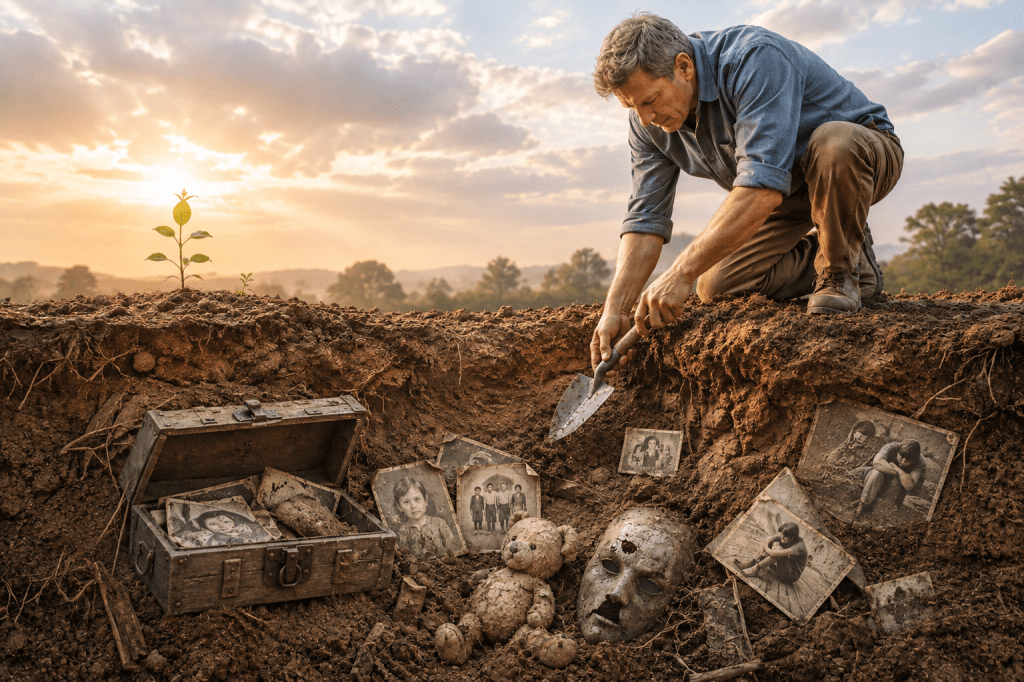
R.J. ElloryBad memories… we all have them. Some, not surprisingly, are more traumatic than others. The problem with these memories is that, as English writer R.J. Ellory points out, they have long shadows. Try as we might to put them out of our mind, they seem to find a way to revisit us, often breaking open the unhealed scab which remains from the original transgression.
For sixty years, there is one memory I have tried to put behind me. It has resurfaced in my life more times than I would like to admit. While I am not able to completely recall the specific details of the incident, the feeling I experience whenever that memory comes to mind reminds me that something wrong, something significant, happened to me — that something that should never have happened, actually did occur.
That feeling gripped me once again on the afternoon of Wednesday, June 3rd while I was walking in San Francisco. I arrived at a specific location in The City when, once again, the memory of that reprehensible event was triggered by something I saw. It really should not have surprised me. Without realizing it, I had wandered to the exact location where the incident took place. My body tensed up with anxiety as memories of that afternoon in the 1960’s raced through my head.
The feelings were tangible — helplessness, anger, embarrassment, shame, regret that I had not handled the situation differently at the time. The event replayed in my memory. As is always the case, however, I was unable to recall everything that had happened that day. I tried my best not to think about it, but that’s like trying not to breathe. It wasn’t an option.
I have no question about who was involved. I am well-aware of where the incident took place. I have never been able to comprehend why such a thing would happen. And I am a bit uncertain as to exactly when it happened, though I know I was in either sixth or seventh grade at the time. It’s a recurring flashback from which I’ve been unable to escape.
This is not the only bad memory of my life. To this day, I still have nocturnal recollections of the last ten years of my teaching career, when toxicity in the workplace compelled me to retire prematurely. This memory, however, unlike those that I experience in my sleep, only resurfaces when I am awake. I’ve decided the time has finally come to confront this distressing memory head-on.
I’m grateful for the opportunity I have, with the help of a professional therapist, to do some serious digging into my past in an effort to make sense out of what, for sixty years, has not made sense to me.
-
08.04.2026

“Use a picture.
It’s worth a
thousand words.”
Arthur BrisbaneI make an effort to keep my blog posts to about 500 words. For this reason, I’m going to let this image speak for itself. I’d love to know what you think. You can respond to: kmc43sjc@gmail.com.
-
Summer Fun
Every summer
has a story.Novelist Henry James wrote, “Summer afternoon — summer afternoon; to me those have always been the two most beautiful words in the English language.” I am fairly certain that most people would agree with him. I, for one, most definitely do.
While I often write about my favorite season of the year being autumn, throughout my life, I have taken great pleasure in enjoying the days of summer. In my childhood, summers meant spending my time at Silver Tree Day Camp in San Francisco, or a week or so with my family at Redwood Rest Resort in Boulder Creek or Pine Grove Resort in Lake County. As I mentioned in a recent post, I spent the summer of 1971 in Jamaica,… and I had the opportunity to spend the summer of 1974 running a summer day camp in The Bahamas. Summers have always been very good to me.
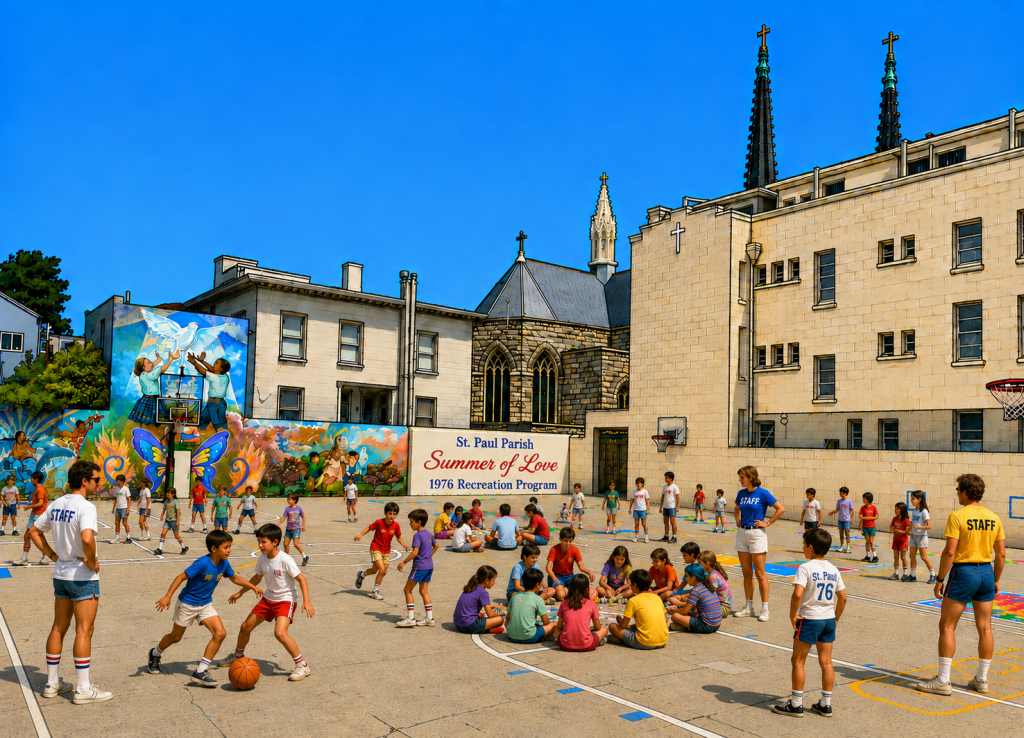
There was one summer, however, when I didn’t have any plans. It was the summer of 1976. I knew that I would be returning to San José to live and teach at Bellarmine College Preparatory in the fall, and continue my education at Santa Clara University, but I had not made any plans for how I would spend the summer of our country’s bicentennial. Somehow, and I don’t recall exactly how it happened, I ended up volunteering at the St. Paul Parish “Summer of Love” recreation program.
My Dad had attended St. Paul School in his childhood. He had lived at 25th & Sanchez Streets, not far from the church and school. In that summer of ’76, the parish offered a recreation program for children ages 7-12. Since I’d had extensive experience working at Silver Tree Day Camp as a junior counselor, I was confident in my ability to be a contributing member of the volunteer staff at the Summer of Love.
Each day, the kids who attended the program had a variety of activities from which to choose — arts and crafts, table games, kickball, relay races, basketball, soccer, bingo, talent shows, and more. The staff, which included two sisters from the convent along with about a dozen high school and college students, was outstanding. I recall there being a good vibe among those who worked each day with the kids.
On my walk through Noe Valley last Friday, I passed the St. Paul schoolyard on 29th Street. I paused to look through the fence into the empty yard. Sadly, it appears that the summer recreation program is a thing of the past. This disappoints me, especially knowing that in recent years, the school building has been rebuilt and now includes a state of the art gymnasium. What a perfect venue for a thriving summer program for kids.
It’s been fifty years since I participated in the Summer of Love program, yet I still have fond memories of my experiences there, and of some of the people with whom I worked.
Yes, every summer has a story. The summer of 1976 is yet another gift for which to be grateful in my life.
-
Good Morning!

Have a great day!
-
Remembering Dad
29th Street Hill “Death ends
a life, not a
relationship.”
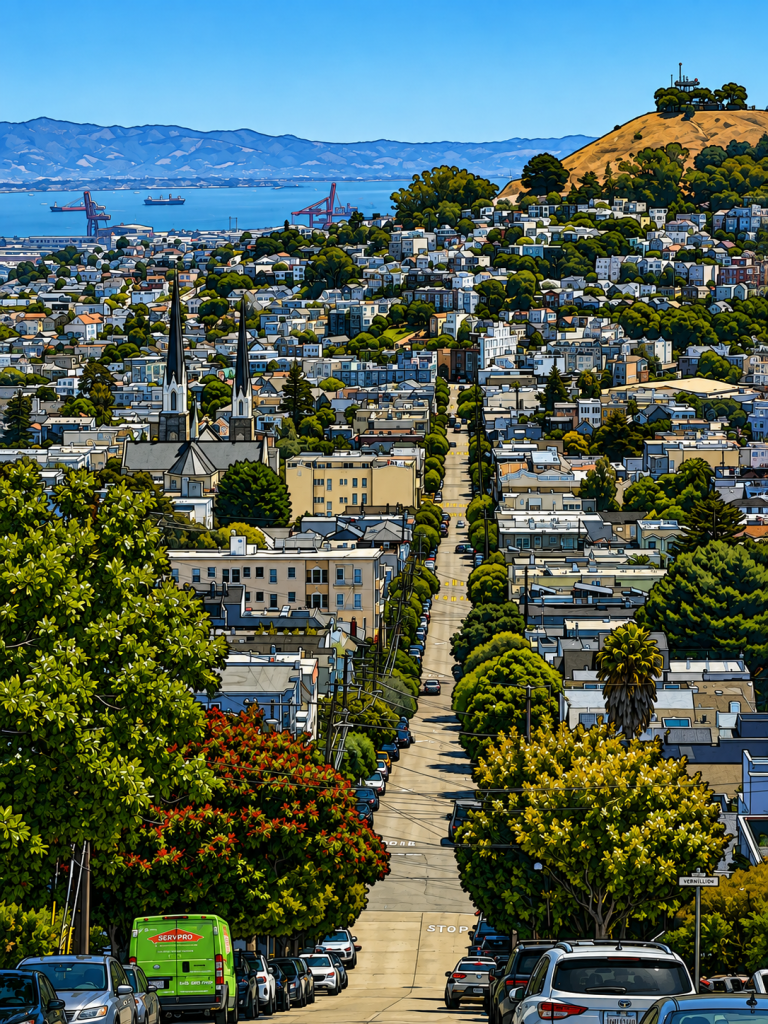
Mitch AlbomYesterday, July 31st, was the feast day of Saint Ignatius of Loyola. It was also the eighteenth anniversary of my Dad’s unexpected death. Again this year, I spent a good part of the day walking in The City. I began my walk at the Glen Park Bart Station — Diamond & Bosworth Streets.
After a delicious oatmeal raisin cookie and cup of hot chocolate at the Bello Coffee Shop on Diamond, I began my trek up Diamond Street to the top of Diamond Heights. From there, I stayed on Diamond until I got to 29th Street. This is where I stopped to take the photo above. As challenging as it was walking up the steep Diamond Street hill from Glen Park to Diamond Heights, the walk down 29th Street was much more taxing on my knees. I was relieved to get to the bottom of the hill at Sanchez Street.
Dad grew up on Sanchez Street at 25th. He attended Saint Paul Elementary School at 29th & Church before beginning his high school years at Saint Ignatius High School on Stanyan Street in September 1939.
After a brief walk through the Noe Valley neighborhood, I stopped for a light lunch at Martha & Brothers Coffee Shop at the corner of Duncan & Church Streets. I was pleasantly surprised by the quality of the yogurt parfait, which was served with granola and fresh fruit. It was the perfect lunch for a comfortably warm and sunny summer day in San Francisco.
I ended my day back out in the Sunset District, where I had parked my car outside Java Beach Café at 45th & Sloat earlier in the morning. Of course, I had to walk up 38th Avenue from Vicente to Wawona Streets to see our old family home. Serendipitously, just as I got to the house, the current resident of 2650 – 38th Avenue arrived home. I introduced myself to him and asked if I could go into the garage for a moment. I explained to him about Dad’s death eighteen years ago and how he had fallen down the back stairs, sustaining a traumatic head injury. He invited me in.
Mom moved out of this home fourteen years ago today. Still, there is a plethora of evidence to prove that we once lived there, including “Kevin was here 6/4/64” written in chalk on the garage wall. I stood for just a moment at the bottom of the staircase where Dad fell. I’m not sure why I felt the need to do this, but I did… and I’m glad I did. I walked out the garage door and up 38th Avenue with a tremendous sense of inner peace.
I’m grateful that the weather for today’s outing was so agreeable. It was sunny, comfortably warm, and a bit breezy, but quite pleasant throughout the day.
Let the month of August begin! — A M D G

2650 – 38th Avenue -
Jamaica 1971
“The spirit is
strong and our
culture is vibrant.”
Edmund Bartlett
Jamaica Tourism MinisterJamaica, with its vibrant culture, stunning landscapes, white sand beaches, and warm hospitality, has captured the hearts of people from around the world. Many famous personalities have been touched by Jamaica in their lives, whether through its music, culture, or natural beauty. There are many celebrities who have been inspired by or have had a connection to Jamaica, which has influenced their lives and work. From authors and musicians to athletes and politicians, Jamaica’s influence can be seen in their work, their lives, and their hearts.
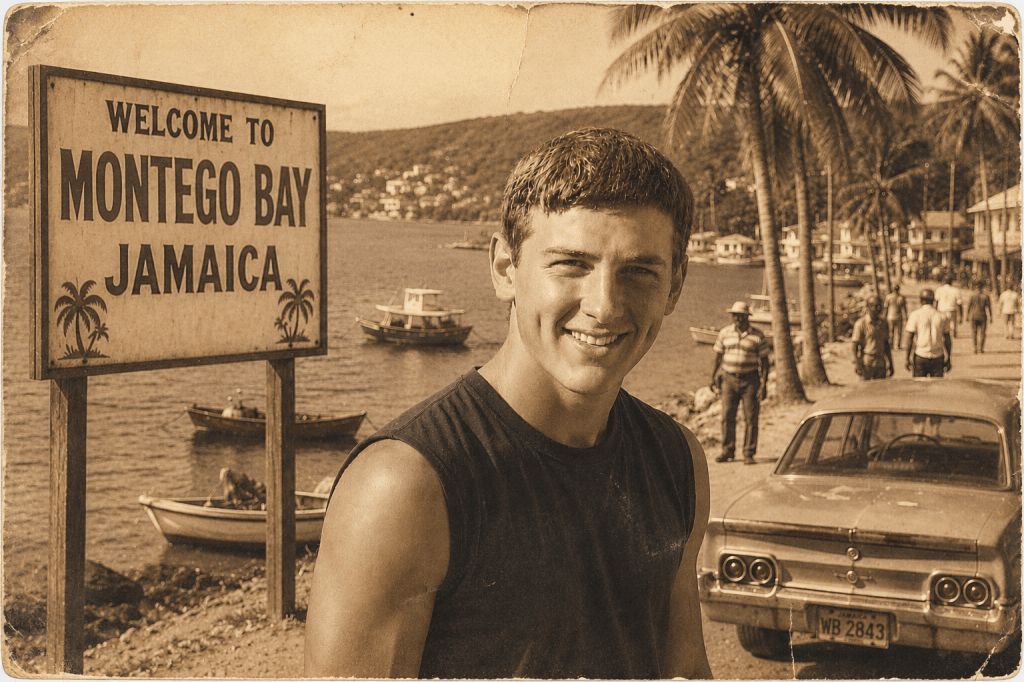
Though I am anything but a celebrity, my life, too, has been touched by Jamaica. On this date fifty-five years ago, my Saint Ignatius classmate, Dan Pasini, and I were traveling across the island teaching and learning liturgical music for young people with Father Russ Roide, S.J. The experience, more than I realized at the time, was life-changing for me.
I was only seventeen years old in the summer of 1971. While I was part of the music ministry group at S.I., I was not in a leadership role. I didn’t play an instrument. All I had to contribute to the group was my voice and my desire to participate in school liturgies. It came as a shock to me to receive the invitation by Fr. Roide to join him in Jamaica.
There’s a very good chance that I was not one of the first to be invited. Surely, Russ must have asked some of the other members of the group who had more to offer in terms of their ability to play a musical instrument. Even if I did end up going by default, I enjoyed the experience immensely. Dan and I had a great time immersing ourselves in Jamaican culture, eating Jamaican food, and even going to the beach in Montego Bay with Beverly Chin and Kathy Kafati, two local Jamaican girls who stopped by the bishop’s residence to invite us to join them. Yes, it was quite an experience.
Blessed Sacrament Cathedral in Montego Bay was our home base for the summer. We stayed in guest rooms in the residence of Bishop Edgarton Clarke, bishop of Montego Bay. Our travels took us to a variety of places across the island — Mandeville, Seaford Town, Kingston, and several of the tourist areas along the island’s north coast. One of the highlights of the trip was a brief stop at Dunn’s River Falls in Ocho Rios.
55 years ago today, on July 31, 1971, Russ, Dan, and I attended an event at Campion College, one of the two Jesuit schools in Kingston. It was a celebration of the feast day of Saint Ignatius of Loyola, founder of the Society of Jesus (Jesuits). It was there that I met Father Elias Achatz, a Benedictine monk from Nassau in The Bahamas. In the spring of 1974, he invited Dan and me to spend the 1974-75 academic year teaching at Saint Augustine’s College in Nassau. We both accepted his invitation. Talk about life-changing experiences!
As a result of that one year teaching at SAC, I committed my life to teaching. The fulfillment I experienced teaching in Nassau motivated me to continue my education and devote 43 years of my life to catholic education.
Jamaican novelist Nicole Dennis-Benn wrote, “Jamaica is more than just sun, sea, and sand. It’s a place where stories are born, where the whisper of the past mingles with the rhythm of the present.”
A story was born in July 1971, and I’ve been living it ever since.
A M D G
-
Subscribe
Subscribed
Have a WordPress.com account? Log in now.

