-

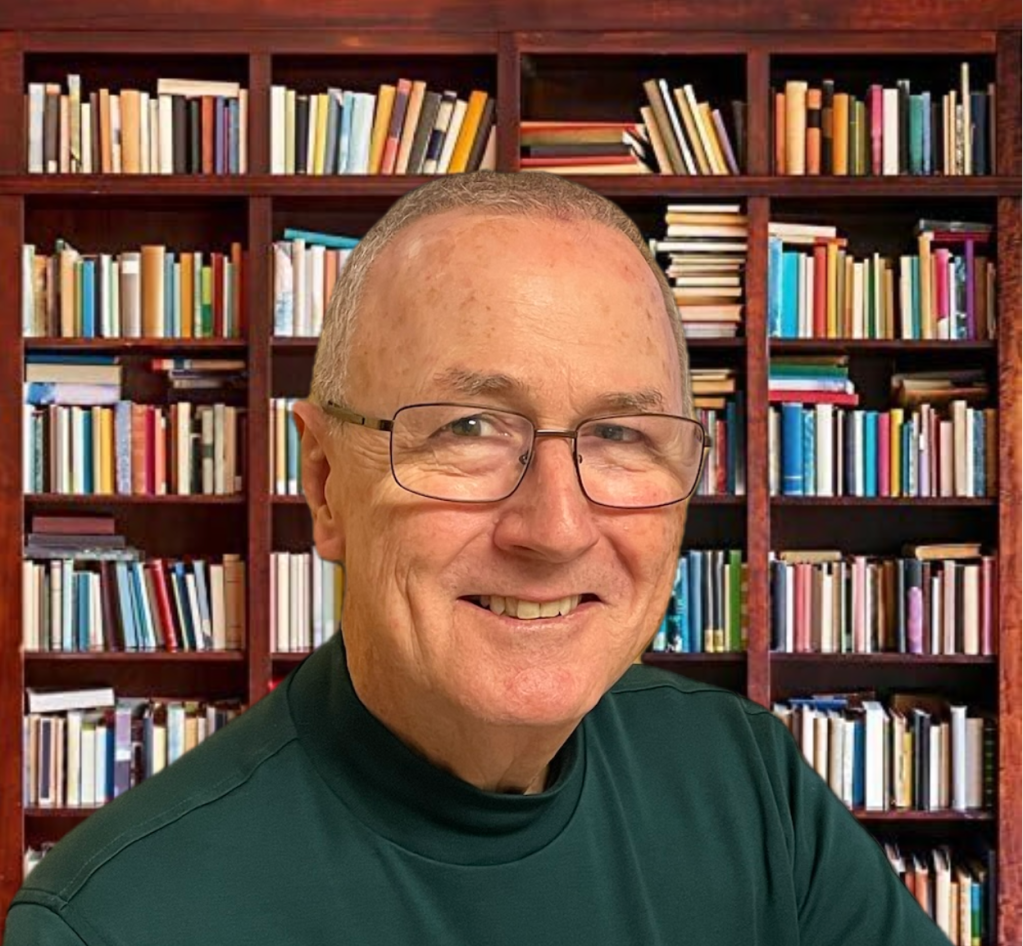
My name is Kevin Carroll. I was born and raised in San Francisco, California, where I attended Saint Ignatius College Preparatory. I am a graduate of both Santa Clara University and the University of San Francisco. Following a 40-year career in teaching and pastoral ministry, I launched a new career as a writer and speaker.
I live in San José, California. My wife, Kathy, and I have three adult sons and five precious grandchildren. I have much for which to be grateful.
I can be reached via email at kmc43sjc@gmail.com
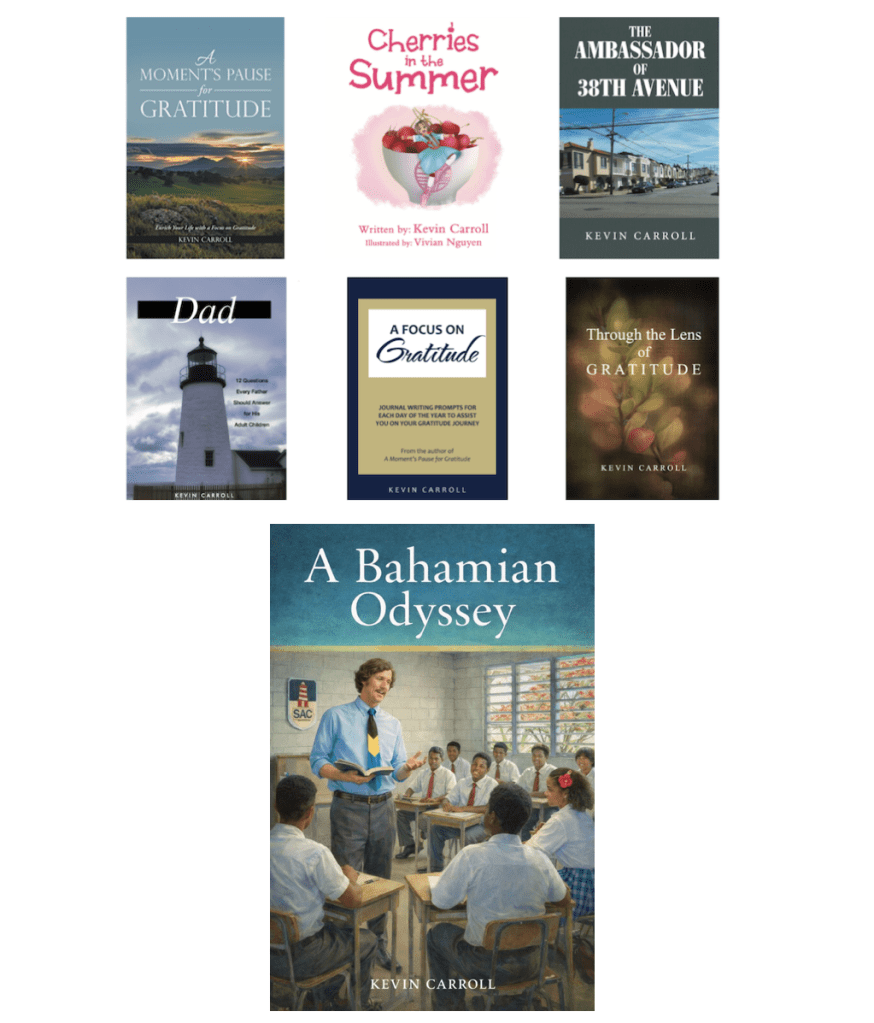
My books are available for purchase online from Amazon. I also have copies of some of these titles at my home for those who would like to buy them directly from me.
A Moment’s Pause for Gratitude (2017)
Cherries in the Summer (2021)
The Ambassador of 38th Avenue (2022)
Dad: 12 Questions… (2023)
A Focus on Gratitude (2024)
Through the Lens of Gratitude (2024)
A Bahamian Odyssey (2026)
-

- October 2026
- September 2026
- August 2026
- July 2026
- June 2026
- May 2026
- April 2026
- March 2026
- February 2026
- January 2026
- December 2025
- November 2025
- October 2025
- September 2025
- August 2025
- July 2025
- June 2025
- May 2025
- April 2025
- March 2025
- February 2025
- January 2025
- December 2024
- November 2024
- October 2024
- September 2024
- August 2024
- July 2024
- June 2024
- May 2024
- April 2024
- March 2024
- February 2024
- January 2024
- December 2023
- November 2023
- October 2023
- September 2023
- August 2023
- July 2023
- June 2023
- May 2023
- April 2023
- March 2023
- February 2023
- January 2023
- December 2022
- November 2022
-
A Crisis of Spirit

“Community [is] a
potent source of
health and well-being.”
Vivek MurthyIn his recently published letter, My Parting Prescription for America, outgoing U.S. Surgeon General Vivek Murthy addresses the epidemic of loneliness in the United States. He calls the current situation in our country “a crisis of spirit.”
Murthy urges Americans to work at developing and participating in community, pointing out that “…the loss of community has become one of the defining challenges of our time.”
Why would this be a concern to the Surgeon General? Murthy writes, “The fracturing of community in America is driving a deeper spiritual crisis that threatens our fundamental well-being.” He points out that “being socially disconnected increases our risk of heart disease, dementia, depression, anxiety, and premature death.”
Murthy introduces the Triad of Fulfillment (relationships, service, purpose), which gives us both meaning and a much-needed sense of belonging. He then contrasts this concept with the socially-accepted Triad of Success (fame, wealth, power), a formula which often fails to bring fulfillment to the individual, resulting in a deterioration of our physical, spiritual, and mental health.
What is your experience of community? Where do you feel a sense of belonging?
I invite and encourage you to check out the Surgeon General’s letter: https://www.hhs.gov/sites/default/files/my-parting-prescription-for-america.pdf
-
A Good Reputation
“The way to gain
a good reputation
is to endeavor to be
what you desire to appear.”
SocratesAt first, I thought it was just me. Throughout much of my life, I had this nagging feeling that if people really knew me the way I knew myself, they wouldn’t like me. I wasn’t a bad person, but I didn’t think as well of myself as others apparently thought of me. I’m not proud to admit this, but the result of my insecurity is that I lived much of my life trying to be what I thought other people wanted me to be. Over time, I’ve learned that this is a fairly common experience.
Certainly, there were some self-image issues I had to endure in my younger years. I think I’ve done a fairly good job of working through them. As I reflect on my life with the perspective of 70 years, I realize that this struggle was a challenging, yet positive experience.
Socrates’ quote cited above makes me think that, to some extent, trying to please others may not have been such a bad thing after all. Who was I trying to impress? Whose image was I trying to live up to? For the most part, they were individuals I highly respected. They were men and women who impressed me, and whose lives I wanted to emulate. In other words, these were people who served as positive role models for me at some point in my life. I would think that trying to model one’s life on a positive role model is a pretty good thing to do.
It’s no secret that many important life lessons are learned outside the formal classroom setting. Participation in athletics taught me many valuable life lessons. When I was younger and played competitive sports, I loved game days, but I was never particularly fond of practices. On practice days, we worked hard trying to perfect each aspect of the game so that in game situations, we would do those things without thinking about them. The pace of athletic competition is such that there’s often no time for thinking while the game is being played — we can only react. This is what makes daily practices so critical to the success of any athlete or team. Only by repetitive practice of the basic skills required for the sport was I adequately prepared to execute those skills effectively in the heat of competition.
The concept of endeavoring to be what one desires to appear can be a good thing. Like practicing a sport, in striving to be like someone else — a role model, a mentor, our parents, or anyone we truly respect — the potential exists to make their positive traits our own default reactions to situations. While we are all called to be our true selves, making a conscientious effort to model our lives after individuals we admire can be a way of growing into the very person we desire to be.
-
A Good Start
“Be the change
you want to see
in the world.”
GandhiIn 2004, when I turned 50, I was told, “50 is the new 30.” In 2014, when I turned 60, I was told, “60 is the new 40.” Last June, when I turned 70, I was told, “You’re old!”
No, seriously, no one said that. They may have thought it, but that sentiment was never verbalized. Instead, I’ve been hearing people say, “Feeling good is the new looking good.” I like that!
Several years ago, an older friend told my wife, Kathy, “You know, when I was a young man, women told me that I was good looking. Now they just tell me that I’m looking good.”
At this point in my life, looking good is not a high priority for me. Of course, I want to look clean and presentable, but my need to impress people with my looks, if this was ever a priority for me, is long gone. There is no need for this to be a serious concern.
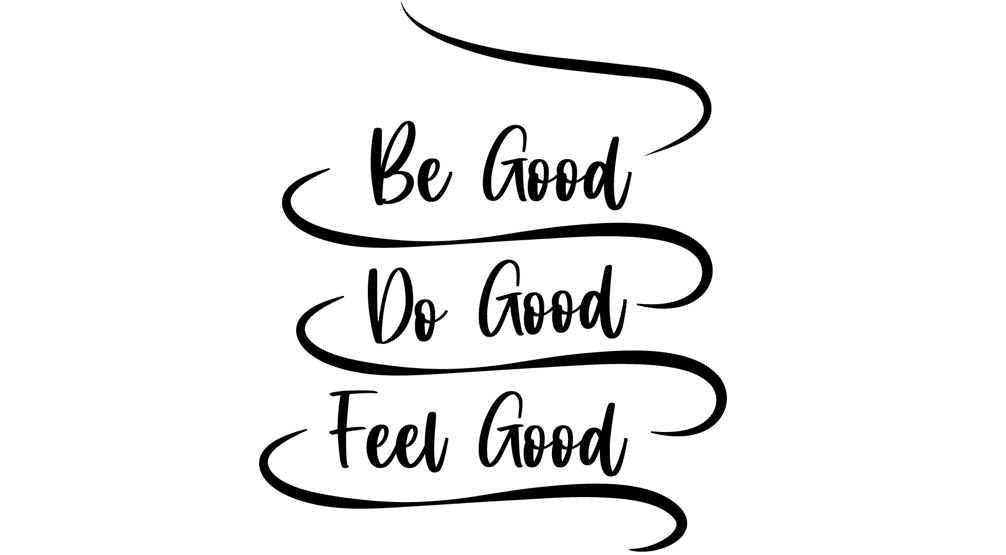
My priorities at this point in my life are summed-up in the three brief statements above.
I make a concerted effort to be good. I fail from time to time, but this is something I strive for on a daily basis. I consciously choose to be consistently honest, fair, compassionate, understanding, forgiving, tolerant, and kind. It should come as no surprise that making these things a priority in my life has resulted in most people treating me in similar ways.
Each day, I look for opportunities to do good. I make an effort to anticipate the needs of others and lend a hand when I am able to do so. I look for ways to brighten people’s days. I do whatever I can each day to make the world around me a better place. Simple acts — holding a door open for someone, offering someone a seat in a crowded room, smiling and acknowledging others when I’m out walking, providing food for those who may not have access to it on a regular basis,… — have the potential to change the world one person at a time. And much like the reward for being good, when I do good, I find that people want to do nice things for me, too.
I decided to write about this today because for the first few days of 2025, I can honestly say that I have been feeling good. Exceptionally good. Maybe it’s the freshness of a new year. Perhaps my good feelings are the result of a significant increase in my daily walking. The app on my phone tells me that I have walked an average of more than 7,000 steps a day over the last seven days (compared to 5,000 steps per day in 2024.) With the holidays behind us, I am better able to refocus my efforts regarding making healthier eating choices. I’ve been getting a good night’s sleep every night. And after several months of struggle, I am again feeling inspired and motivated to write.
So yes, the new year is off to a great start, and I feel good. For this I am immensely grateful.
-
A Close Call

“I’m not afraid to die.
I just don’t want to
be there when
it happens.”
Woody AllenI do not fear death. It is inevitable at some point in my life, but I’m not quite ready to go yet. Although my affairs are in order, and have been for quite some time, there is still much I would like to experience in life.
It has been a few days since Thursday, January 2, 2025. I am still trying to process what I experienced that morning. By the grace of God, it turned out to be nothing, so why have I been so preoccupied with thoughts of the event throughout these past seventy-two hours?
Three lanes of cars were at the stoplight on eastbound Moorpark Avenue at Saratoga Avenue in San José. I was the driver of the first car in the middle lane, enjoying a glimpse of the sunrise while I waited for the light to change. When the light turned green, the first car in each lane accelerated into the intersection. The vehicle to my right jumped out to a very quick start. The vehicle to my left started out more slowly, just a bit before me. What happened next is what rattled me.
As my car entered the intersection, I noticed that the car to my left stopped sharply. Without thinking, I quickly applied the brake. It was a reaction, not a decision. I didn’t know, at that moment, why the car to my left was stopping, but it didn’t take long for me to find out. A white pickup truck, traveling southbound on Saratoga Avenue, barreled through the intersection at approximately 40 miles per hour (the posted speed limit) or faster. My car, and the vehicle to my left, stopped just in the nick of time. The car to my right had taken off so quickly that the white pick-up truck, after blowing past the two stopped cars, sped through the intersection behind the other vehicle, miraculously without hitting it. At no point did the driver of the pick-up apply the brakes. How he made it through the intersection without colliding with another vehicle will always be a mystery to me.
I will never know exactly what would have happened had I not stopped as quickly as I did. There is no question that the truck would have hit the left side of my car, but where? If it happened to strike the left-front wheel, my Honda would have been totally destroyed. More than likely, I would have been injured, but I might have survived the impact. A split-second later, the truck would have hit my driver-side door. Given the size and speed of the oncoming truck, I’m not sure the collision would have been survivable.
It’s interesting how my view of the world around me has changed since that incident. I have recurring thoughts of what life would be like without me here. Walking through Saratoga Creek Park yesterday afternoon, I was more aware of the beauty of the sacred space. While sitting outside Starbucks, I couldn’t help but appreciate the smiles and simple greetings I received from customers entering the store. If nothing else, it validated that I’m still here. And last night, as I was driving home from Santa Clara on Benton Street, I realized that if that truck had hit my car, the street would have been empty, as there were no other vehicles in sight at that time.
While we are all aware of our mortality, it is so easy to become complacent in life, taking for granted the people and experiences which enrich our lives on a daily basis. I avoided an accident three days ago. I didn’t get hurt. I’m still alive. My 2005 Honda is intact. Yet the reality of the situation is that the outcome could have been very different. I can’t shake this thought from my mind.
It was a close call — and a wake-up call. It was a stark reminder that I must make the most of each day, cherish the people in my life, and be grateful for the opportunity to continue doing what I can to make a positive difference in the world.
-
All About Effort
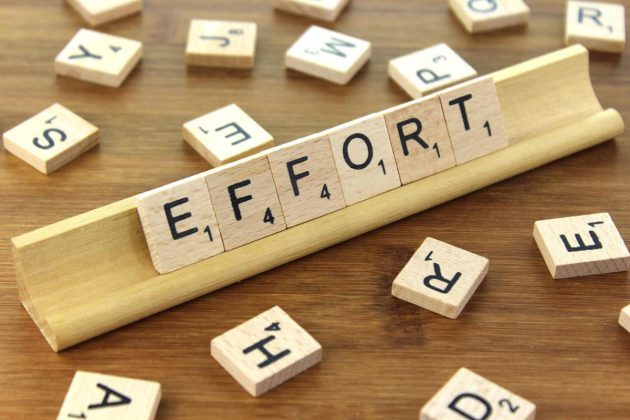
“To give anything less
than your best
is to sacrifice
the gift.”
Steve PrefontaineDuring my career as an educator, I witnessed the full spectrum of student effort. Many of my students were consistently conscientious, some to the point of obsession, about doing well and putting forth their best effort on class assignments. A smaller percentage of students seemed to think that someone else should do their work for them. These students often failed to complete required reading or submit homework assignments. A number of these same students chose to be inattentive or uninvolved in class discussions. The largest percentage of students were somewhere in between these two extremes. They did what was required to successfully complete the course.
For several years, I had the Steve Prefontaine quote (above) posted on the back wall of my classroom. One might wonder why I would post such an inspirational quote on the back wall, rather than in the front of the room. The reason is quite simple: I posted it for me! Certainly, I hoped my students would notice it and be inspired by Prefontaine’s words, but my primary reason for posting it was to inspire me — to provide a daily reminder to myself to put forth my best effort every day of the academic year.
There were days when I failed to put forth 100% effort. Occasionally, I slipped into “survival mode” due to illness or sheer exhaustion. Burning the candle at both ends, a practice I tried to avoid, sometimes took its toll, resulting in an attempt to just get through the day (or week). Fortunately, those times were rare. Most often, my car was one of the first in the faculty parking lot each morning and one of the last to leave in the afternoon. It was quite common for me to spend my Sunday afternoons in my classroom preparing lessons for the upcoming week.
Even today, I do my best to put forth my best effort — whether in my role as a writer, father, husband, neighbor, or friend. While I fall short of this expectation on a regular basis, my intentions are good. I want my wife, my sons and grandkids, my neighbors, and my friends to know that my goal is to be the best person I can be for them and to put forth my best effort in my relationships with them.
Steve Prefontaine was a runner — one of the best in the United States. He once held national records in every long-distance running event. He came up short of winning a medal at the 1972 Olympic Games in Munich, Germany. Undeterred, he refocused his efforts on preparing for the 1976 Games in Montreal, Canada. Unfortunately, his plans were derailed when he died in an auto accident in May of 1974. He was only 24 years old. Prefontaine knew what it meant to give one’s best. He also recognized that his running ability was a God-given gift, so the quote above is a reflection of that understanding.
Although I may come up short from time to time, my goal is still to put forth my best effort in everything I do. Giving my best effort is a way of expressing my gratitude for the many ways I have been blessed. That, in itself, should provide all the motivation I need.
“Doing your best
is more important than
being the best.”
Zig Ziglar -
Mentors

“We must find the time
to stop and thank
those people who
make a difference
in our lives.”
John F. KennedyI would be hard-pressed to name all the women and men who have made a positive difference in my life. The list would include family members, teachers, coaches, neighbors, friends, colleagues, teammates, healthcare professionals, and so many more. I’ve been blessed to have so many kind, compassionate individuals in my life. President John F. Kennedy suggested that we take the time to thank these people for the difference they made in our lives. Sadly, I waited much too long to do so.
A few difference-makers in my life rise to a different level — that of mentor. A simple dictionary definition of this term might describe them as wise and trusted counselors or teachers. In reality, they are so much more.
A mentor is someone who shares their knowledge, expertise, and experience to assist another person in their personal, professional, or spiritual growth. Mentors provide individuals with guidance and support in their life journey. They encourage their mentees to clarify their life goals and to take action to achieve them.
The goal of mentoring is to help the mentee navigate the inevitable challenges of life, to develop skills to deal with them effectively, and, ultimately, to achieve their personal and professional goals. Author John Maxwell tells us, “We all need someone to help us in our pursuit of intentional growth and the right mentor helps you take massive leaps forward.”
The Harvard Business Review characterized the successful mentor relationship as one characterized by “mutual respect, trust, shared values, and good communication.”
Six individuals come to mind when I consider those who have filled the role of mentor in my life:
1. Rich Baptista: During the summers of 1967 to 1970, Rich and I worked together at Silver Tree Day Camp in San Francisco. He was a professional educator who worked at the summer camp for many years. I was hired to work as a junior counselor, assisting adult counselors with the supervision of young campers. Rich, who served as director of the summer camp, consistently provided advice and guidance which enhanced my leadership skills and self-confidence.
2. Russ Roide: A Jesuit priest at St. Ignatius College Prep in San Francisco, Russ saw something in me that I was unable to see in myself — until I did. In 1971, he invited me to work in Jamaica for the summer. In 1972, he recommend me for a job working in the student dormitory at Bellarmine College Prep in San José. This job provided me with room and board throughout my college years. In 1974, he contacted me to inquire about my interest in teaching in a Catholic high school in Nassau, Bahamas — a life-changing experience. His influence on my life is undeniable.
3. Mike Mitchell: Mike was also a Catholic priest. He served as pastor at St. Lawrence Parish in Santa Clara from 1985 to 1991. During those years, I was employed as a pastoral associate at the parish. A number of challenging situations, both professional and personal, arose during that time which I was able to handle effectively thanks to Mike’s insightful guidance.
4. Ron Modeste: In 1994, when I was in desperate need of a change in the workplace, Ron was serving as principal of St. Lawrence Academy, the parish high school. My job as pastoral associate for the parish included responsibilities in the high school. Ron invited me to increase my role in the school to full-time status. I gratefully accepted. For the next seven years, Ron was much more than just my boss. He was my mentor, friend, and confidante. His trust in me, combined with the wisdom he shared with me about education and fatherhood, had a profound impact on my level of confidence.
5. Sam Chan: I met Sam, the father of two of my former students, in the early 2000’s when his kids got involved in the Japan Exchange Program I coordinated at St. Lawrence. Sam owns and operates his own highly-successful computer components company. He is also a certified life-coach. By the end of the 2013 academic year, Sam noticed that I was struggling with my role at the school. Morale at the school had deteriorated. I had an overwhelming sense that it was time for me to move on to a new venture, but I was fearful of making a move. The problem was that I was approaching the age of 60. It would have been difficult for me to find a teaching position in a new school, as my placement on the salary schedule would have been prohibitive due to my education and experience. Sam invited me to stop by his office for a chat. It was life-changing. With his guidance and encouragement, I took a risk and retired from teaching in June 2015 to begin a new career as a writer and speaker.
6. Hal Urban: Several years ago, I picked up a book in a local bookstore — 20 Things I Want My Kids to Know. The book was revised and republished in 2012 with the title 20 Gifts of Life. Having three kids of my own, I read the book and found it to be quite insightful. A few years later, at a social function, I happened to meet the author, Hal Urban. I contacted Hal for advice on publishing my first book. His guidance, encouragement, and friendship have been instrumental in my success as a writer and as a person.
Research has shown that having a mentor is tied to an overall increase in one’s emotional health. I think I can safely say this has been true in my case. Sadly, Rich and Russ have passed. Mike and Ron are enjoying retirement and I rarely see either of them anymore. Sam and Hal, however, are still very much a part of my life. Both have unique gifts to share with me as I continue my life journey. I am grateful to all of them for the positive difference they have made in my life through the years.
Who are the individuals who have filled the mentor role in your life?
-
True Strength

“A strong nation,
like a strong person,
can afford to be gentle, firm,
thoughtful, and restrained.
It can afford to extend
a helping hand to others.”
~ Jimmy CarterJimmy Carter was the real thing. I expect that he will go down in history as the American leader who, throughout his entire lifetime, most exemplified the trait of integrity.
I’m not a historian. My knowledge of and interest in politics is limited. I do, however, have a fairly good memory. In the early 1970’s, following the debacle of the Nixon administration and Watergate, the United States found themselves with the only leader to serve as President without ever having been elected into the Executive Branch of the government. In the wake of Vice President Spiro Agnew’s resignation, Gerald Ford was appointed to replace him. When Richard Nixon resigned a short time later, Ford became the 38th President of the United States.
In the 1976 election, President Ford was challenged by an unknown peanut farmer from Georgia by the name of Jimmy Carter. Carter won the November election, becoming the 39th President of the United States. I will leave it to historians to judge his presidency.
Carter’s greatest contribution to the world is the life he lived after leaving the White House in 1981. For the next 40+ years, the former President worked tirelessly with Habitat for Humanity to provide affordable housing for thousands of Americans. Carter didn’t wear a suit and tie or take on an administrative position in the organization. He didn’t work in an air conditioned office with Ethan Allen furniture. Rather, the former president donned blue jeans, work boots, a Habitat for Humanity work shirt, hard hat, tool belt, and, often times, a bandanna around his neck. Carter worked with the tools of the construction trade to labor side-by-side with other volunteers and with those who would eventually live in the homes they built.
The many pictures of President Jimmy Carter in his post-White House years are not photo-ops so commonly seen of politicians doing five minutes of volunteer work for the cameras. Carter’s commitment to Habitat was genuine. He certainly must have been aware of photographers snapping photos of him hammering nails, sawing wood, or framing a home, but the former President was not posing for the cameras. His volunteer work was motivated by genuine kindness, compassion, and love.
During a recent visit to Los Angeles, I had the opportunity to visit the headquarters of Homeboy Industries, where, like Jimmy Carter, Father Gregory Boyle, S.J. works side-by-side with former gang members to provide opportunities for them to live productive lives and to be contributing members of society. While there, I purchased a hat embroidered with this quote by Father Greg: “Kindness is the only strength there is.”
Some people just get it!
-
Hope

“What a wonderful
thought it is that
some of the best days
of our lives haven’t
even happened yet.”
~ Anne FrankI mentioned in yesterday’s blog post that there’s something about the last day of each calendar year that brings up a feeling of melancholy in me. It is equally true that there’s something about the first day of each calendar year that engenders a feeling of hope in me. I like to consider the word hope to be an acronym: Have Only Positive Expectations. Is this not the ideal way to begin each new chapter of our lives?
More than likely, we will all be confronted with challenging times and difficult situations at some point in this new year, but why worry about them now? Maybe they will materialize, but maybe they won’t. It seems that too many people deprive themselves of experiencing the joy of the present moment by worrying about the possible negative things which might arise in their lives at a later time.
I’m certainly not suggesting that we abandon essential responsibilities such as financial planning and long-term health. These are significant elements of being a mature adult. Responsible spending, eating, and behavior need not be swept aside in order to maintain positive expectations in our lives. What we need to sweep aside is unnecessary, unhealthy worry about our future and that of those we love.
As we begin our journey through 2025, it is quite possible, as Anne Frank proposed, that “some of the best days of our lives haven’t even happened yet.” Give this some serious consideration. Will we allow ourselves to be open to these opportunities or will we be too preoccupied with fear of what might happen to even recognize them when they arise in our lives?
I’m 70 years old. I’m grateful to be 70. I’m totally at peace with being 70. Am I approaching the end of my life? Well, yes… but aren’t we all, despite our age? I used to think 70 was old. I have a very different perspective on 70 now. Knowing that there are no guarantees, I’m looking forward, with tremendous hope, to at least twenty more years of life. If I don’t last that long, so be it. While I am alive, though, I will continue to make an effort to live each day with positivity, gratitude, and hope.
-
Let It Go

“New beginnings
are often disguised
as painful endings.”
~ Lau TzuThere’s something about the last day of each calendar year that brings up a feeling of melancholy in me. It’s not so much a gloomy state of mind. It’s more of an experience of sober pensiveness or contemplation. On this day each year, before I fully embrace the possibilities of the new year, I find myself reflecting back on the previous twelve months. There are times when doing this is a pleasant experience. At other times, however, I find it difficult to let go of the year which is ending.
There were certainly some highlights in 2024 — a brief visit to Palm Desert, California and visits with friends there; the birth of my grandson, Henry; a few more social gatherings of some of my elementary school classmates; countless breakfast, lunch, and dinner engagements with friends and family; the publication of two more books on the topic of gratitude; a get-away to Ojai, California with Kathy; numerous visits to the downtown Campbell farmers market; a few days in Los Angeles to visit with my brother, Tom, at Loyola Marymount University; a riverboat cruise on the Colombia and Snake Rivers with Kathy to celebrate our 39th wedding anniversary; attending a few Giants’ baseball games at Oracle Park; several speaking engagements on the topic of gratitude; and increasing my daily walking, resulting in an average of more than 5,000 steps per day throughout 2024. In many ways, it’s been a good year.
Like all years, however, there were some difficult times. I attended four funerals in 2024 — two for family members and two for friends (one was an elementary school classmate.) I guess it shouldn’t be surprising that the older I get, the more funerals I attend.
Fortunately, these losses, and a few other challenges with which I was confronted this past year, were outnumbered by the good experiences and opportunities I enjoyed.
Perhaps the most significant change in my life in 2024 has been as a result of my decision to delete my social media accounts in late January. While this decision has resulted in the loss of contact with a number of people with whom I would like to stay connected, the positive results of this decision have been overwhelming. It’s amazing how much more time I have in my day, every day, as a result of deleting my Facebook account. I was also able to escape the online vitriol and negativity associated with the 2024 presidential election. I am grateful to have made this change in my life.
Kathy and I just returned home from a delightful New Year’s Eve dinner at a local restaurant with our son, Brendan. After posting this blog piece, I’ll head over to our local Paris Baguette Bakery where, each night at 9:00, I pick up all the pastries and breads that were not sold today. In late June, it came to my attention that all the unsold items were being tossed in the trash at closing time. I asked if it might be possible for me to stop by each night, pick them up, and deliver them to organizations that could use them. I’ve done this just about every night for the past five months. I take the products to places like the Cypress Senior Center, Morning Star Memory Care, Mission City Skilled Nursing, Villa Fontana Senior Living Community, and a number of other locations. It’s nice to know that these food items are not going to waste.
Yes, New Year’s Eve can be bittersweet, yet my overall feeling as I reflect back on the past twelve months is that of genuine gratitude.
-
Developing Empathy
“Forget what hurt you
in the past,
but never forget
what it taught you.”
~Author UnknownIn the late 1970’s, I was teaching at Bellarmine College Prep in San José. One of my colleagues shared the following humorous, yet thought-provoking story with me:
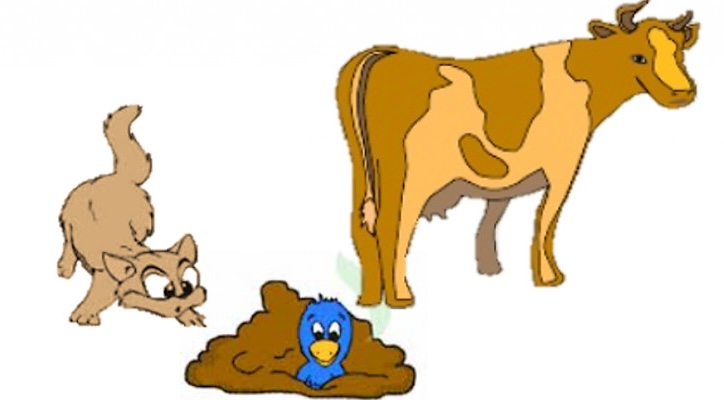
A little bird was flying south for the winter. It was bitter cold, so much so that the poor little bird froze and fell to the ground into a large field. Soon after, a cow came by and dropped some dung on him. As the frozen little bird lay there in the pile of cow manure, he began to realize how warm he was. The manure was actually thawing him out! He laid there all warm and happy, and soon began to sing for joy.
As fate would have it, a passing cat heard the bird singing and came to investigate. When the cat discovered the little bird under the pile of cow manure, he promptly dug him out — and ate him.
There are three important lessons one can learn from this brief story:
(1) Not everyone who shits on you is necessarily your enemy.
(2) Not everyone who gets you out of shit is necessarily your friend.
(3) And when you’re in deep shit, it’s probably best to just keep your mouth shut!
• • •
Life lesson are constantly available to us. They come in the form of inspiring posters, thought-provoking quotes, humorous stories, bumper stickers, and great literature. We learn life lessons from grandparents, coaches, parents, teachers, preachers, writers, neighbors, children, and school custodians. Life lessons can be learned at any time, anywhere, and from anyone. Although the author of the quote at the top of this post is unknown, the wisdom of the author’s words have tremendous value. We are all hurt at one time or another. In such situations, we have choices — we can hold on to the hurt, refusing to forgive the person who hurt us, or we can let go of it and offer the gift of forgiveness, whether it’s deserved or not. Whichever choice we make, it’s important that we never forget the lesson we learned from the situation.
Some of life’s most important lessons are learned from painful experiences. Certainly, the death of a loved one is a cause of significant pain, yet that same loss can be a tremendous learning experience for us — one which enables us to be more empathetic toward those who experience a similar loss.
This Christmas season was a difficult one for several people I know. All of them experienced the loss of a loved one in the past year, and all of them struggled to embrace the joy of the holiday season. I remember well the Christmas after my father died. I couldn’t listen to Christmas music. I didn’t want to celebrate the holiday, because it just didn’t feel right celebrating anything. There was such a tremendous void in my life, one which simply could not be filled with anything the holiday season had to offer. I was also unjustifiably resentful that those around me were celebrating Christmas as they always did, seemingly oblivious to my overwhelming sense of loss.
Sixteen years have passed since that time. I am in a much better place today. Through the years, I have come to fully accept the reality of my father’s death. I’m now able to fully embrace the celebrations of Christmas and the New Year.
I will always remember what I learned from that difficult time in my life. I am acutely aware of the pain and sense of loss in the lives of those who have experienced the loss of a loved one in recent months. I’ve made an effort to reach out to several of these individuals, some family and some friends. I understand their pain. I share their sense of loss.
I try to assure these individuals that things will get better with time. This is something I couldn’t imagine in December 2008. Now I know that it is possible.
-
Subscribe
Subscribed
Have a WordPress.com account? Log in now.

