-

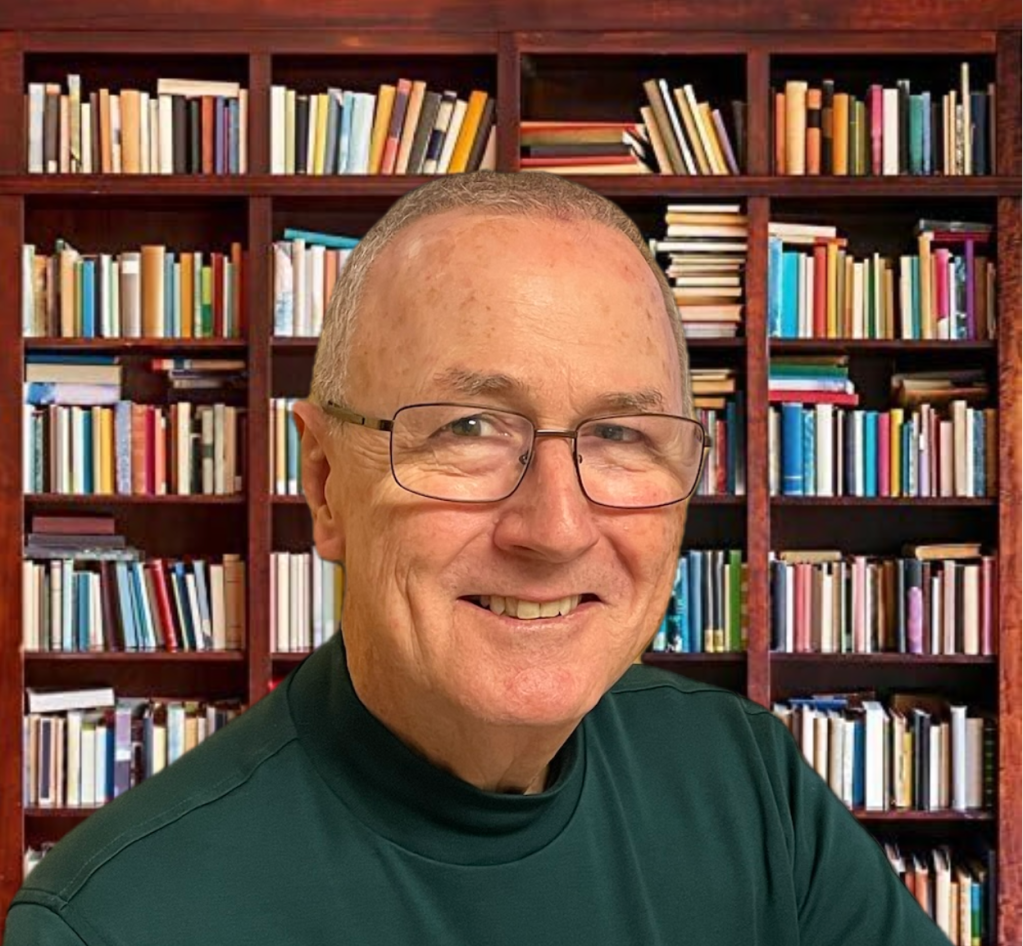
My name is Kevin Carroll. I was born and raised in San Francisco, California, where I attended Saint Ignatius College Preparatory. I am a graduate of both Santa Clara University and the University of San Francisco. Following a 40-year career in teaching and pastoral ministry, I launched a new career as a writer and speaker.
I live in San José, California. My wife, Kathy, and I have three adult sons and five precious grandchildren. I have much for which to be grateful.
I can be reached via email at kmc43sjc@gmail.com
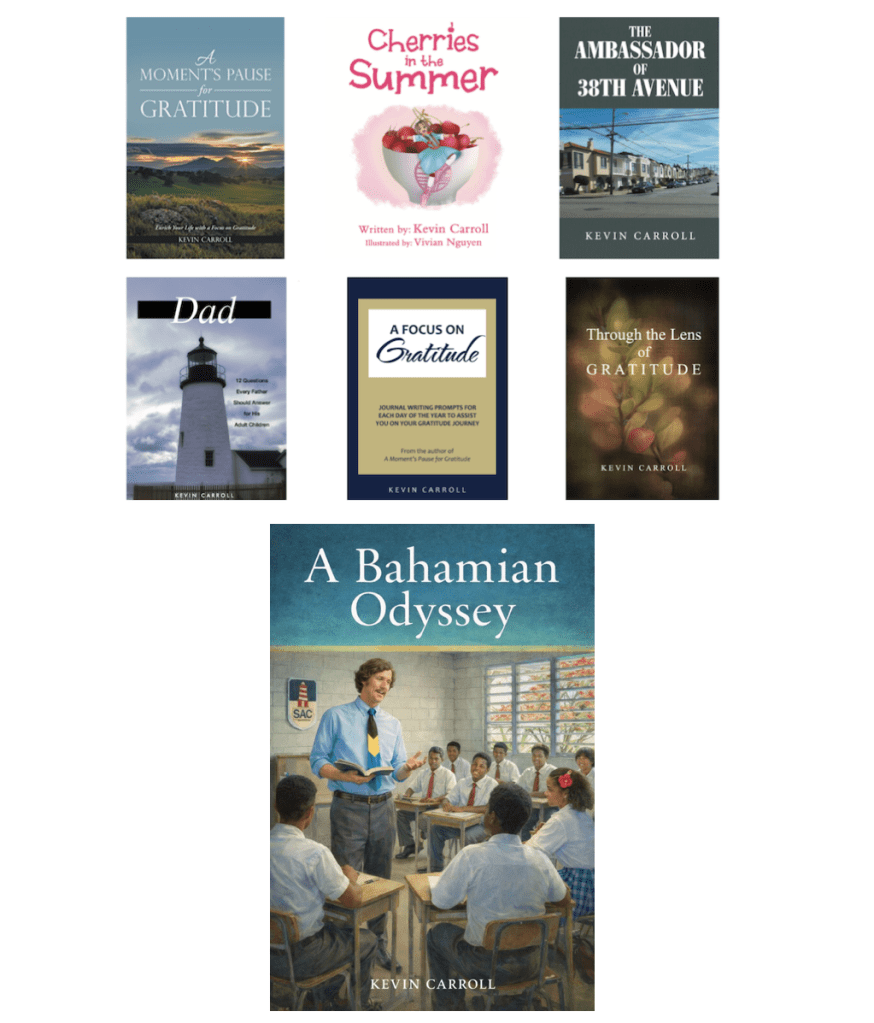
My books are available for purchase online from Amazon. I also have copies of some of these titles at my home for those who would like to buy them directly from me.
A Moment’s Pause for Gratitude (2017)
Cherries in the Summer (2021)
The Ambassador of 38th Avenue (2022)
Dad: 12 Questions… (2023)
A Focus on Gratitude (2024)
Through the Lens of Gratitude (2024)
A Bahamian Odyssey (2026)
-

- October 2026
- September 2026
- August 2026
- July 2026
- June 2026
- May 2026
- April 2026
- March 2026
- February 2026
- January 2026
- December 2025
- November 2025
- October 2025
- September 2025
- August 2025
- July 2025
- June 2025
- May 2025
- April 2025
- March 2025
- February 2025
- January 2025
- December 2024
- November 2024
- October 2024
- September 2024
- August 2024
- July 2024
- June 2024
- May 2024
- April 2024
- March 2024
- February 2024
- January 2024
- December 2023
- November 2023
- October 2023
- September 2023
- August 2023
- July 2023
- June 2023
- May 2023
- April 2023
- March 2023
- February 2023
- January 2023
- December 2022
- November 2022
-
Speak Out!

“A child that is being
abused by its parents
doesn’t stop loving
its parents. It stops
loving itself.”
~ Shahidi Arabi“GODDAMMIT! DON’T DO THAT!”
The loud, shrill voice of a woman in the parking structure at Westfield Valley Fair Mall in Santa Clara this evening was one I could not ignore. So much has been written lately about security concerns in the parking structures of local malls, I felt compelled to investigate immediately. I took a few steps back and peered between two parked minivans. From that vantage point, I could see the woman, who was clearly agitated. The trunk of her car was open. The woman was tossing bags of items into the trunk while her toddler-age child sat in a stroller next to the car. No one else was around. The woman was upset with the crying toddler.
I stood there for several seconds taking in the situation. The woman saw me and said, rather caustically, “Do you have a problem?”
“Apparently, I do,” I replied. “Verbal abuse of a small child should be a problem for any responsible person.”
“F%#@ you,” she said as she slammed the trunk and quickly moved the child from the stroller to the carseat in the vehicle. I just stood and watched until she backed out of the parking space and drove away.
It’s true. It wasn’t my business. My first thought was that the woman was in danger. When I realized that she had been screaming at the toddler, I was dumbfounded. I could have simply ignored the disturbance. Many others might have done so. I chose to investigate, and upon doing so, observed the dispiriting situation. Holiday stress? Perhaps. While not excusing the inappropriate behavior of the mother, I can certainly understand how the pressures of holiday shopping can put one on edge. But the child… what could a child of that age possibly have done to deserve such a verbal lashing?
I was not a perfect parent. I, too, responded inappropriately at times to things my kids said or did when they were young. I am not proud of the way I handled some situations. On more than one occasion, I sat down, held the hands of the son I had offended, looked directly into his eyes, and apologized for my inappropriate response. Those apologies, followed by a long hug, always made me feel better. I hope it made them feel better, too.
I don’t regret that I stopped and addressed the situation at the mall this evening. I don’t think I was rude, but I did convey a very clear message that the woman’s treatment of her child was not appropriate, and that yes, someone noticed.
They say, “It takes a village…” Sometimes we have an obligation to pay attention — and to speak out.
-
It’s True!

“What you do
makes a difference.”
~ Jane GoodallAfter loading the basket of groceries into the back of her SUV, a young mother opened the side door and gently place her toddler securely into a car seat. She then closed the door, returned to the back of the vehicle, and, with an expression of pure exhaustion, looked around for an appropriate place to put the shopping cart. The Trader Joe’s parking lot was packed. It was a Friday afternoon, just a few days before Christmas. As the look on the woman’s face transitioned from exhausted to desperate, an older man, who just happened to be walking by, stopped and said, “I can take that back for you.”
The woman expressed her appreciation. The man pushed the shopping cart across the busy parking lot driveway, parked it carefully with others just outside the front door of the store, then continued on his way. He did not go into Trader Joe’s to shop. In fact, he was not in need of a shopping cart at all. He simply performed that act of kindness and continued on his afternoon walk.
In the same parking lot that afternoon, a number of impatient drivers used their car horns to express their aggravation or anger with other drivers who were doing their best to navigate the chaos of holiday traffic in the congested lot.
It’s true. For good or for bad, what we do makes a difference.
Jane Goodall is a well-known and highly-respected scientist. She has been referred to as a conservationist, zoologist, primatologist, and anthropologist. The job title for which she is best known, however, is ethologist. Yeah, I had to look that one up, too. An ethologist is a scientist who studies the behavior of animals in their natural environment. Goodall, who will always be remembered for her incredible work with gorillas, has made a difference in the world. She is convinced that we are all called to the same lofty challenge.
“You cannot get through a single day without having an impact on the world around you,” she said. “What you do makes a difference, and you have to decide what kind of difference you want to make.”
Now you might be one to ask, “Who… me? What kind of difference can I make in the world? I’m just a…..” (Fill in the blank)
I’m just a checkout clerk at a grocery store. I’m just a shoe salesperson at Nordstrom. I’m just a letter carrier for the postal service. I’m just a security guard. I’m just a gardener. I just make cakes and pastries at Paris Baguette. I’m just a yard supervisor at the local junior high school. I’m just a server at Lazy Dog Restaurant. I just cut hair for a living. I’m just a secretary in a small law office. I’m just a stay-at-home mom. Just? Really?
Every one of these occupations offer countless daily opportunities to make a positive difference in the lives of other people. Each job enables the workers to have an impact on the world around them. For good or for bad, what we do and how we treat those around us makes a difference. And, when it comes right down to it, it’s not about our job. Retired individuals are called to the same challenge.
Rather than seeking to be the boulder dropped into the small pond, making a big splash to be noticed by all, try instead to be like the pebble — much less noticeable, yet able to send gentle ripples of positivity into the world.
We can, and we do, make a difference! Be sure it’s a positive one.
-
Autumn’s End

“We must prepare
for an end.”
Gwynn ScheltemaIn a recent article, award-winning writer and poet Gwynn Sheltema wrote, “Falling leaves symbolize change and even though they are brilliant in color, we know what is soon to follow — winter.”
Today marks the beginning of the final week of autumn 2024. The official start to the season of winter is Saturday, December 21st. A break in the rain offered me an opportunity to get out for an afternoon walk today. It was a blessing for so many reasons.
As Sheltema pointed out in her article, “Fall brings a certain melancholy.” While the astounding beauty of the autumn leaves may leave us in awe, we can’t help but be reminded that after a lifetime of growing and thriving on the tree, each falling leaf has served its purpose in life. Each one helplessly floats to the ground where, for a brief time, we recall and appreciate its presence in our lives. It’s just a matter of time, however, before the rakes and leaf-blowers send these leaves, and our memories of them, to their final resting place.
Why the feelings of melancholy? As Sheltema wrote, “Our symbolic human autumn of maturity must prepare us for the winter of old age and death.” We are well aware that death is inevitable for each of us. We devote a lifetime to making a name for ourselves and making a positive difference in the world. Most of us would like to be remembered for who we were and, perhaps, what we accomplished in our lifetime. In reality, like the leaves strewn upon the ground which will soon be swept-up and forgotten, we, too, will eventually become a forgotten memory.
In the introduction to my book, The Ambassador of 38th Avenue, I quoted a line from John Steinbeck’s short story, Tularecito. The author wrote, “After the bare requisites to living and reproducing, man wants most to leave some record of himself, a proof, perhaps, that he really existed.” This thought crossed my mind today as I walked through the colorful, leaf-strewn neighborhood.
It is humbling to realize that, much like the leaves on the streets and sidewalks, memories of me and the time I have spent on this earth will be relatively short-lived. My name will not appear in history textbooks. There will be no parks or city streets named after me, nor will there be any statues erected in my honor. My name will not grace any buildings on the campuses of the schools I attended. Yes, I’ve published a few books which may or may not be read in future generations, but I readily admit that my life will be much like the rock tossed into a placid lake — it will temporarily cause ripples which will inevitably dissipate over time.
It’s understandable that one might allow such feelings of melancholy to overwhelm them, leading them to an experience of hopelessness. Such a reaction is not the only option. What others think of me, if they do at all, after my death is not of interest to me. What motivates me to get out of bed in the morning is the opportunity to make a positive difference in the lives of others each day, to lighten the burden on those who are suffering, and to help others to recognize that they are enough just as they are. Society and media bombard us with messages telling us that we are inferior and deprived, then offer us some product that will magically make us significant. Sadly, these messages can be quite convincing.
Today’s walk through the neighborhood provided time for me to immerse myself in gratitude for the people, experiences, and opportunities I have had, and continue to have, in my life. When we make a concerted effort to see the world around us Through the Lens of Gratitude, life improves considerably.
-
Gratitude Walks
“If you are in
a bad mood,
go for a walk.
If you are still
in a bad mood,
go for another walk.”
~ HippocratesIt’s no secret that walking is good for us. The health benefits of engaging in a regular walking routine have been well-documented:
• Effective weight management
• Increased metabolism
• Improved heart health
• Enhanced self-image
• Toned muscles
• Increased energy level
• Stronger bones & joints
• Reduced stress
• Strengthened immune system
• Lower risk of high blood pressure.
There is no doubt that intentionally scheduling walking time into our days can be beneficial to us.Walking has other benefits, as well. One, in particular, is that walking offers us the opportunity to consciously focus on the people, experiences, and opportunities in our life for which we are grateful. For this reason, I like to think of the walks I take as gratitude walks.
I often pop-in my air pods and listen to music on Pandora while I walk. Occasionally, rather than reminiscing about the memories associated with the songs I hear, I choose to avoid that distraction and allow myself to be totally focused on the present moment. These can be moments of absolute grace. Engaging in this practice allows me to focus more attentively on all the things in my life for which I am grateful.
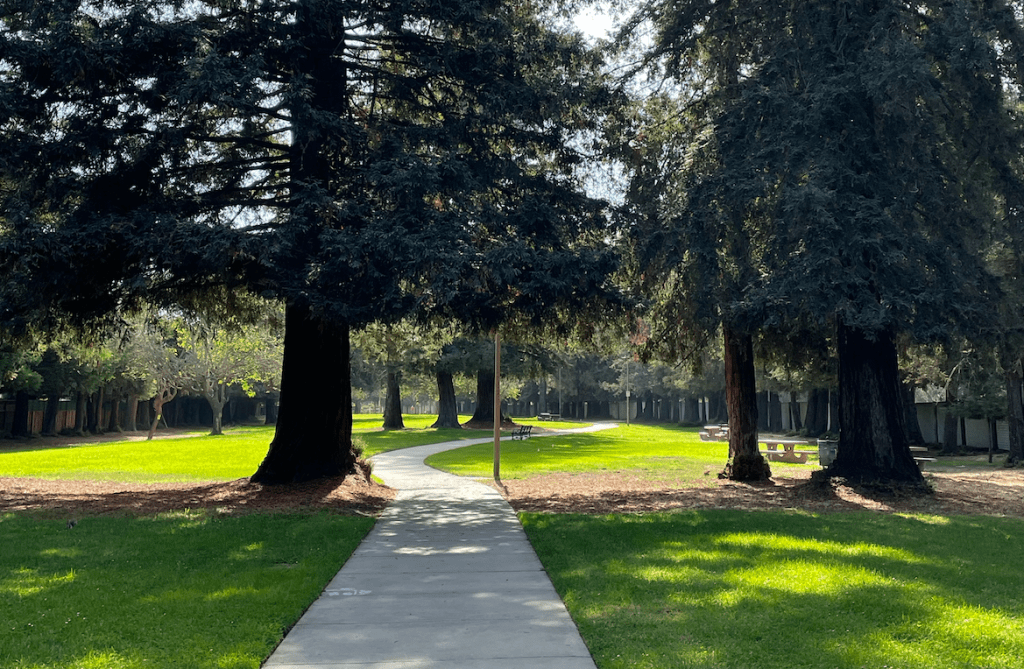
One of my favorite places to walk is Saratoga Creek Park in West San José. Located along the east side of the sound wall of Lawrence Expressway, between Doyle Road and Graves Avenue, the paved path provides a safe and serene environment for both pedestrians and cyclists. Along the path, there are stretches of open grass, a variety of trees, a dozen or so picnic tables, and a few benches. Clean rest rooms are available for park users. I usually spend about 45 minutes to an hour walking at this park. My step-count is normally about 5,000 for each visit.
In the event of rain, I like to walk in the Westfield Valley Fair Mall on Stevens Creek Boulevard. The large, two-level mall provides a safe, comfortable environment for indoor walking. There, I usually walk about 5,000 to 7,000 steps per visit. The greatest challenge of walking at the mall is the plethora of eating establishments — Shake Shack, California Pizza Kitchen, Coldstone Creamery, Onigilly Japanese Kitchen, Panda Express, and Pizza My Heart, just to name a few. The most tempting, however, is Cinnabon. The pleasant aroma of freshly baked cinnamon rolls is a constant temptation.
About once each month, I take the train from Santa Clara to San Francisco to enjoy a day of walking in The City. The step-count for these excursions can range from 18,000 to as many as 32,000. On these days, I convince myself that I’ve earned a treat or two along the way. It might be a pastry at Caffe Trieste in North Beach, a soft serve ice cream cone from Gott’s in the Ferry Building, or a burger and beer at Frankie’s Restaurant at South Beach Harbor.
All of these walking options provide opportunities for me to meet people, especially my walks in The City. Whether I’m at Ghirardelli Square, walking along Fisherman’s Wharf, passing by Pier 39, or enjoying my soft serve ice cream overlooking San Francisco Bay behind the Ferry Building, I most often find myself engaged in conversations with visitors to The City from around the world. The experience energizes me.
Hippocrates was right about walking having the potential to improve one’s mood. I always feel better about myself, my life, and the world after a good brisk walk.
-
Half Moon Bay
“What fire could
ever equal
the sunshine of
a winter’s day?”
~ Henry David ThoreauDespite the fact that the official start of winter (December 21st) is still more than two weeks away, we’re in the month of December now. Most of us, I would think, consider December to be part of the season of winter. For this reason, I was immensely grateful for the spectacular day I enjoyed yesterday in Half Moon Bay.
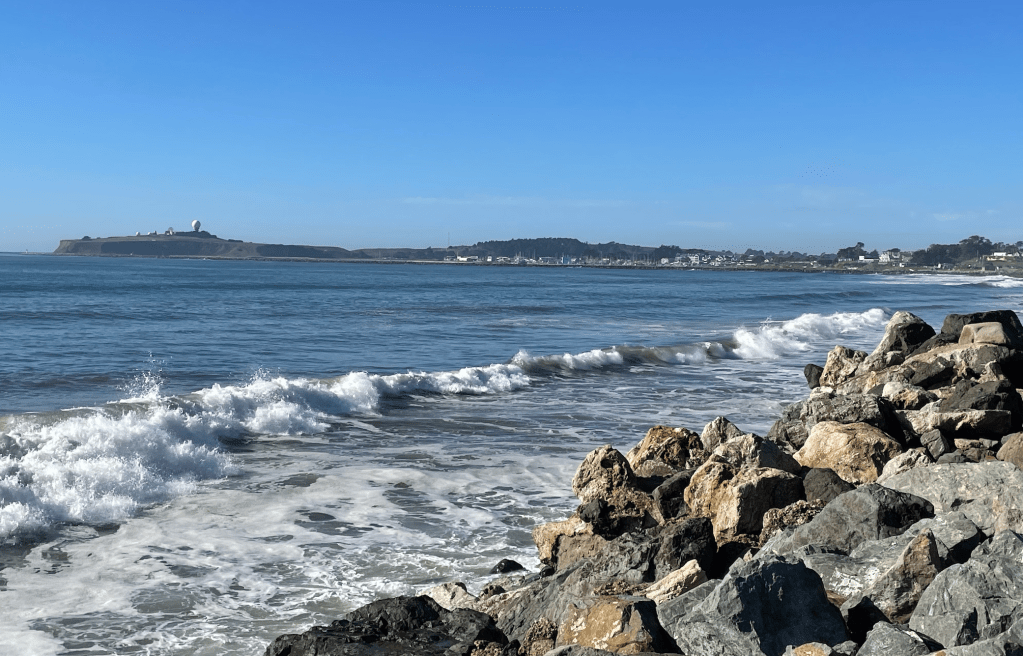
Walking along the water’s edge, the air was a comfortable 64º. An occasional gust of a light breeze reminded me that it was December. In the direct sunshine, however, the temperature felt more like the mid-70º’s. The sky, water, waves, rocks, and beach provided a serene backdrop for my gratitude walk.
It’s unfortunate that during the first eighteen years of my life, I rarely took advantage of the opportunity to spend time at the beach. Our family home on 38th Avenue in San Francisco was just ten short blocks from the Pacific Ocean. I have no recollection of ever walking to the beach to watch the sun set over the horizon. I did spend a few late-night weekend evenings during my early college years parked in the lot at the end of Sloat Boulevard enjoying the submarine races with a special friend. Never, however, did I spend time alone looking out over the ocean while thinking or praying about my life, my future, or the many blessings I received in my youth.
Having spent most of the past fifty-two years living in the Santa Clara Valley, I’ve missed being near the water. Now, I appreciate opportunities to spend time at beaches in The City, Half Moon Bay, Santa Cruz, and Pacific Grove. Whether I’m walking, sitting on a lawn chair or bench, or enjoying the view from an oceanside restaurant, I am tremendously grateful for the opportunity to breathe the fresh ocean air and take in the scenic views.
I began my adventure in Half Moon Bay yesterday with a walk along the pedestrian path near Miramar Beach. At several vantage points, I stopped to enjoy watching the incessant parade of waves rolling in. The gentle roar of the surf provided the perfect soundtrack for the experience. At one point, I just sat on a bench overlooking the bay and savored the overwhelming feelings of gratitude and solitude. I couldn’t help but wonder why I didn’t do this more often.
Before returning to the South Bay, I enjoyed a nice visit with my cousin, Debbie. She had driven down to Half Moon Bay from her home in Pacifica to meet me for a late lunch at the Miramar Beach Restaurant. Despite the calendar showing that it’s now December, we sat at a table on the outdoor patio with a view of the warm sun shining on the bay. It was delightful!
In light of this experience, one I hope to replicate on a more regular basis, I am better equipped to understand the insightful query of Henry David Thoreau quoted above.
-
Humility
“The graveyards
are full of
indispensable men.”
~ Charles de GaulleIt’s so easy for us to believe that we are indispensable. It’s so easy to convince ourselves that if we were to leave an organization, the void would be devastating to those left behind. In reality, life doesn’t often work this way. Such an attitude is usually evidence of two major character flaws — ignorance and arrogance.
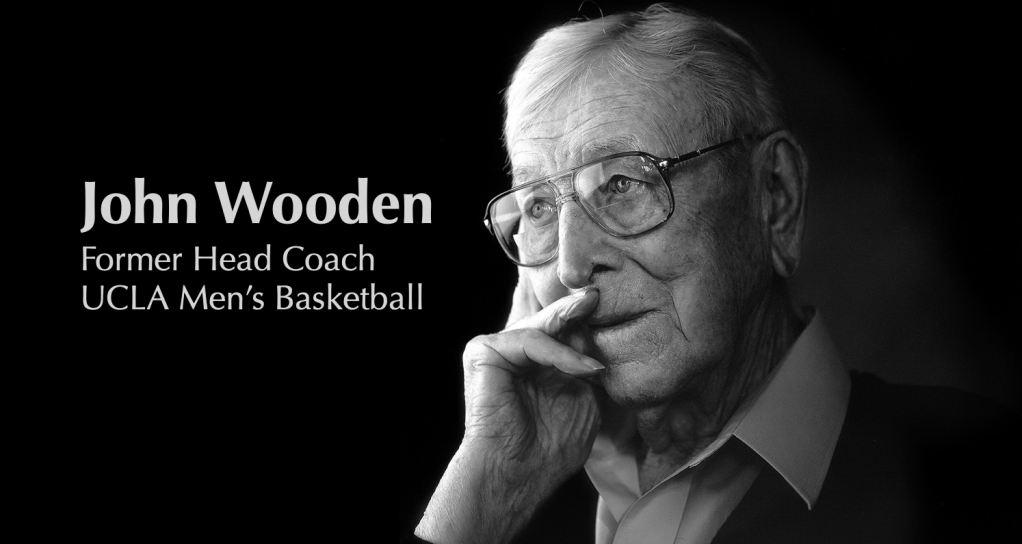
It is well and good to see oneself as a vital, contributing member of an organization. It is healthy to believe that our words, actions, and efforts actually make a difference, a positive difference, in the lives of others. In reality, though, is anyone truly indispensable? Coach John Wooden didn’t think so.
Coach Wooden led the UCLA Bruins men’s basketball team to ten national championships over a twelve year period. How could anyone possibly fill his shoes after a stellar coaching career like that? Surely he, of all people, must be indispensable, yes? Coach Wooden himself said, “No!” In fact, one of Coach Wooden’s favorite poems was Ode to the Indispensable Man, by Ogden Nash.
Sometime when you’re feeling important,
Sometime when your ego’s in bloom,
Sometime when you take it for granted,
You’re the best qualified in the room.Sometime when you feel that your going
Would leave an unfillable hole,
Just follow this simple instruction
And see how it humbles your soul.Take a bucket and fill it with water;
Put your hand in it up to the wrist.
Pull it out, and the hole that’s remaining
Is the measure of how you’ll be missed.You may splash all you please when you enter;
You can stir up the water galore;
But stop, and you’ll find in a minute,
That it looks quite the same as before.The moral in this quaint example
Is to do just the best that you can.
Be proud of yourself, but remember,
There’s no indispensable man!One of the commonly-overlooked keys to success in life is humility — that is, being aware of one’s giftedness, but not flaunting it. Genuinely humble people are more concerned with sharing their gifts with others than with being recognized for their accomplishments. Truly humble people are filled with a sense of gratitude for the giftedness with which they have been blessed.
No one is indispensable! The sooner we learn this lesson, the better off we will be.
-
Keep It Going

“Joy is the
simplest form
of gratitude.”
~ Karl BarthThanksgiving is over. There’s no more leftover turkey. Out-of-town visitors are on their way back home. Thanksgiving Day 2024 is now a part of history. Giving thanks, however, goes on.
Giving thanks is not a once-a-year activity. Gratitude is a mindset, one which enables us to see and experience life and those around us through the lens of gratitude each and every day.
I’ve been thinking about, writing about, and focusing on gratitude for the past eighteen years. I am well aware of the benefits, both physical and emotional, of embracing a life of gratefulness and of regularly expressing my gratitude to those around me. It truly is transformative, yet doing so can also be extraordinarily challenging at times.
On most days, I wake up in the morning filled with gratitude, optimistic about the day to come, and highly motivated to make a positive difference in the lives of those I encounter throughout the day. Other days, however, can be very different. There are mornings when, regardless of the weather outside, I wake up to dark clouds and a sense of gloom. Some call it melancholy or a funk. Others might identify it as depression. Whatever name we choose to give it, I cannot help but feel dispirited by the negativity I sense on such mornings.
I’ve found that there are a few things I can do to lift my spirits when I’m feeling down. Going for a walk is exceptionally beneficial. Moving my body, breathing the fresh air, noticing and appreciating the beauty of God’s creation around me, and graciously acknowledging the presence of those I encounter along the way all contribute to increased feelings of peace and joy.
Doing something positive for someone else also immediately increases my level of joy and contentment. When I’m driving, something as simple as slowing down a bit to allow another driver to merge safely into my lane can be helpful. Holding the door open for someone entering or exiting a building can have a similar result. Smiling at a stranger I encounter and greeting them with a simple “Good morning” or nod of the head can bring a sense of peace to my life — and, hopefully, to theirs.
Each day, if we make a concerted effort to be aware of the possibilities around us, we have countless opportunities to make a positive difference in the lives of others. Doing so allows us to experience greater joy in our day. Swiss theologian Karl Barth was right. Joy really is the simplest form of gratitude. Living with a genuine sense of joy is beneficial not only to those with whom we come in contact, but to ourselves, as well.
-
One Simple Choice

“When we focus on what’s right
instead of what’s wrong,
life improves considerably.”
~ Hal UrbanIt seems to be human nature to focus on what’s wrong in life and to take what’s going well for granted. I wish I could explain this phenomenon, but I’m unable to do so. I know from my own lived experience, however, that it’s true.
On many occasions throughout my life, I’ve been evaluated — as a teacher, author, and speaker. When I had the opportunity to read the evaluations, I often found myself focusing on the few negative comments which showed up — and inevitably they did. Even when I was confident that I had done a good job, there would always be those few who were not impressed, and had no qualms about expressing their disappointment in an anonymous evaluation. That’s the way life is.
Why is it, then, that when 95% of the evaluations were positive, I found myself fixated on the other 5%?
After reading Hal Urban’s first book 20 Things I Want My Kids to Know (the book was republished with the title 20 Gifts of Life) many years ago, I found one point to be particularly challenging. Would my life really improve considerably if I could focus on what’s right instead of what’s wrong in life? It didn’t take long for me to learn the answer to this question: Absolutely!!!
Life is never going to be perfect. The people around me are never going to be perfect. I am never going to be perfect. Yet I have to believe that everyone is doing the best they can, given their unique situation. This mindset enables me to be a bit more understanding, accepting, and forgiving of those who fail to meet my expectations. This also allows me to be significantly more grateful for the people and situations in my life. In trying to focus on what’s good in those around me, and in looking for the good in every situation I encounter, life does improve — considerably.
In recent years, a simple phrase has emerged in our culture which helps me to accept things as they are — and to focus on what’s good instead of what’s wrong. “It is what it is.” While I’m not a big fan of this phrase for a number of reasons, it is a simple statement, and has so often proven to be true. Acknowledging this helps me to remember that I have a choice in every situation. I can focus on how I wish things were, and be constantly frustrated, or I can focus on how things are, and be genuinely grateful. Focusing on what’s right, instead of what’s wrong, has most definitely improved my life.
-
Be the Light
“Hope is being able
to see that there is light
despite all of the darkness.”
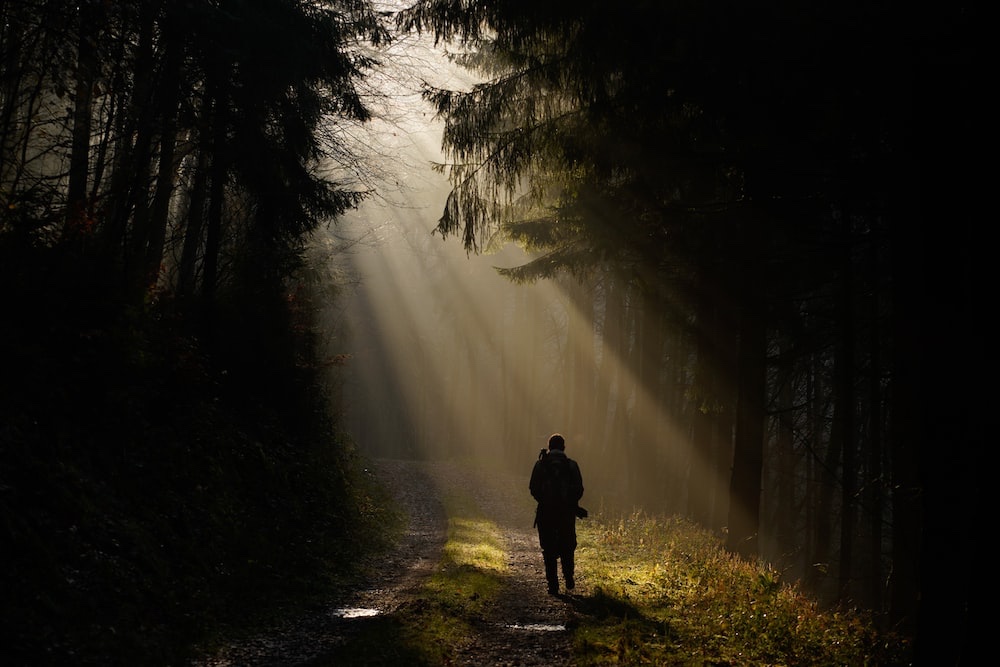
Desmond TutuErnest Hemingway once wrote, “We are all broken. That’s how the light gets in.” It’s difficult to disagree on the brokenness part of his statement. We are human, therefore we are all, in some way, broken. And that’s okay.
I have always tried to maintain a positive outlook on life. Why shouldn’t I? When I was seventeen years old, I sustained an ankle injury which got infected. Not realizing the severity of the injury, I tried to conceal it from my parents, as I was scheduled to depart on June 24, 1971 for a summer of work in Jamaica and I didn’t want anything to jeopardize the trip. Fortunately, on June 17th, my mother notice that I was favoring my left ankle as I walked, and inquired about it. Reluctantly, I showed her the injury. Within hours, I was in isolation at Saint Mary’s Hospital in San Francisco where I remained for ten days. Upon hearing of my plans to go to Jamaica, the doctor informed us that if I had successfully hid the injury and departed as scheduled, there was a good chance that I would have lost either my leg or my life.
Reflecting on that incident, as I have many times, I’ve realized that there is a purpose for my life, one which, at that time, I had not yet fulfilled.
Throughout my life, I have enjoyed many opportunities which have been presented to me. To be grateful, therefore, has not been much of a challenge for me. Sure, like anyone else, I’ve had some challenging times. There have been periods of my life when the dark clouds of despair or uncertainty have hovered above my head. Generally speaking, however, my life has been blessed with far more good times than bad.
In recent weeks (months?), those clouds have been present again. They haven’t been the type of low clouds which create a dense fog through which it has been difficult to see and function. Rather, they have been the type of clouds which effectively prevent the warm rays of light from reaching and nurturing my soul. Despite my desire to see the world around me Through the Lens of Gratitude, I have found it difficult to do so.
My purpose for creating A Beacon of Light was to shine a light of positivity and gratefulness in the world around me. Those who follow this blog may or may not have noticed that I’ve written very little in recent weeks. I’ve wanted to write, but I simply couldn’t. Given the struggles I was enduring, I found myself lacking the motivation and ability to write with the degree of positivity and integrity needed to inspire others. I needed someone or something to be the light for me.
Something happened today. Just as the clouds part after a rain storm and allow the sunlight to shine brightly on the land, I noticed a break in the darkness which had enveloped my life recently. For the first time in quite a while, I felt nourished by the warmth of the light I have so desperately missed. I have been savoring this feeling throughout the afternoon. I’m hopeful that I will wake up tomorrow morning to clear skies and brilliant light. Perhaps this will enable me to resume my writing — and continue to effectively share the positivity and gratitude which have been such pillars of strength in my life.
We can all look for ways to be the light for others.
-
October

“Anyone who thinks
fallen leaves are dead
has never watched them
dancing on a windy day.”
Shira TamirThe well-quoted phrase, “The only constant in life is change,” is attributed to the ancient Greek philosopher Heraclitus. His prophetic words are as valid today as when they were first uttered in the 6th century B.C.
I moved from my childhood home in San Francisco to San José in late August 1972 to attend college. The Santa Clara Valley was still known as “The Valley of Heart’s Delight.” Dozens of orange, prune, apple, cherry, and apricot orchards were spread out over acres of fertile farming land. I had no idea, at that time, how the South Bay would be transformed into the congested, highly-priced Silicon Valley of today. So much has changed.
I’ve noticed that the commute in and out of San Francisco is the opposite of what it was in the early 70’s when workers tended to live in the suburbs and work in The City. The morning traffic at that time was going into San Francisco from the peninsula and South Bay. Today, those working in the technology industry seem to prefer living in The City and commuting to Silicon Valley for their jobs. The morning commute is a mass exodus from the City by the Bay.
As a firefighter in San Francisco, my Dad regularly came home with amazing stories of fires he responded to throughout The City. Fire fighters fought fires. Today, according to S.F. Gate newspaper, 70% of calls for service are for medical assistance, not firefighting. I’m guessing this is probably true for fire departments throughout the greater San Francisco Bay Area, as well.
In the early 70’s, my normal bedtime was well after midnight. Accordingly, I tried to sleep-in until 7 or 8 a.m. More often than not, I skipped breakfast, indulged in fast food options, and often joined my friends for 11 p.m. Round Table pizza runs after a couple of hours of playing basketball. My weight remained a constant 210 in those years. Today, my preferred bedtime is 9:30 p.m., with a wake-up call at 5:30. Breakfast is the most important meal of my day. I avoid fast foods and I choose not to eat anything after 7:00 p.m. This helps me to maintain my current weight (218 as of this morning.)
When I graduated from Santa Clara University, I made the decision to remain here in the Santa Clara Valley. I had no desire to return to the damp, foggy weather in San Francisco’s Sunset District. I liked it hot. I loved spending time out in the sun. The darker my tan, the better, right? Well, this, too, has changed. I still enjoy warm weather, but I opt for shade whenever possible. When it gets too hot here in the San José area, I take CalTrain to San Francisco to enjoy the cooler temperatures there. In this part of my life, too, the script has been flipped.
Tonight I’m going to attend a high school football game. Bellarmine College Prep, where I worked for five years, is hosting St. Ignatius College Prep, where I spent my four years of high school, at San José City College. In the ’70’s, Bellarmine was one of the perennial football powerhouses of the West Catholic Athletic League. S.I. has struggled through the years to compete with South Bay schools, where Pop Warner football is quite popular and prepares kids well for the competition of high-level WCAL football. Tonight, S.I. enters the game in first place, undefeated in league play. They knocked off the pre-season favorite, Junipero Serra High School (San Mateo), two weeks ago. Bellarmine, on the other hand, is winless in league play. Of course, when these two teams walk onto the field of play, season records and rankings mean nothing. I’m looking forward to a well-played contest.
Yes, life is all about change. We are reminded of this each October as we observe the changing colors of the leaves on trees throughout the valley and savor the sounds of fallen leaves crunching underfoot. I wholeheartedly agree with the words of Canadian author L.M. Montgomery. She wrote, “I’m so glad I live in a world where there are Octobers.”
-
Subscribe
Subscribed
Have a WordPress.com account? Log in now.

