-

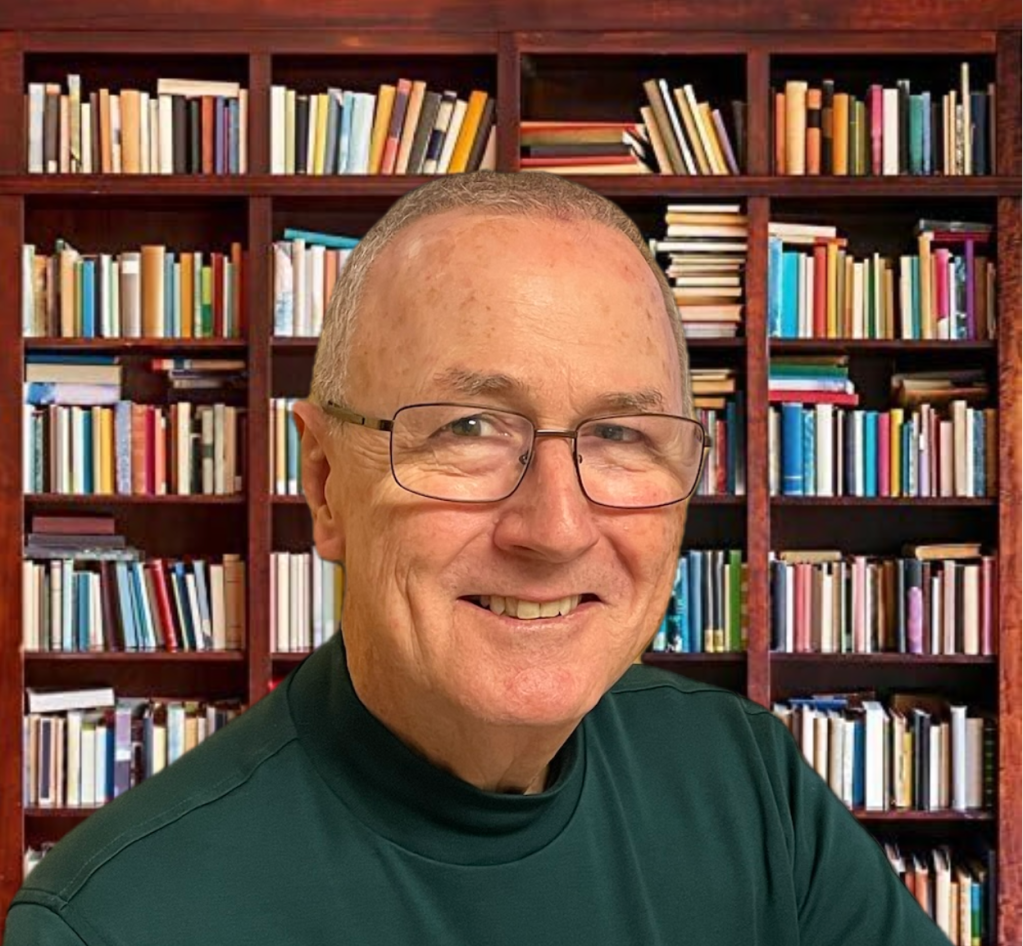
My name is Kevin Carroll. I was born and raised in San Francisco, California, where I attended Saint Ignatius College Preparatory. I am a graduate of both Santa Clara University and the University of San Francisco. Following a 40-year career in teaching and pastoral ministry, I launched a new career as a writer and speaker.
I live in San José, California. My wife, Kathy, and I have three adult sons and five precious grandchildren. I have much for which to be grateful.
I can be reached via email at kmc43sjc@gmail.com
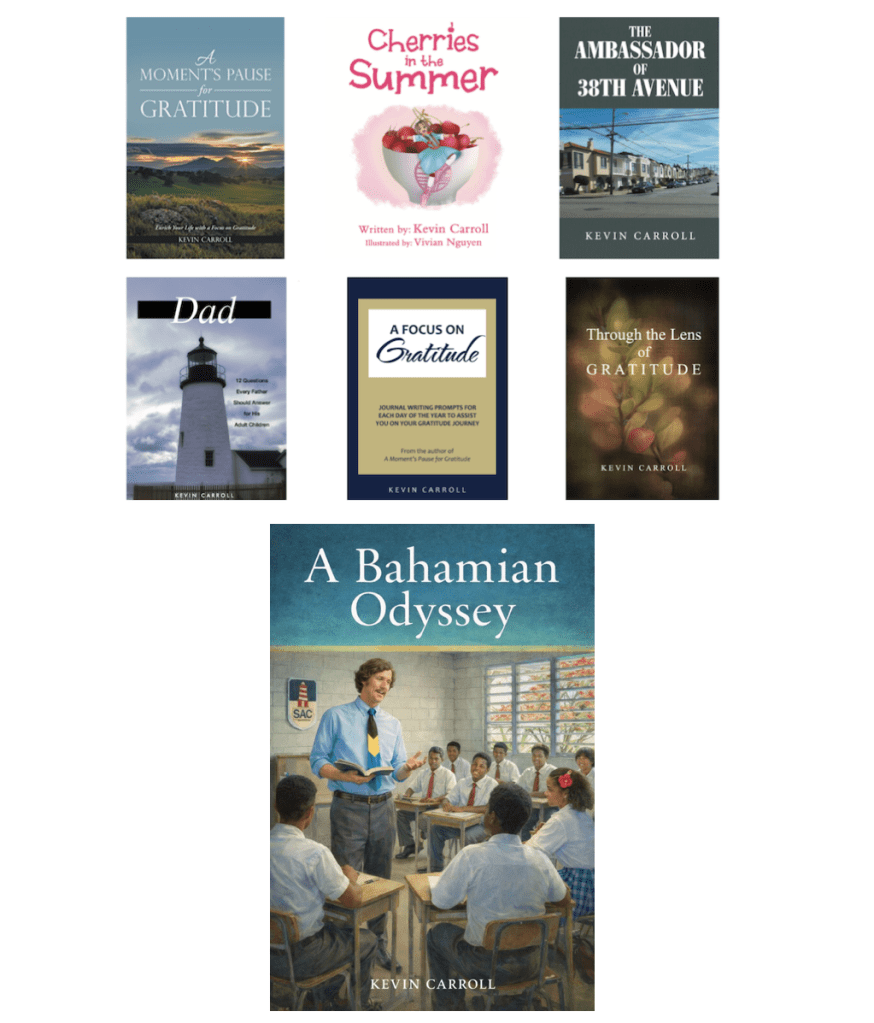
My books are available for purchase online from Amazon. I also have copies of some of these titles at my home for those who would like to buy them directly from me.
A Moment’s Pause for Gratitude (2017)
Cherries in the Summer (2021)
The Ambassador of 38th Avenue (2022)
Dad: 12 Questions… (2023)
A Focus on Gratitude (2024)
Through the Lens of Gratitude (2024)
A Bahamian Odyssey (2026)
-

- October 2026
- September 2026
- August 2026
- July 2026
- June 2026
- May 2026
- April 2026
- March 2026
- February 2026
- January 2026
- December 2025
- November 2025
- October 2025
- September 2025
- August 2025
- July 2025
- June 2025
- May 2025
- April 2025
- March 2025
- February 2025
- January 2025
- December 2024
- November 2024
- October 2024
- September 2024
- August 2024
- July 2024
- June 2024
- May 2024
- April 2024
- March 2024
- February 2024
- January 2024
- December 2023
- November 2023
- October 2023
- September 2023
- August 2023
- July 2023
- June 2023
- May 2023
- April 2023
- March 2023
- February 2023
- January 2023
- December 2022
- November 2022
-
Sunday Morning
“A farmer’s market is
worth more than
everything I’ve written.”
~ Wendell BerryKathy and I met up with a friend for an early-morning visit at the Orchard Valley Coffee shop in downtown Campbell this morning. While I frequent the establishment on a regular basis, it was the first time I’d been there on a Sunday morning. So Kathy and I were pleasantly surprised to have the opportunity to spend time at the Downtown Campbell Farmer’s Market, which is held every Sunday morning. What a delightful experience!
After the brief visit with our friend, Kathy returned to the car to get a few reusable grocery bags. Thanks to the kind hospitality of Monica, a Campbell local, I got a seat at a sidewalk table outside Starbucks at the corner of East Campbell Avenue and 1st Street. A Beatles cover band was playing directly across the street, so when Kathy returned with the grocery bags, I stayed where I was while Kathy did the shopping.
I thoroughly enjoyed watching hundreds of people walk by as they checked out all the products offered by the Farmer’s Market vendors. Both sides of East Campbell Avenue were lined with booths selling fruits, vegetables, breads, pastries, and a number of other items. I was amazed at how many people of all ages and ethnicities were singing along to the variety of Beatles’ songs as they walked past the band. Seeing this made me realize what a powerful impact the Fab Four have had on music throughout the world.
While the majority of shoppers were significantly younger than me, I was struck by the diversity I witnessed through the morning hours. There were dozens of young parents pushing strollers or walking with toddlers. A good number of high school students were present, as well. Quite a few of them were wearing purple sweatshirts advertising the upcoming production of Footloose at Westmont High School. My generation was well-represented, too. And the number of people in the 80s to 90s age-range surprised me. It was nice to see everyone enjoying all that the Farmer’s Market had to offer.
The rich cultural diversity of the Santa Clara Valley was also evident as I watched shoppers strolling down the street. Caucasians, Latinos, Asians, and Indians seemed to be equally represented. I met one man who was a native of The Netherlands and two others who identified themselves as Iranian. In a time when our country seems so divided and polarized on so many levels, it was encouraging to see the blend of cultures coexisting and enjoying all that the local Farmer’s Market had to offer.
Before returning home, I wanted to check out some of the bakery booths Kathy had seen while shopping. When I saw the Greenlee’s Bakery booth, I knew I was in the right place. The gentleman working behind the counter asked what I’d like. I was looking at some items that looked like the aebleskeivers one would find in Solvang, California. He told me that they were beignets, and offered to let me try one. With just one bite, I thought I’d died and gone to Heaven. The cinnamon flavor was mouthwatering. Needless to say, I purchased a few to bring home.

Something tells me that Kathy and I will be regulars at the Downtown Campbell Farmer’s Market from now on.
-
Making a Difference

Garvin Thomas – NBC Bay Area Journalist “You may find that
making a difference for others
makes the biggest difference
in you.”
Brian WilliamsNBC Bay Area news reporter Garvin Thomas is making a difference — a positive difference — in the lives of television viewers throughout the greater San Francisco Bay Area. A couple of times each week, Thomas airs an episode of his feel-good, people-making-a-positive-difference segment called Bay Area Proud. These brief videos are sure to bring a smile to your face.
A couple of years ago, Thomas did an episode of Bay Area Proud dedicated to Cherries in the Summer, the children’s book I wrote in collaboration with then-12-year-old Vivian Nguyen, who illustrated a poem I’d written for my grandson, Liam. You can see this segment by clicking HERE.
A more recent episode of Bay Area Proud focused on a special education teacher who went above and beyond to accommodate a student with special needs. Such stories can restore one’s faith in humanity and in the basic goodness of those around us. Click HERE to see this story.
If you have some time on your hands and would like to view some of Garvin Thomas’ other Bay Area Proud segments, click HERE.
By sharing these videos, I hope to inspire readers to look for opportunities in your own lives to make a positive difference. Ralph Waldo Emerson wrote, “The purpose of life is not to be happy. It is to be useful, to be honorable, to be compassionate, to have it make some difference that you have lived and lived well.”
So often, we can get overwhelmed by the enormity of needs in our world and wonder, almost hopelessly, what can I possibly do to make a difference? I’m only one person. Archbishop Desmond Tutu of South Africa had this to say about that, “Do your little bit of good where you are; it is those little bits of good put together that overwhelm the world.”
If not you, who?
If not now, when?
If not to make our world a better place, why? -
“Coffee Break”
“Coffee, the favorite drink
of the civilized world.”
Thomas JeffersonI am not a coffee drinker. I grew up in a home where the preferred hot beverage was tea. The only times I can recall coffee brewing in our 38th Avenue home in San Francisco was when my parents had company for dinner and when my paternal grandmother would live with us for a couple of weeks at a time following hospital stays. Although I detest the taste of coffee, I savor the aroma of fresh brewed coffee.
I fully agree with the words of Jessi Lane Adams who said, “Coffee smells like freshly ground heaven.” Yes, there is something special about the fragrance of coffee.
Consumers have many options for getting a good cup of coffee. Of course, there’s Starbucks. Some, however, prefer Peet’s. Still others don’t mind paying the prices at Philz. I’ve heard that Dunkin’ Donuts and McDonald’s are also known for serving a good cup of coffee. The lines at Blue Bottle Coffee in San Francisco would also indicate that their products are highly desired.
As a non-coffee drinker, I still appreciate the ambiance at coffee shops. My favorite, by far, is Orchard Valley Coffee on East Campbell Avenue in downtown Campbell, California. I enjoy their orange-spice tea. Sandwiches I’ve purchased there have consistently exceeded my expectations, and the pastries and coffee cakes are a constant temptation.
Inside Orchard Valley Coffee there are about a dozen tables of various sizes, along with a few comfortable sofas and easy chairs. The wifi connection is consistently reliable, as well. This is why I thoroughly enjoy spending time at Orchard Valley Coffee to do some writing and reading.
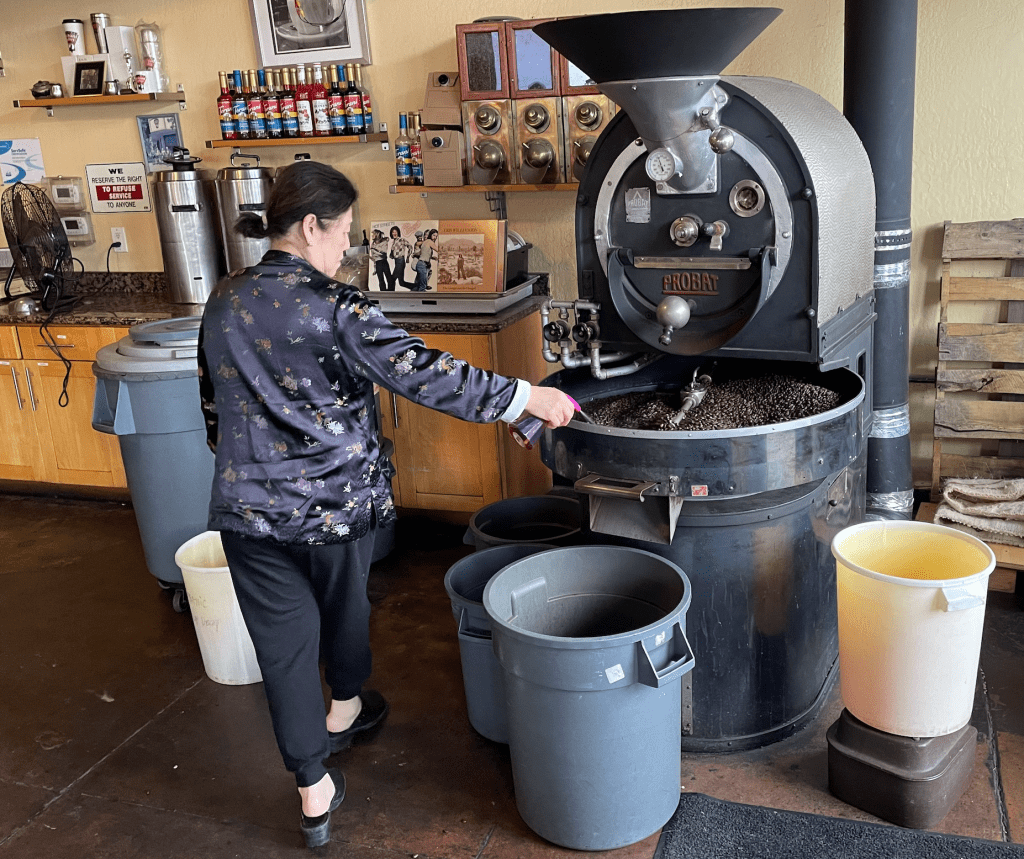
The owner of Orchard Valley Coffee is Eve Ngov, better known in the Campbell community as “Mama.” She oversees the daily operation of the business. As a hands-on manager, Mama takes an active role in every aspect of the operation, including the roasting of coffee beans. The greatest gift she brings to her business, however, is her warm, hospitable personality. She and her staff make every visit to Orchard Valley Coffee a pleasant experience for their customers.
Downtown Campbell is a charming shopping and entertainment district offering a variety of shops, restaurants, galleries, boutiques, and historical landmarks. Of all the establishments the neighborhood has to offer, Orchard Valley Coffee is my absolute favorite.
-
Ojai 2024

“The best thing one can do
when it’s raining is
to let it rain.”
Henry Wadsworth LongfellowKathy and I arrived in Ojai, California in the early evening hours on Wednesday. Kathy, and her sister Clare, are here to attend a conference at the Ojai Retreat. I came along for the ride to be their driver and to do a bit of writing. We knew that rain was predicted for Friday and Saturday, so we came prepared.
After dropping Kathy and Clare at the retreat facility on Thursday morning, I drove down to Ventura to meet up with one of my elementary school classmates. Ben Resella joined our class at Saint Gabriel School when we were in fifth grade. He had recently arrived with his family from the Philippines. We became quick friends and, gratefully, our friendship continues to this day. Ben now resides in Camarillo.
After lunch at a restaurant near the Ventura Harbor, we drove around to the main harbor area and took a walk around. As always, being near the ocean was invigorating. We were grateful that the weather on Thursday was ideal for an outdoors afternoon adventure.
When Kathy and I awoke yesterday morning, the rain had arrived. It came down steadily throughout the day and night. Again today, the rain has been plentiful. I don’t mind this at all, because other than my visit with Ben on Thursday, my plan was to stay here in the hotel room and continue working on my next book. Everything I need for my breakfast and lunch is here in the room. I’ll pick up Kathy and Clare around 5:00 and we’ll head into downtown Ojai for dinner.
A simple getaway, for sure, but the time here has been thoroughly enjoyable. Our hotel room is not fancy, but it’s totally functional. To be able to sit at the desk in the room and look out at the pool while I write has been a real treat. Despite the fact that the pool is not heated, a few brave souls participated in a polar plunge after their time in the hot jacuzzi.
The weather forecast for tomorrow indicates that we’ll have a relatively dry drive home. I sure hope so. The Santa Barbara area has already had its share of flooding and mudslides for this season. I’m hoping that we’ll be able to make a quick stop in Solvang for a serving of Arne’s famous aebleskivers. What are aebleskivers, you might wonder? They are a golfball-size hybrid between a pancake and a donut. They are served three to a plate, covered with red raspberry jam, then sprinkled with powered sugar. I know the nutritional value of these little gems is negligible, but the taste,… oh, the taste,… makes the experience so worthwhile.
-
Mister Rogers

“The greatest thing
that we can do is to
help somebody know
that they’re loved
and capable of loving.”
Fred “Mister” RogersTwenty-one years ago today, the world bid a fond farewell to Fred Rogers, the iconic creator and host of Mister Rogers’ Neighborhood. He was 74 years old.
Mister Rogers’ Neighborhood was a preschool television series which ran from 1968 to 2001. Through this program, Rogers, a Presbyterian minister, shared some of life’s most important lessons with three decades of little ones. In an article published in Greater Good Magazine in 2018, author Shea Tuttle identified seven lessons from the show which continue to inspire people today.
Lesson #1 is that it’s okay to feel whatever it is that we feel. Rogers taught about the importance of naming our feelings, exploring those feelings with those we love, and the need for us all to grow on the inside as well as the outside.
Lesson #2 piggybacks the first lesson with an important limitation. Rogers taught that while it’s okay to feel whatever we feel, our feelings do not justify bad behavior. He consistently emphasized that self-expression and respect for others are intimately linked. For example, Rogers once said that we must help children to realize that “they can be angry and not have to hurt themselves or anybody else.”
Lesson #3 focuses on the differences in people. This is a timely lesson for all of us today, too. Rogers emphasized that while we may disagree with something someone says, we can still respect them for who they are. Differences in individuals are not indications of who is good and who is bad. Every person is deserving of our respect.
Lesson #4 is powerful. As an ordained Presbyterian minister, Rogers understood the value of teaching children about the importance of caring for the most vulnerable members of society. This was a value reflected in his off-camera life, too. He regularly wrote letters to people who were lonely and visited those who were sick or dying. Rogers didn’t just preach the Gospel message, he practiced it in his daily life, as well.
Lesson #5 challenges us to make a difference right where we are. Many people say that they want to make a positive difference in the world. Mister Rogers affirmed the value of making a difference in your own family and neighborhood. Through his teaching and example, Rogers emphasized that it is possible to respond to the needs of the most vulnerable people wherever we might be.
Lesson #6 focuses on self-care. Rogers understood that one cannot pour water from an empty vessel. In order to be able to help others, we have to begin by taking care of ourselves.
Lesson #7 reminds us that we are all neighbors. In the Gospel story, Jesus is asked, “And who is my neighbor?” He responds by telling the story of the Good Samaritan. It is so critical in our world today that we acknowledge that those around us, including those who are quite different than us, are our neighbors, comrades, or friends, rather than perceiving them as our enemy.
Fred Rogers was a modern-day prophet. We would do well to embrace and emulate his message of love and mercy in our lives.
-
Paw Patrol

“No job is too big,
no pup is too small!”
Ryder
(Paw Patrol)It’s not the ’50s anymore, that’s for sure. In my early childhood, preschool television programming included such classics as Romper Room, Captain Satellite, and Captain Kangaroo. They were all fairly tame, mildly educational, and captivating for the preschool kids of my generation who hoped that Miss Nancy would see us through her magic mirror.
In the late ‘80s and early ‘90s, when our three sons were preschoolers, in addition to similarly tame and increasingly-educational programs such as the highly-acclaimed Sesame Street and Mr. Rogers’ Neighborhood, a new genre of preschool television emerged when Michelangelo, Donatello, Raphael, and Leonardo starred in the action-adventure Teenage Mutant Ninja Turtles. This sensation was followed by another action-packed preschool favorite Power Rangers. These two programs spawned a lucrative business of colorful action figures which were available at toy stores everywhere.
Three of our five grandkids are currently under the age of five. One of their favorite programs is Cocomelon, which follows the life experiences of a young married couple, their three children, TomTom, YoYo, and JJ, and a number of other characters from their neighborhood. One other show they enjoy is the sensation Paw Patrol.
In each episode of Paw Patrol, viewers are introduced a person who finds himself in some kind of trouble. Needing assistance, this person turns to Ryder, a ten-year-old tech wizard who drives a high-tech jet ski and lives and works with a group of young dogs. Each pup is gifted in a different way. When Ryder receives a call for help from a member of the community, he calmly assesses the situation, chooses which of the dogs he will need to rescue the person in distress, and, relying on the specific skills of the dogs, resolves the crisis in a timely fashion. Ryder has total confidence that his collection of dogs can accomplish anything successfully.
So why am I writing about Paw Patrol today? Well, for Christmas 2023, Kathy and I gave Steve, Morgan, and their girls tickets to see Paw Patrol Live at the San José Civic Auditorium. The show was scheduled for 10:00 this morning. Penny and Scarlett have been anxiously anticipating this event for the past few days. Kathy and I had the pleasure of taking care of their one-month-old brother, Henry, here in our home during the performance.
I’m grateful that the girls are learning an important life lesson, one which should serve them well throughout their lifetime: No job is too big, no person is too small.
-
My Brother, Tom

“The bond that links
your true family is not
one of blood, but of
respect and joy in
each other’s life.”
Richard BachI was blessed with three siblings — one brother and two sisters. Each of us has experienced a full, productive, and unique life journey. Our interests vary. Our likes and dislikes can be quite disparate. It seems that our bucket lists have few commonalities. And yet, we share a bond, an enduring and resilient bond, because we are, after all,… family.
My brother, Tom, is four years older than me. Today is his birthday. For this reason, I want to take some time to reflect on the gift Tom has been for me throughout my lifetime.
In our formative years, Tom and I had little in common. He liked to read. I didn’t. I lived to play sports. He didn’t. He had a fascination with pipe organs. I didn’t. I got into lots of trouble for doing stupid things. He didn’t. He was handy with tools and building things. I wasn’t. I enjoyed listening to San Francisco Giants’ baseball games on the radio. He didn’t. He graduated from high school as a National Merit scholar. I didn’t. I graduated from high school… by the grace of God.
Despite our differences, we’ve always had a solid connection. Tom has cared about me and I have cared about him. I have been supportive of Tom and he has been supportive of me. I am proud to be Tom’s brother and, well,… I can only hope.
Tom is a Jesuit priest. His call to the priesthood came early in life. As part of his priestly formation, he was asked to serve a number of communities in a variety of ways — teaching at Bellarmine College Prep in San José and Loyola High School in Los Angeles, doing pastoral ministry work at the Jesuit Urban Center in Boston, providing spiritual direction at the Jesuit Retreat Center in Los Altos, and, for ten years, providing both spiritual direction and editing assistance for international Jesuits working on post-graduate degrees in Rome. Tom is now providing spiritual direction at Loyola Marymount University in Los Angeles.

As close as I thought my siblings and I were five years ago, the death of our mother in August 2022 has had a profound effect on our interactions. I always thought of Tom, Cathy, and Peggy as my siblings, with Mom serving as the focal point of our relationships. Since Mom’s passing, however, our point of convergence is gone. My interactions with my siblings at this point in time are direct and straightforward. I realize now, more than ever, how much they mean to me and how important they are in my life.
As we acknowledge and celebrate Tom’s birthday today, I am overwhelmed with gratitude for both his presence in my life and his role in our family. I have the same sense of gratitude for my sisters. We are family. It’s just us now. We need to be here for each other. The greatest gift we can give our parents at this time in our lives is to love each other. This, more than anything, must make them incredibly happy.
-
In Times of Loss

“Change is inevitable —
except from a
vending machine.”
Robert C. GallagherThe Oxford Dictionary defines impermanence as “the state or fact of lasting for only a limited period of time.”
In an online article published in November 2020, Hal Atwood wrote, “Impermanence is an inescapable, essential fact of life.”
Seneca, a philosopher of ancient Rome, pointed out, “All things human are short-lived and perishable.”
Everything in life is subject to change with the passage of time. This is a reality with which we all must come to terms. Change can be difficult. Challenging as it may be, however, it is beneficial for us to acknowledge and embrace the impermanence of life around us. One’s refusal to accept this reality can be a significant cause of suffering in one’s life.
As I reflect back on the past seventy years, I am able to identify countless examples of the impermanence of life. My childhood ended. My adolescent years ended. My four years of high school ended. So, too, did my college years, a number of relationships, a few part-time jobs, and a memorable year teaching abroad. The years Kathy and I devoted to raising our three boys ended. They are all competent, independent young men now. Vacations ended. Car payments ended. My lower-back pain ended. And my 43-year career in education ended. For some, the end of a career might also bring about the end of one’s self-identity. They may find themselves asking Who am I now that I’m not what I did for a living?
As is true with so many other aspects of our lives, impermanence can bring about a crisis in one’s life. All the more reason to remember that a crisis has two components: danger and opportunity. It is imperative that we consciously look for the opportunities any life change offers us. Rather than viewing change as a threat, as something to be feared, it’s best if we can recognize that the transition opens new doors of possibilities for us.
It is so easy for us to become attached to the people, roles, and status with which we identify. We want to hold on to the people in our lives. We want to maintain the roles we fill and the status we’ve achieved. Impermanence serves as an antidote to attachment.
Thích Nhất Hạnh, the Vietnamese Buddhist monk, stated, “It is not impermanence that makes us suffer. What makes us suffer is wanting things to be permanent when they are not.”
And, clearly, they are not.
Embracing inevitable changes in our life is in our best interest, for by recognizing and accepting the impermanence of all things, we are better equipped to minimize the pain and suffering we may endure in times of loss.
-
The Inner Arsonist

“Anyone can become angry —
that’s easy. But to be angry
with the right person,
to the right degree,
at the right time,
for the right purpose,
and in the right way —
that is not easy.”
AristotleThis may come as a surprise to some, but many who have known me for a long time are well aware that, in my earlier days, I struggled with anger management issues in some settings. My mood could change from congenial to confrontational in the blink of an eye. The slightest trigger could set it off. It took tremendous effort, a significant amount of reading, and a few life changes for me to overcome this disability. Gratefully, I’ve been successful at keeping my anger in check for close to twenty years now.
In her book, Transforming Fire, author Kathleen Fischer writes, “Men, as well as women, are trying to find their way in a world that both generates anger and constricts its expression.” On any given day, it is fairly common to see people expressing their anger in a variety of ways and for a variety of reasons. No doubt, there are times when one’s anger is justified, but Fischer warns us, “Failing to direct it wisely puts us and our world at risk.”
In just this past week, I’ve witnessed a road rage incident, a parental meltdown toward a toddler-age child in a restaurant, a verbal conflict between coworkers, and a hostile verbal assault of a developmentally-disabled courtesy clerk in a grocery store by a disgruntled customer. In each of these cases, I felt compassion for the victims of the abuse and pity for the abuser. Life doesn’t have to be so complicated and volatile.
In her poem, Portrait of a Figure Near Water, poet Jane Kenyon referred to anger as “the inner arsonist.” What an accurate description for such a complicated emotion.
Anger need not be avoided completely. How we express that anger, however, must be harnessed employing the strategy of containment — a way of consciously putting our emotion on hold long enough for us to find an appropriate time and way to express it in a constructive manner.
The words of Aristotle quoted above can provide valuable guidance, reminding us that the emotion of anger is not bad in and of itself. It’s just an emotion. The problem arises when we express that emotion inappropriately.
It is not always easy to regulate our anger, but it’s always possible.
-
Rest in Peace

“The life of the dead
is placed in the memory
of the living.”
Marcus Tullius CiceroTrevor Brown was a stay-at-home Dad. His wife’s job with the federal government allowed him to provide care for his three children, ages 6, 9, and 11. Trevor was also a volunteer firefighter with the Sterling Volunteer Fire Company in Loudoun County, Virginia. He was killed on Friday night when a 500-gallon propane tank under a single-family residence exploded, leveling the house and sending debris flying through the neighborhood. Ten other firefighters and two civilians were taken to the hospital with injuries sustained in the blast.
Firefighters, like other first-responders, are well aware of the dangers of their job. While they know that any call to which they respond could be their last, they do not, and cannot, dwell on this fact. Some might think that the same could be said about anyone who leaves their home, and it’s true. We just never know when our time will come, or how. Like firefighters, we cannot dwell on the possibility, and so, we become complacent.
Most of us take much for granted in our lives. We assume that, when we get up and go to work in the morning, we’ll return home safely in the evening. We assume that, when our spouse or children leave home to do grocery shopping or spend time with friends, they, too, will return home safely. For the most part, these are reasonable expectations. Sadly, life doesn’t always happen this way.
I don’t know the protocols for the Sterling Volunteer Fire Company, but on Thursday evening, Trevor Brown got the call. I’m guessing he was probably at home with his family. More than likely, as he left his home to respond to the emergency call of a gas leak at a home in town, he said something along the lines of Hey, I gotta go. I’ll be back soon. We now know that’s not how the evening played out.
It pains me deeply to think of how Brown’s wife and children were notified of his death. It pains me to think about how devastating it must be for Brown’s fellow firefighters to cope with the loss of a colleague. It pains me to think of the other ten firefighters who were injured in the blast as they reflect, as they will, on the reality that they, too, could have perished that night. Incidents like this remind us all of our mortality, and of the fragility of human life.
I hope and pray that, in time, the family, friends, and colleagues of Trevor Brown can experience a transformation in their response to Trevor’s death — a transformation from deep grief to genuine gratitude. Trevor Brown will live on… in the memories of his family, friends, and colleagues. May he rest in peace.
-
Subscribe
Subscribed
Have a WordPress.com account? Log in now.

